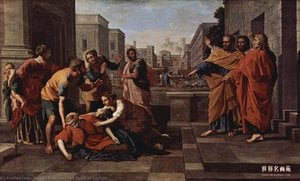
Oil On CanvasWallArtHigh Baroque
 1645Early Modern
 117.0 x 178.0 cm
当社のアーティストが、お客様のご希望のサイズと額縁に合わせて、キャンバスに手描きで制作する油彩画です。 ( プリント版に切り替え デジタル画像販売へ切り替え)





























作品のオリジナル比率に合わせた、当店の規定サイズからお選びください。

フレームや壁のスペースに合わせて、ご希望の幅と高さを入力してください。本作品は手描きのため、異なる比率のサイズをご希望の場合、絵画の周囲を少し広げて描くか、あるいは端を少しカットして調整することが可能です。お客様のご要望に合わせます。制作を開始する前に、仕上がりを確認するためのデジタルモックアップをお送りいたします。このページに表示されている画像は完成品の実物ではなく、あくまでモックアップによるイメージです。
Confirmation
複製画サイズ一覧
Confirmation is a Baroque-style oil painting on canvas by Nicolas Poussin, completed in 1645. The artwork depicts the sacrament of Confirmation, featuring a complex and detailed composition of numerous figures arranged around an altar table within an architectural interior containing classical elements.
The scene is structured with Jesus Christ at the center of the table as the focal point, surrounded by disciples and other figures in various poses, including some kneeling in prayer. The painting utilizes several key visual elements:
The painting employs a traditional oil painting method involving painstaking layering and blending of pigments. Poussin utilized glazing techniques to achieve luminosity through translucent washes. The texture of the canvas appears smooth, contributing to an impression of refinement.
The subject matter focuses on the religious sacrament of Confirmation, with the arrangement of figures around the table alluding to the Last Supper. The architectural setting provides a sense of order and formality to the depiction of this religious event.
ニコラ・プーサン作「Confirmation」のX線解析ページは、X線写真のような表示を含む、作品画像の11層にわたる光学レイヤーをスライドして閲覧できるインタラクティブ・ビューアです。
1645年に制作された「Confirmation」は、ニコラ・プーサンの画業におけるMature Periodに属する作品です。
ニコラ・プーサン作「Confirmation」は、sacrament, confirmation, last supper, classical art, religious symbolism, renaissance influence, baroque paintingとDramaticな雰囲気を融合させています。


1594 - 1665 , フランス

バロック油彩画が放つ、光と影のドラマ。WahooArt.comでは、レンブラント等の巨匠による名画を、熟練した芸術家が100%手描きで再現する最高級の油彩レプリカをご提供します。本物の筆致と重厚な質感、伝統的な技法を用いた一点物の美しさが、貴方の邸宅に時代を超えたラグジュアリーをもたらします。カスタム肖像画やインテリア相談も承る、エリートコレクターのためのプレミアム・アート・マーケットプレイスです。世界中へ、信頼の品質をお届けします。
Explore the breathtaking power of Baroque art. Delve into the dramatic interplay of light, shadow, and motion through the works of masters like Caravaggio. Discover how the era's intense emotional realism continues to inspire collectors and connoisseurs of classical grandeur.

Explore the profound elegance of Baroque Classicism. Discover how masters fused dramatic chiaroscuro with structured order to redefine art history through light, shadow, and emotional grandeur.

 設置イメージを確認
 送る
送る シェア
シェア
 詳細情報
詳細情報 ガイドを表示

 画像をダウンロード
 似ている作品
 X線調査
X線調査 スライドショー
 統計情報
統計情報 続きを読む
続きを読む









 ガラスオプションは、110cm未満のサイズでのみご利用いただけます。