
 Acrylic On CanvasWallArtSymbolist Movement
 192619th Century
 73.0 x 119.0 cm
当社のアーティストが、お客様のご希望のサイズと額縁に合わせて、キャンバスに手描きで制作する油彩画です。 ( プリント版に切り替え デジタル画像販売へ切り替え)





























作品のオリジナル比率に合わせた、当店の規定サイズからお選びください。

特定のフレームやスペースに合わせて、ご希望のサイズをご入力いただけます。選択されたサイズが元の画像の比率と異なる場合、アートワークをトリミングするか、手描きで要素を追加して絵画を拡張いたします。デジタルモックアップ を制作し、制作開始前にご確認(承認)をいただきます。
画面上のプレビューは、実際のトリミングや拡張を正確に反映しているものではありません。最終的な構図は、モックアップによってのみ正確にご確認いただけます。
カスタムサイズもご利用いただけますが、元の比率を維持するためには、あらかじめ用意されたリストからサイズを選択することをお勧めいたします。

Moses the Leader
複製画のサイズ
Nicholas Roemerich’s “Moses the Leader,” completed in 1926, is more than just a painting; it's an immersive experience, a journey into the heart of Symbolist thought and a testament to the artist’s profound spiritual quest. Measuring 73 x 119 cm, this tempera work immediately draws the viewer into its nocturnal drama – a solitary figure, Moses himself, stands atop a towering mountain peak, his sword raised not in aggression, but in a gesture of unwavering leadership, gazing upwards towards an unseen force. The painting’s power resides in its deliberate ambiguity, inviting contemplation on themes of faith, destiny, and humanity's relationship with the cosmos.
Roerich was a master of symbolic representation, deeply influenced by esoteric traditions and his own philosophical explorations. “Moses the Leader” exemplifies this approach perfectly. The nighttime setting isn’t merely atmospheric; it represents the realm of the unknown, where spiritual truths are revealed. Moses' posture – upright, resolute, yet vulnerable in his upward gaze – speaks to a willingness to confront both earthly challenges and divine mysteries. The sword, a recurring motif in Roerich’s work, symbolizes not physical power but rather the strength of conviction and moral authority. The painting aligns with the broader Symbolist movement's desire to evoke emotions and ideas through suggestive imagery rather than literal depiction.
Created using tempera, a technique favored by Roerich for its luminous quality and ability to build rich textures, “Moses the Leader” boasts an impressive depth of color and detail. The artist’s meticulous brushwork creates a palpable sense of the mountain's ruggedness and the vastness of the night sky. The use of tempera lends itself beautifully to Roerich’s style, allowing for subtle gradations in tone and creating a captivating interplay of light and shadow that dramatically enhances the painting’s symbolic weight. The texture achieved through layering and glazing contributes significantly to the artwork's overall impact.
Painted in 1926, “Moses the Leader” reflects Roerich’s evolving artistic vision during a period of intense intellectual and spiritual ferment. His work frequently draws upon ancient myths and legends, seeking to connect with universal human experiences. The painting shares thematic resonances with other works from his oeuvre, such as "Bharagarh Fort" and "From Kurul to Karakoram range," all demonstrating Roerich’s fascination with exploring the intersection of humanity, nature, and spirituality. Furthermore, it's important to note Roerich's connection to the Hirschsprung Collection in Copenhagen, a significant repository of Danish art from the 19th and early 20th centuries, highlighting his engagement within broader European artistic dialogues.
"Moses the Leader" is a profoundly evocative work that resonates with viewers on multiple levels. It’s a painting about leadership, faith, and the human spirit's yearning for connection to something greater than itself. The solitary figure against the dramatic backdrop of the night sky inspires feelings of awe, contemplation, and perhaps even a touch of melancholy. It invites us to consider our own place in the universe and the responsibilities that come with striving towards enlightenment. This piece is ideal for those seeking a work that transcends mere decoration, offering instead a rich source of artistic and philosophical reflection.


1874 - 1947 , ロシア

An expert guide for art collectors exploring the chemistry and artistry of oil, acrylic, tempera, and watercolor. Discover how medium specificity and material integrity define the longevity and value of fine art masterpieces.

Explore the profound tension between Impressionism's light-drenched realism and Symbolism's evocative dreamscapes. An expert art-historical journey into how 19th-century masters captured both the visible world and the unseen human psyche through myth, metaphor, and emotion.
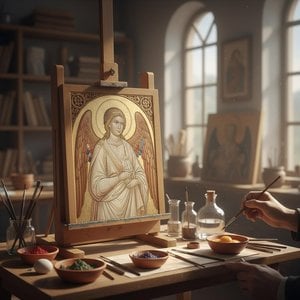
Unveil the sacred secrets of egg tempera on panel. Journey through the technical mastery and profound artistry of the Old Masters, from Giotto to Botticelli. An essential educational guide for Renaissance art enthusiasts seeking deep historical insight and expertise.


 プレビュー
プレビュー
 シェアする
シェアする シェアする
シェアする
 詳細を見る
詳細を見る

 ダウンロード
 似ている作品
 X線調査
X線調査 スライドショー
 統計情報
統計情報 詳細を見る
詳細を見る









 ガラスオプションは、110cm未満のサイズでのみご利用いただけます。


