

 Acrylic On CanvasWallArtSymbolism
 191819th Century
 152.0 x 127.0 cm
当社のアーティストが、お客様のご希望のサイズと額縁に合わせて、キャンバスに手描きで制作する油彩画です。 ( プリント版に切り替え デジタル画像販売へ切り替え)





























作品のオリジナル比率に合わせた、当店の規定サイズからお選びください。

フレームや壁のスペースに合わせて、ご希望の幅と高さを入力してください。本作品は手描きのため、異なる比率のサイズをご希望の場合、絵画の周囲を少し広げて描くか、あるいは端を少しカットして調整することが可能です。お客様のご要望に合わせます。制作を開始する前に、仕上がりを確認するためのデジタルモックアップをお送りいたします。このページに表示されている画像は完成品の実物ではなく、あくまでモックアップによるイメージです。
Forthcoming (Stylites)
複製画サイズ一覧
Nicholas Roerich's "Forthcoming (Stylites)," painted in 1918, isn’t merely a depiction of a man on a rock; it’s an immersive experience of spiritual yearning and the quiet strength found within solitude. This arresting work, rendered in tempera on canvas, captures a moment suspended between earthly existence and something far grander – a visual embodiment of the ascetic ideal that permeated Roerich's life and art. The painting immediately draws the eye to its central figure, a solitary individual standing atop a rugged, almost primordial landscape. His elongated form, accentuated by flowing robes and a deeply furrowed brow, suggests an intense concentration, a deliberate detachment from the world below. The stark contrast between the man’s dark silhouette and the muted tones of the surrounding rock formations creates a powerful sense of isolation, yet simultaneously conveys a profound inner resilience.
To fully appreciate “Forthcoming (Stylites),” one must understand Roerich’s complex and deeply personal worldview. Born into a family steeped in intellectual tradition – his father was a notary public, his mother an artist – he developed a fascination with both the rational and the mystical. He spent years immersed in archaeology, philosophy, and literature, but it was his encounters with Russian esoteric thought and his travels to Tibet and the Himalayas that profoundly shaped his artistic vision. The stylite depicted here is not simply a hermit; he represents a figure deeply connected to ancient ascetic traditions, embodying a quest for spiritual enlightenment through self-discipline and detachment from worldly desires. Roerich’s work frequently draws upon themes of cosmic unity, the interconnectedness of all things, and the importance of inner transformation – concepts central to Russian cosmism, a philosophical movement that sought to reconcile science with spirituality.
Roerich’s technique in “Forthcoming (Stylites)” is characterized by its deliberate restraint and masterful use of color. He employs a palette dominated by earthy browns, grays, and ochres, creating an atmosphere of timelessness and rugged austerity. The brushstrokes are broad and expressive, lending texture to the rock formations and suggesting the raw power of nature. Notably, Roerich’s layering technique builds up depth and luminosity within the painting, particularly in the depiction of the sky – a vast expanse of muted blues and purples that seems to stretch infinitely upwards. This atmospheric perspective not only anchors the figure but also reinforces the sense of his isolation and connection to something far beyond the earthly realm. The use of tempera, with its slow drying time, allowed Roerich to achieve subtle gradations of color and a remarkable level of detail in rendering the textures of stone and fabric.
Beyond its technical merits, “Forthcoming (Stylites)” resonates with a powerful emotional resonance. The painting evokes a sense of quiet contemplation, inviting the viewer to reflect upon their own place in the universe and the potential for inner strength that lies dormant within us all. The figure’s upward gaze suggests an aspiration towards something greater – a connection to the divine or a recognition of one's own spiritual purpose. It is a reminder that true fulfillment can be found not in external achievements, but in cultivating inner peace and embracing solitude as a pathway to self-discovery. The image speaks to the enduring human desire for transcendence, offering a visual meditation on the beauty and power of resilience.
Painted during a period of immense upheaval – the Russian Revolution was just beginning – “Forthcoming (Stylites)” reflects Roerich’s own personal journey of exile and transformation. He sought refuge in Finland, where he continued to develop his artistic vision while grappling with profound philosophical questions. Roerich's work gained increasing recognition throughout the 20th century, particularly for its evocative depictions of Himalayan landscapes and its exploration of spiritual themes. Today, Nicholas Roerich’s art continues to inspire and captivate audiences worldwide, serving as a testament to his unique artistic vision and his enduring legacy as a pioneer of Russian symbolism.
ニコライ・ロエリヒ作「Forthcoming (Stylites)」のSquare形式は、Living Roomに飾る際におすすめです。作品の形式と空間の調和が、複製画を配置する際の指針となります。
「Forthcoming (Stylites)」の明暗のコントラストはBalancedと記録されています。コントラストとは、明るい部分と暗い部分がどの程度強く異なっているかを表す指標です。
ニコライ・ロエリヒ作「Forthcoming (Stylites)」の主要な色調はGreen to Violet Spectrumです。この色調は、パレットの基調となるトーンを形作っています。


1874 - 1947 , ロシア
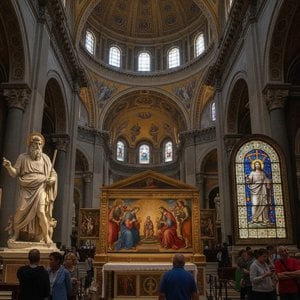
Explore the profound beauty of sacred art through a curated journey of masterpieces. From Renaissance iconography to Baroque drama, discover how history's greatest artists captured the divine presence in timeless works of spiritual transcendence.

Embark on a profound journey through art history with our exploration of spiritual artworks. Discover the deep symbolism, emotional resonance, and transcendent power found in sacred Renaissance, Baroque, and Nabis masterpieces curated for the true classical art enthusiast.
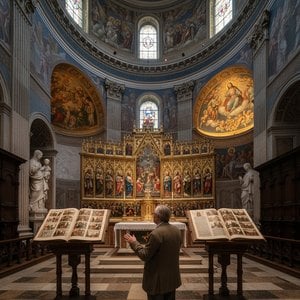
Explore the profound beauty of iconic religious artworks. From Renaissance masterpieces to sacred iconography, our expert guide delves into the spiritual power, symbolism, and enduring legacy of history's most divine paintings for the true art enthusiast.
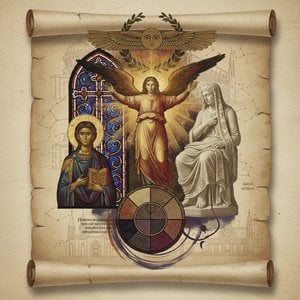
Explore the profound impact of spiritual themes in fine art. From Renaissance iconography to Baroque drama, discover how sacred symbolism and divine visions have shaped art history through a scholarly and reflective lens.

 設置イメージを確認
 送る
送る シェア
シェア
 詳細情報
詳細情報 ガイドを表示

 画像をダウンロード
 似ている作品
 X線調査
X線調査 スライドショー
 統計情報
統計情報 続きを読む
続きを読む









 ガラスオプションは、110cm未満のサイズでのみご利用いただけます。


