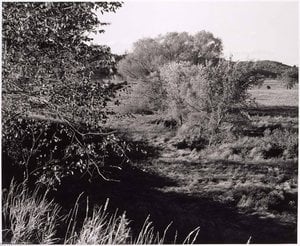
Contemporary Realism
 1992
1992 20.0 x 25.0 cm
このページに掲載されている作品は著作権法によって保護されており、当社の許可なく同一の複製物を制作または販売することは法律で禁じられています。この保護は、以下のような国際条約に基づき執行されます。 ベルヌ条約 および、以下の条項に定められたものを含む各国の法律により、 米国著作権法 第17編。
敬意を払った法的な代替手段として、私たちはオリジナルにインスピレーションを与えられた、カスタムの手描きアートワークを提供しています。私たちの熟練したプロのアーティストは、元の作品が持つスタイル、情緒、そして芸術的なエッセンスを注意深く研究し、独自の創作物でありながら、同じ感性を呼び起こすような、新しくユニークな作品を作り上げます。
この手法は、著作権で保護された作品の複製や複写を伴わないため、著作権法に完全に準拠しています。これは単なる模倣ではなく、創造的な再解釈です。元の作品からインスピレーションを受けつつも、それとは異なる、全く新しい絵画を生み出すものです。
当社のアーティストが、お客様のご希望のサイズと額縁に合わせて、キャンバスに手描きで制作する油彩画です。 ( プリント版に切り替え デジタル画像販売へ切り替え)
作品のオリジナル比率に合わせた、当店の規定サイズからお選びください。

フレームや壁のスペースに合わせて、ご希望の幅と高さを入力してください。本作品は手描きのため、異なる比率のサイズをご希望の場合、絵画の周囲を少し広げて描くか、あるいは端を少しカットして調整することが可能です。お客様のご要望に合わせます。制作を開始する前に、仕上がりを確認するためのデジタルモックアップをお送りいたします。このページに表示されている画像は完成品の実物ではなく、あくまでモックアップによるイメージです。
Spring 2
複製画サイズ一覧

Nathan Jay Jaffee (1921-1999) wasn’t a name immediately recognized by the public, yet his photographs offer an intimate and remarkably honest portrait of mid-20th century America. More than simply documenting scenes, Jaffee possessed a keen eye for capturing the essence of everyday life – from bustling city streets to quiet rural landscapes, from political rallies to solitary moments of reflection. His work, often characterized by its understated elegance and subtle social commentary, reveals a deep understanding of human nature and a profound connection to the American spirit.
Born in Brooklyn, New York, into a family of Russian immigrants, Jaffee’s early life instilled in him a strong sense of independence and resilience. He began working as a typesetter at a young age, supporting himself through the challenging years of the Great Depression. This experience, coupled with his military service during World War II – earning a Bronze Star for valor – shaped his perspective and informed his artistic approach. Following the war, he enrolled in photography classes taught by Sid Grossman, a key figure in the influential Photo League, an organization dedicated to socially conscious documentary photography. Grossman’s guidance proved pivotal, introducing Jaffee to techniques of street photography and fostering a commitment to capturing authentic representations of urban life.
Jaffee's early work focused primarily on the streets of Brooklyn – a vibrant tapestry of immigrant communities, working-class neighborhoods, and burgeoning cultural scenes. He meticulously documented these environments, capturing the faces, gestures, and textures that defined daily life. His photographs weren’t grand pronouncements; instead, they were quiet observations—a solitary figure reading a newspaper, children playing in a stoop, the weathered facade of a tenement building. This approach echoes the ethos of the Photo League, though Jaffee ultimately forged his own distinct style, characterized by a sensitivity to light and composition that set him apart.
Crucially, Jaffee’s connection to the Photo League extended beyond mere instruction; it provided him with a framework for understanding photography as a tool for social engagement. He participated in exhibitions alongside other members of the league, contributing to a broader dialogue about the role of art in reflecting and shaping society. His early work was later compiled and published in 1976 under the title “N. Jay Jaffee: Photography 1947-1956,” solidifying his place within this important photographic movement.
As time progressed, Jaffee’s subject matter broadened beyond the confines of Brooklyn. He traveled extensively throughout the United States and Europe, documenting diverse landscapes and capturing scenes of political demonstrations and social movements. The rise of the Civil Rights Movement and the anti-war protests of the 1960s profoundly influenced his work, leading him to photograph rallies, marches, and gatherings where individuals voiced their concerns about injustice and peace.
His portraits became increasingly significant during this period. He photographed a diverse range of subjects – artists, intellectuals, activists, and ordinary people—capturing their personalities and conveying their stories with remarkable empathy. Notable among his portrait subjects were Yoko Ono, Pete Seeger, Isaac Bashevis Singer, and Stan Brodsky, reflecting his engagement with the cultural and intellectual currents of his time.
In later years, Jaffee’s focus shifted towards nature photography. He moved to Lloyd Harbor, Long Island, where he found solace and inspiration in the landscapes surrounding him. His late works are characterized by a serene beauty and a contemplative mood—images of coastlines, fields, and forests that evoke a sense of timelessness and connection to the natural world.
Despite his relatively quiet career trajectory, Jaffee’s work has been recognized for its enduring quality and artistic merit. A major retrospective, “Inward Image: Photographs by N. Jay Jaffee,” was held at the Brooklyn Museum in 1981, followed by another significant exhibition in 1999 at the Heckscher Museum of Art, Long Island, shortly after his death. His photographs are now housed in numerous museums and institutions across the United States and abroad, testament to their lasting impact on American photography. Nathan Jay Jaffee’s legacy lies not in grand pronouncements or revolutionary styles, but in his quiet, observant eye—a window into the heart of America.

1921 - 1999

Explore the profound evolution of contemporary photography through a connoisseur's lens. From monochrome mastery to digital innovation, discover how modern photographic works shape fine art collections and define our cultural legacy.

Explore the profound artistry of black and white photography. From historical mastery to the interplay of light and shadow, discover how monochrome captures timeless emotion and form through a sophisticated lens of art history.

Explore the profound emotional depth of documentary photography art. Discover how collectors curate powerful historical narratives through museum-quality black and white prints and fine art reproductions that preserve humanity's most resilient moments.

 設置イメージを確認
 送る
送る シェア
シェア
 詳細情報
詳細情報 ガイドを表示

 画像をダウンロード
 似ている作品
 X線調査
X線調査 スライドショー
 統計情報
統計情報 続きを読む
続きを読む






































 ガラスオプションは、110cm未満のサイズでのみご利用いただけます。