スピーディーな制作と多彩な仕上げオプションが魅力の、ミュージアムクオリティなジークレー・キャンバスプリント。 ( 手描き複製画を注文する デジタル画像販売へ切り替え)
作品のオリジナル比率に合わせた、当店の規定サイズからお選びください。

額縁や壁のスペースに合わせて、ご希望の幅と高さを入力してください。プリントはカットすることは可能ですが、元の画像より大きくすることはできないため、異なる比率のサイズを選択された場合は、画像の一部が欠けることになります。印刷を開始する前に、内容を確認していただくためのデジタルモックアップをお送りいたします。このページに表示されている画像は、実際のカット後の状態を示すものではありません。実際の仕上がりはモックアップにてご確認ください。
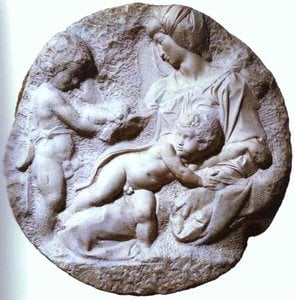
St Petronius
複製画サイズ一覧
To encounter Michelangelo Buonarroti’s St Petronius is to witness the very moment a legend began to breathe life into stone. Completed in 1494, this exquisite marble sculpture emerged from the fertile creative atmosphere of Florence’s Medici gardens, a period when the young Michelangelo was already demonstrating an uncanny ability to transcend the limitations of his medium. The work serves as a profound testament to Renaissance idealism, capturing the transition from the delicate grace of the early Quattrocento to the monumental power that would soon define the High Renaissance. In this piece, we do not merely see a religious figure; we see the dawn of an era where human anatomy and spiritual devotion became inextricably linked through the artist's chisel.
The subject, Saint Petronius, the Bishop of Bologna and patron saint of scholars, is rendered with a dignity that commands immediate respect. Michelangelo captures the saint not as a distant, ethereal icon, but as a figure of palpable presence and authority. Held within his hands is an architectural model, a symbolic element that meticulously underscores his role as both a builder and a protector of the Church. This inclusion of a physical object—a miniature representation of faith and civic duty—adds a layer of intellectual depth to the sculpture, inviting the viewer to contemplate the intersection of earthly administration and divine stewardship.
The technical execution of St Petronius reveals the foundational brilliance of an artist who would eventually redefine Western art. Even in these formative years, Michelangelo’s approach to marble was revolutionary. He utilized the pristine white stone to create a breathtaking interplay of light and shadow, employing precise carving techniques to capture the subtle nuances of texture. From the heavy, rhythmic folds of the bishop's liturgical robes to the smooth, lifelike contours of the face, every surface tells a story of meticulous observation. His burgeoning mastery of anatomical accuracy is evident in the way the figure possesses a sense of internal structure and vitality, as if the marble itself were pulsing with life.
The composition is a masterclass in balance and classical proportion. The verticality of the figure provides a sense of stability and permanence, while the intricate details of the architectural model provide a focal point that draws the eye inward. For the discerning collector or interior designer, this sculpture offers a sophisticated aesthetic anchor. Its neutral palette of whites and soft beiges allows it to integrate seamlessly into diverse environments, whether placed within a classical study or as a centerpiece in a contemporary gallery. The piece does not merely occupy space; it commands it, offering an atmosphere of timeless elegance and intellectual rigor.
Beyond its historical significance, St Petronius possesses an emotional resonance that continues to captivate the modern soul. There is a quiet, contemplative strength in the saint's expression—a sense of spiritual gravity that invites moments of reflection. This is art that transcends time, offering more than just decoration; it offers a connection to the humanist revival and the enduring pursuit of beauty and truth. Owning a high-quality reproduction of such a masterpiece allows one to bring this profound sense of history and Renaissance spirit into the home.
For those seeking to curate an environment of distinction, this work serves as an inspiration. It embodies the pinnacle of craftsmanship and the eternal human desire to capture the divine within the material. Whether used to complement a collection of classical antiquities or to provide a sophisticated contrast in a modern architectural setting, St Petronius remains a powerful symbol of the transformative power of art.
スライドショーはこちら:ミケランジェロ作「St Petronius」のスライドショーページ。
「St Petronius」は、Renaissance時代の作品です。
Renaissanceの作品「St Petronius」は、イタリア出身のアーティストによって制作されました。
カプレーゼの丘陵地帯で、一人の少年が石の重みと大理石の塵の感触を学んでいた。1475年に生まれたミケランジェロ・ディ・ロドヴィーコ・ブオナローティ・シモニは、父が採石場を営んでいたセッティニャーノの近くで幼少期を過ごした。湿った土の匂いと、岩を叩く槌の音は、彼の子供時代の一部であった。彼は筆ではなく、ノミから芸術の道を歩み始めた。フィレンツェでのドメニコ・ギルランダイオの下での修業時代は、人体への関心が高まっていた当時の都市の熱気へと彼を導いたが、彼の眼を真に形作ったのはメディチ家の庭園であった。古代ギリシャやローマの断片が眠るその場所で、彼は筋肉や骨の上にどのように光が落ちるかを深く研究したのである。
彼の作品は、解剖学への深い探求を通じて形作られ始めた。四肢がどのように重さを支えるのか、そして関節の上で皮膚がどのように引き伸ばされるのか。この肉体的なリアリティへの執着が、彼の芸術における主要な言語となった。1496年にローマに辿り着く頃には、彼はすでに、重厚で実在感のある人物像を彫り出していた。1499年に完成したピエタは、死者の重みを支えながらも、大理石をまるで生身の肉体のように柔らかく見せる、初期の驚異的な才能を物語っている。
システィーナ礼拝堂の天井画という任務は、彼が自ら望んだものではなかった。彼は自分自身を、漆喰の上に顔料を広げる者ではなく、石の中から生命を掘り出す彫刻家であると考えていた。しかし、彼は4年もの間、礼拝堂の高い天井の下で、創世記の物語を描いた300体以上の人物像を、フレスコ画として描き続けた。その肉体的な負担は、彼の日常に刻み込まれた。困難な姿勢で何時間も作業を続け、腕を伸ばし、重いフレスコ技法を施すことで、その体は常に緊張にさらされていた。アダムの創造のようなパネルにおいて、その緊張感は二人の指の間のわずかな隙間に宿っている。その、触れ合う直前の瞬間こそが、純粋な構図の力によって観る者の視線を釘付けにするのである。
時が経つにつれ、彼のスタイルは盛期ルネサンスの調和のとれた理想から、より動揺を孕んだものへと変化していった。祭壇の壁に描かれた最後の審判のような後期の作品は、マニエリスムへの移行を示している。人物像はより細長く、構図はより混雑し、劇的なものとなった。この変化は、当時のローマにおける精神的な気候の変化を反映していた。彼は、多くの者が圧倒されるほどの強烈さで創作を続け、その精神が新たな建築的、あるいは彫刻的な問題へと向かうたびに、多くのプロジェクトを未完成のまま残していった。
晩年のミケランジェロは、その関心の多くを建築構造へと向けた。71歳の時、彼はサン・ピエトロ大聖堂の建設を引き継ぎ、より巨大で威厳のあるデザインへと計画を書き換えた。また、ラウレンツィアーナ図書館の設計においても、建築要素の使い方によって伝統を打ち破り、石そのものの中に動きを生み出した。ローマのカンピドリオ広場における彼の仕事は、対称性と古典的なモチーフを用いて、広場を歩く視線を導くように公共空間をいかに組織化できるかを示した。
1564年、彼はローマでその生涯を閉じ、大理石、フレスコ、そして石に刻まれた遺産を後世に残した。彼の人生は、いくつかの重要な役割によって定義されている。

1475 - 1564 , イタリア

Discover the sublime beauty of marble art through an expert exploration of Renaissance and Neoclassical masterpieces. From the delicate textures of Carpeaux to the grandeur of Sansovino, immerse yourself in a guide to timeless elegance and sculptural perfection.

Transform cherished photos into breathtaking 3D sculptures and marble busts with WahooArt AI. Experience the pinnacle of luxury art commissions, blending cutting-edge technology with classical mastery to create timeless, museum-quality heirlooms for your private collection.

Master the nuances of three-dimensional art with our expert guide. Explore sculptural history, from Phidias to Neoclassicism, and learn to evaluate materiality, form, and technique like a true connoisseur. Elevate your collection with profound insights into the world of sculpture.
 シェアする
シェアする シェアする
シェアする
 詳細を見る
詳細を見る ガイドを表示

 ダウンロード
 似ている作品
 スライドショーを表示
 Q&A
Q&A
 統計情報
統計情報

 詳細を表示
詳細を表示






































 ガラスオプションは、110cm未満のサイズでのみご利用いただけます。