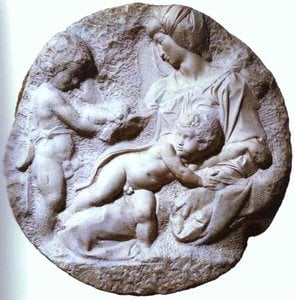
Brutus: A Renaissance Masterpiece of Power and Rebellion
- Title: Brutus
- Artist: Michelangelo Buonarroti
- Date: 1540
- Medium: Marble
- Location: Museo Nazionale del Bargello, Florence, Italy
Historical Context and Significance
Michelangelo's "Brutus" bust was sculpted during a period of significant political upheaval in Renaissance Italy. Commissioned around 1539-1540 by Cardinal Niccolò Ridolfi, the sculpture reflects the anti-tyrannical sentiments prevalent at the time. Brutus, known for his role in assassinating Julius Caesar to preserve Roman republican ideals, served as a powerful symbol against tyranny and oppression – a message resonating strongly with those wary of autocratic rule. The bust's creation coincided with political tensions within Florence and across Italy, making it more than just a portrait; it was a statement about civic virtue and the importance of resisting oppressive power.
Artistic Technique and Style
"Brutus" exemplifies Michelangelo’s mastery of marble sculpture and his deep understanding of classical art principles. The bust showcases a revival of ancient Greek and Roman aesthetics, characterized by realism, anatomical accuracy, and idealized forms. Michelangelo's meticulous attention to detail is evident in the rendering of Brutus' facial features – the stern expression, furrowed brow, and strong jawline convey a sense of determination and resolve. The drapery, skillfully carved, adds depth and texture while subtly emphasizing the figure’s form. Michelangelo employed techniques like undercutting and contrasting planes to create dramatic shadows and highlights, enhancing the sculpture's three-dimensionality and visual impact. The overall style aligns with High Renaissance ideals, prioritizing balance, harmony, and a celebration of human potential.
Symbolism and Emotional Impact
Beyond its technical brilliance, "Brutus" is rich in symbolism. The subject’s stoic expression and dignified posture evoke qualities of courage, integrity, and self-sacrifice. The classical attire – the toga draped over his shoulders – connects Brutus to the legacy of Roman republicanism and emphasizes his role as a defender of liberty. The bust's gaze is direct and unwavering, creating a powerful connection with the viewer and conveying a sense of quiet strength. Emotionally, "Brutus" inspires contemplation on themes of duty, sacrifice, and the complexities of political action. It prompts reflection on the burdens of leadership and the difficult choices individuals must make in pursuit of justice and freedom.
Michelangelo's Legacy and Other Notable Works
“Brutus” stands as a testament to Michelangelo’s enduring artistic legacy. He was a prolific artist, renowned for his sculptures, paintings, and architectural designs. Among his other celebrated works are the "Pietà," the statue of "David," the frescoes on the Sistine Chapel ceiling (including “The Creation of Adam”), and the design of St. Peter's Basilica dome. These masterpieces demonstrate Michelangelo’s unparalleled ability to capture human emotion, anatomical precision, and artistic innovation, solidifying his position as one of history's greatest artists. "Brutus," in its own right, remains a powerful symbol of Renaissance ideals and a compelling portrait of a historical figure whose actions continue to resonate through the centuries.
Q&A
ミケランジェロ作「Brutus」の構図は、縦長、横長、それとも正方形ですか?
ミケランジェロ作「Brutus」はPortraitの構図です。プリントサイズを選択する前に、アスペクト比(縦横比)をご確認いただくことをお勧めします。
美術史において、ミケランジェロ作「Brutus」はどのような位置を占めているのでしょうか?
歴史的に見て、「Brutus」は、より広範なRenaissance時代におけるHigh Renaissanceの作品です。
「Brutus」は、ミケランジェロのこれまでの作風を象徴するものと言えるでしょうか?
「Brutus」はportrait, roman history, brutus, sculpture, marble, renaissance, political symbolism, heroismを描いていますが、ミケランジェロのこれまでの主要なテーマはclassical greek & roman sculpture, revival of ancient artistic forms, demonstrates mastery of marble carving, reflects michelangelo's political views, significant example of his classical style, anti-tyranny and republicanism, political turmoil in renaissance italy, heroic portrayal of historical figuresです。この二つを比較することで、本作が作家の恒常的な主題とどのように結びついているかが浮き彫りになります。


 シェアする
シェアする シェアする
シェアする
 詳細を見る
詳細を見る ガイドを表示

 ダウンロード
 似ている作品
 スライドショーを表示
 Q&A
Q&A
 統計情報
統計情報


 詳細を表示
詳細を表示
 プリント版に切り替え





































 ガラスオプションは、110cm未満のサイズでのみご利用いただけます。