Early Life and Artistic Beginnings in Krakow
Born in the historic city of Krakow, Poland, in 1991, michał stonawski emerged as a multifaceted artist whose work seamlessly blends the unsettling allure of horror fiction with a keen exploration of cultural landscapes. His formative years within the rich artistic tradition of Krakow undoubtedly shaped his sensibility, fostering an appreciation for both beauty and decay—themes that would become central to his oeuvre. While initially pursuing writing and publicism, stonawski’s debut in 2010 with the short story ‘wyrok’ signaled a burgeoning talent for narrative tension and atmospheric storytelling. This early foray into literature laid the groundwork for his later explorations of genre fiction, particularly within the realm of horror.
A Prolific Voice in Polish Horror Literature
stonawski quickly established himself as a prominent voice in contemporary Polish horror. Over the following decade, he published nearly sixty short stories across various platforms—online magazines, anthologies like ‘dziedzictwo manitou’ (2013), ‘oblicza grozy’ (2014), and ‘żertwa: antologia słowiańskiego horroru’ (2021)—demonstrating a remarkable prolificacy. His work often delves into Slavic folklore and mythology, imbuing his tales with a distinctly regional flavor that sets them apart. Translations of his stories into German and Czech further broadened his reach, introducing his chilling narratives to international audiences. Beyond the written word, stonawski’s commitment to the horror community is evident in his collaborative efforts—organizing and co-creating the ‘nagroda polskiej literatury im. stefana grabińskiego’ award and serving as editor-in-chief of ‘polskagroza.pl’. These initiatives underscore his dedication to fostering a vibrant literary scene.
From Words to Visual Art: Exploring Decay and Nostalgia
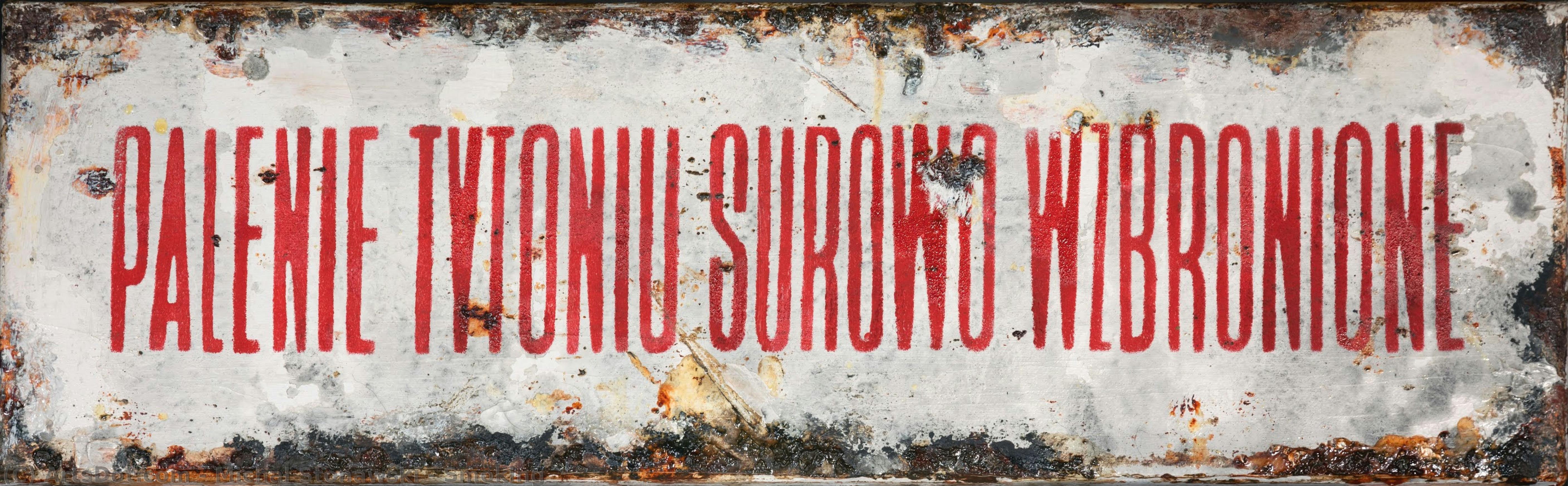
While stonawski's initial recognition came through writing, his artistic practice extends far beyond the page. He creates three-dimensional painting objects from oil paintings on canvas, meticulously imitating the structure of corroded metal. This shift towards visual art represents a fascinating evolution in his exploration of decay and the passage of time. His works are not merely representations of rust or deterioration; they are an “ennoblement of beauty that accompanies the process of decay,” as described by Google Arts & Culture. He imbues ordinary objects—smoking ban signs, work-at-height plates—with a sense of nostalgia and humor, prompting viewers to contemplate their own memories and sentiments associated with these everyday items.
Cultural Activism and Collaborative Projects
stonawski is not simply an artist working in isolation; he’s deeply engaged in cultural life. His involvement with portals like enklawanetwork.pl, efantastyka, qfant, interia, and dzikabanda demonstrates a commitment to pop culture discourse. From 2013-2016, his work on the ‘nagroda polskiej literatury im. stefana grabińskiego’ award and as editor-in-chief of ‘polskagroza.pl’ solidified his role as a cultural organizer. He co-organized events like krakon, falkon, dni fantastyki, and krakowski festiwal na falach, fostering community and dialogue around art and literature. His podcast ‘misterium grozy’, co-hosted with krzysztof biliński, further expanded his reach, offering a platform for discussions on horror themes. His membership in the galara boudicca team highlights his dedication to promoting old culture and cultural life along the vistula river.
Major Achievements and Historical Significance
stonawski’s work has been exhibited at Bunkier Sztuki and MOCAK, both prominent contemporary art institutions in Krakow. His first comprehensive exhibition, *What I Am Seeing Is Not What I See*, presented over 50 works created over the last fifteen years, showcasing his unique approach to painting and illusion. His ability to transform mundane objects into compelling artistic statements—challenging perceptions of beauty and decay—has garnered critical acclaim. He provokes questions about the role of the artist, the significance of their decisions, and the very limits of art itself. Through his writing, organizing efforts, and visual creations, michał stonawski has become a significant figure in contemporary Polish culture, bridging the gap between literature, art, and public engagement.



 プレビュー
プレビュー
 手描きの絵画を購入
 シェアする
シェアする シェアする
シェアする
 詳細を見る
詳細を見る

 ダウンロード
 似ている作品
 X線調査
X線調査 スライドショー

 詳細を見る
詳細を見る






































 ガラスオプションは、110cm未満のサイズでのみご利用いただけます。





