
迅速な制作と多彩な仕上げオプションを備えた、ミュージアムクオリティのジークレーまたはキャンバスプリント。 ( 手描きの絵画を購入 デジタル画像販売へ切り替え)





























作品のオリジナル比率に合わせた、当店の規定サイズからお選びください。

特定のフレームやスペースに合わせて、ご自身でサイズを指定することも可能です。選択されたサイズが元の画像の比率と一致しない場合、作品をトリミングするか、鏡面反射または単色での塗りつぶしによって画像を拡張いたします。制作を開始する前に、ご確認用のデジタルモックアップをお送りいたします。
画面上のプレビューには、実際のトリミングや拡張は反映されませんのでご注意ください。最終的な構図を正確に確認できるのは、モックアップのみとなります。
カスタムサイズも承っておりますが、元の比率を維持するためには、あらかじめ用意されたリストからサイズを選択することをお勧めいたします。

Virgin and Child
複製画のサイズ
Hans Memling’s “Virgin and Child,” circa 1480, is more than just a depiction of the biblical narrative; it's a profound meditation on motherhood, faith, and the quiet dignity of human connection. This small roundel, radiating an almost palpable serenity, offers a glimpse into the devotional practices of its time – a period where such intimate scenes were often hung above bedsides, serving as a constant blessing and focal point for personal prayer. Memling’s Bruges workshop produced countless variations on this theme, yet his version stands apart through a remarkable sensitivity to detail and an evocative use of landscape, transforming a simple depiction into a richly layered experience.
The composition itself is deceptively straightforward. The Virgin Mary, rendered with exquisite realism – note the delicate modeling of her face, the subtle folds of her gown – cradles the Christ Child in a pose that speaks volumes about maternal tenderness. Her gaze, directed towards an unseen horizon, suggests contemplation and perhaps even a touch of melancholy, hinting at the sacrifice inherent in motherhood. The child, nestled securely against her breast, is not merely passive; his hand reaches out as if exploring the world around him, embodying youthful curiosity and innocence.
It’s crucial to understand that this roundel wasn't conceived in isolation. Memling, like many artists of his era, operated within a workshop system where designs were disseminated through patterns – essentially templates – allowing for consistent stylistic elements while still permitting individual variations. This explains the subtle differences between numerous versions of this motif; each one carries a unique character reflecting the hand of its creator and the specific demands of its patron. The extended wooded landscape, a key element distinguishing Memling’s version, wasn't merely decorative—it served to heighten the sense of depth and create an atmosphere of peaceful seclusion, mirroring the intimate setting of domestic devotion.
The choice of materials further enhances the work’s impact. Carved from a single piece of wood, the frame and painted image are seamlessly integrated, creating a unified whole that speaks to the meticulous craftsmanship characteristic of Memling's workshop. This technique not only demonstrates technical skill but also imbues the artwork with a sense of permanence and solidity – qualities highly valued in devotional objects intended for long-term contemplation.
Beyond its immediate visual appeal, “Virgin and Child” is rich in symbolic meaning. The landscape itself can be interpreted as representing Paradise, a realm of serenity and spiritual fulfillment. The muted colors – predominantly blues, greens, and browns – evoke a sense of humility and reverence. Mary’s posture, with her head slightly bowed, suggests submission to God's will, while the Christ Child’s outstretched hand symbolizes his role as mediator between humanity and the divine. The inclusion of two figures standing behind the scene—likely donors—underscores the importance of piety and faith within the domestic sphere.
Memling’s work reflects a broader trend in Early Netherlandish painting: a profound engagement with religious iconography combined with an acute observation of natural detail. He masterfully balances realism with spiritual depth, creating images that are both visually stunning and emotionally resonant. Reproductions of this piece offer a wonderful opportunity to bring this timeless depiction into your home, allowing you to experience the quiet majesty of Mary and Child in a setting of your own choosing.


ドイツ
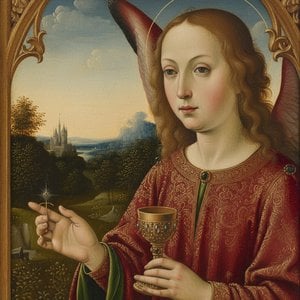
Embark on a journey through the luminous world of Early Netherlandish art. Discover the revolutionary oil techniques, microscopic realism, and sacred symbolism used by masters like Jan van Eyck to redefine Western art history in this expert-led guide.
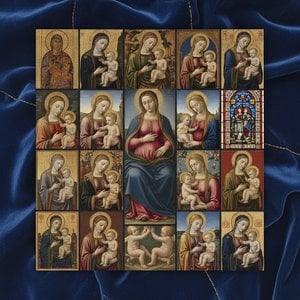
Embark on a sophisticated journey through art history with our curated guide to the most iconic Madonna and Child masterpieces. Discover the profound beauty, theological depth, and enduring legacy of these sacred Renaissance treasures.

Embark on a profound journey through art history with our exploration of the most iconic depictions of the Virgin Mary. Discover the divine grace, symbolism, and masterful techniques found in Renaissance masterpieces and sacred iconography.

Explore the profound beauty of Marian iconography through an art historian's lens. Discover iconic masterpieces by Raphael and Renaissance masters, celebrating the divine grace and timeless elegance of the Virgin Mary in classical fine art.

Delve into the luminous revolution of Early Netherlandish painting. Unveil how Jan van Eyck and Flemish masters pioneered oil techniques to achieve unparalleled depth, sacred symbolism, and breathtaking realism, forever shaping the legacy of Western art history.


 プレビュー
プレビュー
 シェアする
シェアする シェアする
シェアする
 詳細を見る
詳細を見る ガイド
ガイド

 ダウンロード
 似ている作品
 X線調査
X線調査 スライドショー
 統計情報
統計情報


 詳細を見る
詳細を見る









 ガラスオプションは、110cm未満のサイズでのみご利用いただけます。


