
 Oil On BoardWallArtEarly Netherlandish Painting
 1475Renaissance
 70.0 x 30.0 cm
 ナショナル・ギャラリー
当社のアーティストが、お客様のご希望のサイズと額縁に合わせて、キャンバスに手描きで制作する油彩画です。 ( プリント版に切り替え デジタル画像販売へ切り替え)





























作品のオリジナル比率に合わせた、当店の規定サイズからお選びください。

特定のフレームやスペースに合わせて、ご希望のサイズをご入力いただけます。選択されたサイズが元の画像の比率と異なる場合、アートワークをトリミングするか、手描きで要素を追加して絵画を拡張いたします。デジタルモックアップ を制作し、制作開始前にご確認(承認)をいただきます。
画面上のプレビューは、実際のトリミングや拡張を正確に反映しているものではありません。最終的な構図は、モックアップによってのみ正確にご確認いただけます。
カスタムサイズもご利用いただけますが、元の比率を維持するためには、あらかじめ用意されたリストからサイズを選択することをお勧めいたします。

The Donne Triptych (left wing)
複製画のサイズ
In the quiet, luminous world of Early Netherlandish painting, few works capture the delicate intersection of earthly status and divine grace as poignantly as Hans Memling’s The Donne Triptych (left wing). Created around 1475, this exquisite panel serves as a window into a period where every brushstroke was an act of prayer and every detail a vessel for meaning. As part of a larger devotional masterpiece commissioned by the Welsh diplomat Sir John Donne, this specific wing presents us with a profound encounter with Saint John the Baptist. The scene is not merely a religious icon but a masterclass in Northern Renaissance intimacy, where the boundaries between the viewer and the sacred begin to dissolve through Memling's unparalleled ability to render light, texture, and spirit.
The composition draws the eye immediately to the figure of the Saint, whose presence is both commanding and humble. Clad in a rich, deep purple robe that cascades with heavy, realistic folds, he stands as a pillar of strength against a backdrop that suggests a threshold between worlds. In his hands, he cradles a white lamb—the Agnus Dei—a symbol of purity and the ultimate sacrifice. The contrast between the soft, organic texture of the lamb's wool and the structured, architectural elements of the doorway creates a visual tension that is quintessential to Memling’s style. This interplay of textures invites the observer to linger, finding beauty in the meticulous realism that defines the Bruges Master’s hand.
To behold this work is to witness the pinnacle of 15th-century oil painting technique. Memling, a student of the legendary Rogier van der Weyden, utilized the unique properties of oil glazes to achieve a depth of color and a luminosity that tempera could never permit. The way light catches the edge of the Saint's robe or reflects off the subtle contours of the lamb suggests a world breathed into existence by light itself. Furthermore, the exterior panels of the triptych were famously rendered in grisaille—a technique designed to mimic the solemnity of stone sculpture. This clever illusionism creates a breathtaking transition when the triptych is opened, moving from the monochromatic, sculptural austerity of the exterior to the vibrant, jewel-toned reality of the interior panels.
For the discerning collector or interior designer, this piece offers more than mere decoration; it provides an anchor of historical depth and sophisticated elegance. The muted yet profound palette of purples, whites, and earthy tones allows the artwork to integrate seamlessly into a variety of high-end settings, from classical studies to contemporary galleries. It is a work that demands attention through its subtlety rather than through clamor, making it an ideal centerpiece for those who appreciate art that rewards slow, contemplative viewing.
Beyond the technical mastery lies the heart of the piece: the humanist spirit of the late Middle Ages. The Donne Triptych was a personal testament to the piety and political allegiances of its patron, Sir John Donne. By placing himself and his family within the same visual plane as the saints, Donne bridged the gap between the temporal and the eternal. This movement toward humanism—the celebration of human emotion and individual experience within a religious framework—is what gives this painting its enduring emotional resonance. When we look upon the left wing today, we are not just looking at a relic of the past; we are participating in a centuries-old tradition of seeking beauty, meaning, and a sense of peace through the mastery of light and form.


ドイツ

Explore the profound iconography of Saint Jerome through art history's most iconic masterpieces. From Renaissance serenity to Baroque drama, discover how legendary painters captured divine devotion in breathtaking oil paintings and fine art reproductions.

Embark on a scholarly journey through the sacred beauty of High Medieval art. Discover the profound symbolism, luminous iconography, and spiritual depth of Gothic masterpieces in this expert guide for classical art enthusiasts.
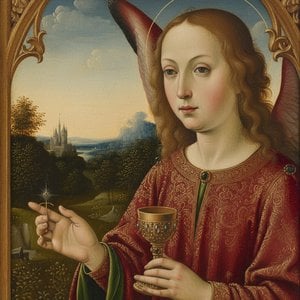
Embark on a journey through the luminous world of Early Netherlandish art. Discover the revolutionary oil techniques, microscopic realism, and sacred symbolism used by masters like Jan van Eyck to redefine Western art history in this expert-led guide.

Delve into the luminous revolution of Early Netherlandish painting. Unveil how Jan van Eyck and Flemish masters pioneered oil techniques to achieve unparalleled depth, sacred symbolism, and breathtaking realism, forever shaping the legacy of Western art history.

Embark on a visual journey through Early Medieval art. Explore the profound beauty of illuminated manuscripts, sacred symbols, and golden light through an expert historical lens, celebrating the enduring legacy of medieval craftsmanship and divine artistry.


 プレビュー
プレビュー
 シェアする
シェアする シェアする
シェアする
 詳細を見る
詳細を見る

 ダウンロード
 似ている作品
 X線調査
X線調査 スライドショー
 統計情報
統計情報 詳細を見る
詳細を見る









 ガラスオプションは、110cm未満のサイズでのみご利用いただけます。


