迅速な制作と多彩な仕上げオプションを備えた、ミュージアムクオリティのジークレーまたはキャンバスプリント。 ( 手描きの絵画を購入 Switch to Digital Image)





























作品のオリジナル比率に合わせた、当店の規定サイズからお選びください。

特定のフレームやスペースに合わせて、ご自身でサイズを指定することも可能です。選択されたサイズが元の画像の比率と一致しない場合、作品をトリミングするか、鏡面反射または単色での塗りつぶしによって画像を拡張いたします。制作を開始する前に、ご確認用のデジタルモックアップをお送りいたします。
画面上のプレビューには、実際のトリミングや拡張は反映されませんのでご注意ください。最終的な構図を正確に確認できるのは、モックアップのみとなります。
カスタムサイズも承っておりますが、元の比率を維持するためには、あらかじめ用意されたリストからサイズを選択することをお勧めいたします。

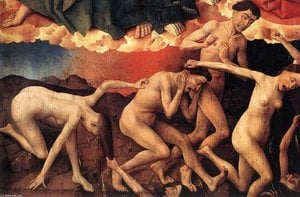
Last Judgment Triptych (detail) (10)
複製画のサイズ
To stand before a depiction of the Last Judgment is to confront the sublime terror and ultimate hope inherent in the human condition. This detail, drawn from Hans Memling’s monumental triptych, does not merely illustrate a biblical event; it captures a moment suspended between earthly life and eternal reckoning. The scene explodes with dramatic energy, a swirling vortex of humanity—some bathed in divine light, others consumed by shadow—all gathered before the ultimate tribunal. One can almost feel the palpable tension radiating from the painted surface, the weight of every soul’s fate hanging in the air.
Hans Memling, the celebrated Bruges Master, was renowned for his exquisite realism and meticulous attention to detail, qualities that shine through even in this chaotic grandeur. Observe the figures: they are not mere mannequins; each possesses a distinct gesture, an individualized expression etched onto their faces. The artist has achieved a remarkable feat of emotional portraiture, capturing everything from ecstatic awe to abject terror. Whether depicting angels engaged in celestial battle or souls struggling against unseen forces, Memling’s brushwork imbues the scene with profound psychological depth. His technique allows the viewer to lose themselves within the narrative drama, drawn into the very heart of the spiritual conflict.
The symbolism woven throughout this work is rich and deeply rooted in late medieval Christian thought. The composition itself—the dramatic rock formation serving as a backdrop—grounds the heavenly spectacle in a tangible, almost geological reality. Here, every naked form carries symbolic weight: they represent humanity stripped bare before God’s judgment. The contrast between light and shadow, between order and chaos, speaks to the core theological questions of salvation and damnation that preoccupied the era. For the modern collector or decorator, this piece offers a powerful focal point, an object that demands contemplation and elevates any space it graces with intellectual gravity.
While originating in 1467, the emotional impact of Memling’s vision remains startlingly immediate. Reproducing such a masterpiece allows one to bring the profound narrative power of the Early Netherlandish Renaissance into contemporary living spaces. Imagine this dramatic energy tempered by the rich, detailed quality of a high-quality reproduction—it serves not just as decoration, but as a meditation piece. It speaks to permanence, to consequence, and ultimately, to the enduring human search for meaning.


ドイツ

あなたのクリエイティビティを、世界中のファンへ届ける新しい形。在庫リスクなしで始められるオンデマンド・アートプリント販売をご紹介します。美術館品質のジークレー印刷技術を用い、デジタルな感性を一生のレガシーとなるファインアートへと昇華。WahooArtが提案する、洗練されたアーティスト・ビジネスの第一歩をここから。

Master the nuances of Giclée printing with our expert guide. Discover how pigment-based inks and museum-grade substrates create fade-resistant, high-fidelity art reproductions designed for discerning collectors seeking unparalleled quality and longevity.

Discover museum-quality Giclée paper prints at WahooArt. Elevate your space with archival, pigment-based reproductions of the world's greatest masterpieces. Affordable, elegant, and designed for lasting beauty. Start curating your timeless art legacy today.

 プレビュー
プレビュー
 シェアする
シェアする シェアする
シェアする
 詳細を見る
詳細を見る

 ダウンロード
 似ている作品
 X線調査
X線調査 スライドショー
 Stats
Stats


 詳細を見る
詳細を見る









 ガラスオプションは、110cm未満のサイズでのみご利用いただけます。