A Vision of Modernity: Decoding Max Ernst’s Untitled Cityscape (8008)
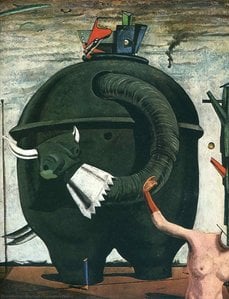
This striking composition by Max Ernst presents a compelling vision of urban life, dominated by imposing infrastructure and an atmosphere steeped in the anxieties and possibilities of the modern age. Painted with a loose, expressive hand, this work exemplifies Ernst's pivotal role in bridging Post-Impressionism with the burgeoning Surrealist movement.
Subject & Composition: The Industrial Heart
The artwork centers on a cityscape defined by an elevated bridge and a network of power lines – symbols of progress and technological advancement. The composition is deliberately asymmetrical, drawing the eye across the canvas rather than anchoring it to a central point. This creates a dynamic energy that mirrors the bustling activity of the urban environment. Buildings are suggested through blocks of color and geometric forms, receding into space not through traditional perspective but through overlapping shapes and tonal variations. The flattened perspective contributes to a sense of immediacy and almost claustrophobic density.
Style & Technique: Impasto and Expressive Brushwork
Ernst’s technique is immediately captivating. He employs a rich, impasto application of oil paint, creating a heavily textured surface that invites tactile exploration – even in reproduction.
Thick, gestural brushstrokes are visible throughout, conveying a sense of urgency and emotional intensity. The style leans towards early 20th-century modernism, echoing the expressive freedom found in Post-Impressionist works while simultaneously rejecting strict representational accuracy. The deliberate distortion of form and emphasis on subjective experience foreshadows Ernst’s later Surrealist explorations.
Color & Atmosphere: A Cool Palette with Warm Accents
A predominantly cool palette of blues and greens establishes a somber, perhaps even melancholic mood. These tones evoke the steel and concrete of industrial architecture, as well as the often-overcast skies of urban landscapes. However, strategically placed warmer hues – oranges and reds within the building structures – provide visual contrast and suggest pockets of life and activity amidst the coldness of the city. The diffused lighting contributes to an atmospheric quality, softening edges and creating a sense of mystery.
Symbolism & Interpretation: Connection, Transition, and Alienation
The symbolism within *untitled (8008)* is open to interpretation, characteristic of Ernst’s work. The bridge can be seen as representing connection – a physical link between different parts of the city – but also transition, suggesting movement and change. The power lines, while essential for modern life, evoke themes of industrialization, technology's pervasive influence, and potentially, a sense of detachment or alienation from nature.
The painting subtly explores the complex relationship between humanity and its increasingly industrialized world.
Historical Context & Ernst’s Legacy
Max Ernst (1891-1976) was a German-born artist who became a leading figure in both Dadaism and Surrealism. His artistic journey was marked by experimentation with various techniques, including frottage and collage, all aimed at unlocking the subconscious mind. This work, while predating his most overtly surrealist pieces, demonstrates his growing dissatisfaction with traditional artistic conventions and his desire to explore new modes of expression. Ernst’s influence on 20th-century art is immense, paving the way for generations of artists who sought to challenge established norms and delve into the realm of dreams and imagination.
Emotional Impact & Interior Design Considerations
*untitled (8008)* evokes a range of emotions – from awe at the scale of human achievement to a sense of unease about its potential consequences. Its dynamic composition and expressive brushwork make it a visually arresting piece, capable of commanding attention in any space.
- For interior design,
- this artwork would complement modern or industrial-chic aesthetics.
- The cool color palette pairs well with neutral tones and metallic accents.
- Its thought-provoking subject matter makes it an ideal conversation starter.
A high-quality reproduction of this work will bring a touch of artistic sophistication and intellectual depth to any home or office.



 プレビュー
プレビュー
 手描きの絵画を購入
 シェアする
シェアする シェアする
シェアする
 詳細を見る
詳細を見る

 ダウンロード
 似ている作品
 X線調査
X線調査 スライドショー

 詳細を見る
詳細を見る






































 ガラスオプションは、110cm未満のサイズでのみご利用いただけます。