A Surrealist Vision of Flight and Femininity: Examining Max Ernst’s “Untitled (7546)”
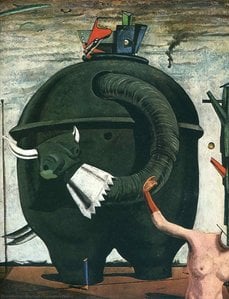
Max Ernst's "Untitled (7546)" stands as a hauntingly beautiful testament to the Surrealist movement’s fascination with dreams, subconscious impulses, and the merging of disparate imagery. Painted sometime around 1930-31, this enigmatic artwork depicts a woman adorned with two colossal wings crafted from delicate lace or crocheted fabric—a striking visual metaphor for liberation and transformation. The dark background serves as an arresting counterpoint to the luminous detail of the wings, amplifying their ethereal quality and drawing the viewer’s gaze inward toward the artist's exploration of psychological landscapes.
- Style: Surrealism – Ernst’s work embodies the core tenets of Surrealist philosophy, rejecting rational thought in favor of accessing the realm of unconsciousness. He deliberately disrupts conventional artistic conventions to provoke contemplation and challenge perceptions of reality.
- Technique: Ernst employed a masterful blend of collage and frottage—a technique he pioneered himself—to achieve his distinctive aesthetic. Frottage involves rubbing pencil over textured surfaces like wood or stone, transferring their patterns onto canvas, creating an organic and unpredictable visual element that reflects the artist’s intuitive process. The collage incorporates meticulously layered paper fragments and textures, adding depth and complexity to the composition.
- Historical Context: Created during the turbulent years of the Weimar Republic in Germany, “Untitled (7546)” reflects anxieties surrounding societal upheaval and the looming shadow of impending war. Surrealism emerged as a reaction against the horrors of World War I and sought to liberate artistic expression from the constraints of logic and reason—a defiant stance against the dominant ideologies of the time.
Symbolism: The woman herself represents femininity, vulnerability, and aspiration – qualities often juxtaposed with the imposing presence of the wings. Lace and crochet symbolize delicacy, fragility, yet simultaneously convey strength through intricate craftsmanship. Wings are universally recognized as emblems of freedom, transcendence, and spiritual ascension—a powerful visual declaration of overcoming limitations and embracing boundless possibilities. The dark background contributes to a sense of mystery and introspection, mirroring the subconscious mind’s hidden depths.
Emotional Impact: “Untitled (7546)” evokes a profound feeling of melancholy mingled with hope. Its unsettling beauty compels viewers to confront uncomfortable truths about human experience—the duality of desire and fear, the struggle between control and surrender. Ernst's masterful manipulation of texture and color creates an immersive visual experience that lingers in the mind long after viewing, prompting reflection on themes of metamorphosis and the transformative power of dreams. It’s a piece designed not merely to be observed but felt – a captivating invitation into the artist’s inner world.



 プレビュー
プレビュー
 手描きの絵画を購入
 シェアする
シェアする シェアする
シェアする
 詳細を見る
詳細を見る

 ダウンロード
 似ている作品
 X線調査
X線調査 スライドショー
 詳細を見る
詳細を見る






































 ガラスオプションは、110cm未満のサイズでのみご利用いただけます。