A Descent into Dreamlike Landscapes: Examining Max Ernst’s “Untitled (2886)”
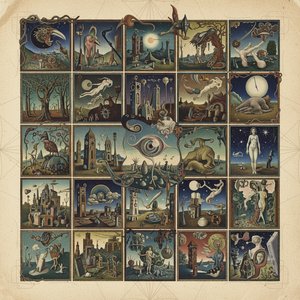
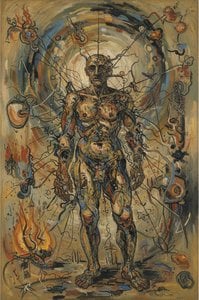
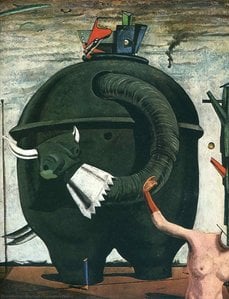
“Untitled (2886),” a striking black and white photograph capturing Max Ernst’s enigmatic painting, offers a glimpse into the heart of Surrealist exploration. Created sometime between 1935 and 1940 during Ernst's prolific period in Paris—a city teeming with artistic ferment and intellectual debate—the artwork embodies the movement’s core tenets: chance, irrationality, and the liberation of the subconscious mind. It’s a piece that demands contemplation, inviting viewers to delve beneath its surface and confront unsettling yet strangely beautiful imagery.
The Surrealist Vision Embodied
Ernst's artistic approach was fundamentally antithetical to academic conventions. Rejecting meticulous realism, he embraced techniques designed to bypass conscious thought—methods like frottage and grattage—that deliberately introduce textural irregularities into the creative process. These methods weren’t merely stylistic choices; they were deliberate attempts to tap into a deeper reservoir of imagery residing within the artist's psyche. As Ernst himself famously stated, “I want to paint what I dream.” This sentiment perfectly encapsulates the spirit of Surrealism and informs every element of "Untitled (2886)."
Compositional Layers: Figures Amidst Symbolic Landscapes
The painting’s composition is deliberately unsettling. Three figures dominate the scene—one positioned on the left, another centrally located, and a third appearing on the right—each bearing distinctive characteristics that contribute to the artwork's overall impact. The figure on the left wears a tie and turns his head backwards, an unusual posture that disrupts conventional representation and hints at disorientation. Similarly, the central figure’s tie is unremarkable compared to its companion, creating a subtle tension within the group dynamic. However, it’s the bird-like creature on the right that truly elevates the piece's symbolism. Birds frequently appear in Ernst’s oeuvre as emblems of freedom, aspiration, and transformation—themes central to Surrealist thought.
Texture and Technique: The Alchemy of Frottage
The photograph itself highlights the remarkable texture achieved through Ernst’s signature technique – frottage. This process involves rubbing a pencil or stylus over textured surfaces (such as wood grain or fabric) transferring their impressions onto paper or canvas. In “Untitled (2886),” this technique is skillfully employed to generate an ethereal landscape backdrop, punctuated by the subtle marks of underlying objects—a deliberate act of undermining rational control and prioritizing instinctual perception. The resulting surface possesses a captivating depth and luminosity that enhances the painting’s dreamlike atmosphere.
Emotional Resonance: Confronting the Unconscious
Ultimately, “Untitled (2886)” transcends mere visual representation; it seeks to evoke an emotional response in the viewer. Ernst's masterful manipulation of form and texture compels us to confront unsettling images—a reflection of the anxieties and desires lurking beneath the veneer of everyday life. The painting’s stark monochrome palette amplifies its psychological intensity, fostering a sense of mystery and prompting introspection. It stands as a testament to Surrealism’s enduring power to unsettle, inspire, and illuminate the complexities of human consciousness.
- Artist: Max Ernst
- Year Created: Circa 1935-1940
- Medium: Painting (Black & White Photography)
- Style: Surrealism