作品詳細説明
A Fragment of Surrealist Vision: Examining Max Ernst’s Untitled (2678)
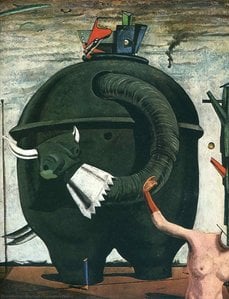
The artwork presented here—a monochrome depiction of what appears to be a frottage drawing by Max Ernst—offers a glimpse into the mind of one of Dada and Surrealism's most influential figures. More than just an image, it embodies Ernst’s relentless pursuit of subconscious exploration and his masterful manipulation of texture and form to convey profound symbolic resonance. This piece exemplifies Ernst’s signature technique – frottage – transforming a simple act of rubbing pencil over textured paper into a conduit for dreamlike imagery and unsettling beauty.
The Technique of Texture: Frottage as Surrealist Tool
Max Ernst's fascination with the subconscious drove him to develop innovative artistic methods, and frottage stands as testament to this intellectual fervor. Unlike traditional painting or drawing that strives for precise representation, frottage deliberately rejects realism in favor of capturing the essence of feeling and intuition. The process itself—applying pressure with a pencil over a surface bearing an embossed pattern—creates a grainy, almost blurred effect reminiscent of wood grain or foliage. This technique wasn’t merely stylistic; it was conceptual – Ernst believed that by transferring textures from objects onto paper, he could unlock hidden layers of the imagination and bypass conscious thought. As Urs Fischer eloquently describes in his sculptural explorations, “It's about letting go of control.”
A Landscape Within Texture: Composition and Symbolism
The composition of Untitled (2678) is strikingly minimalist. A vertical element dominates the left side of the frame, subtly obscuring a broader vista, while another similar structure occupies the right edge. The central mass of vegetation—rendered in shades of gray—commands immediate attention, anchoring the viewer’s gaze and suggesting an organic growth process against a structural backdrop. This juxtaposition speaks directly to Surrealist concerns about confronting the tension between nature and civilization. Ernst frequently utilized landscapes as metaphors for psychological states, portraying them as both beautiful and fraught with latent anxieties. The upward thrust of the vegetation symbolizes aspiration and resilience—a defiant assertion of life amidst perceived limitations.
Historical Context: Dada and Surrealism’s Rebellion Against Convention
Understanding Untitled (2678) requires acknowledging its place within the broader context of Dada and Surrealist movements. Born in Brühl, Germany, Ernst emerged from a milieu characterized by disillusionment with rationality and artistic dogma following World War I. Dada artists rejected logic and embraced absurdity as tools for critique—challenging societal norms and questioning established values. Surrealism, spearheaded by André Breton, sought to liberate the unconscious mind through dreamlike imagery and automatic writing. Ernst’s work aligns perfectly with these principles, reflecting a desire to bypass conscious control and tap into primal instincts. Like Yves Tanguy's otherworldly landscapes, Ernst’s Untitled (2678) invites contemplation on the hidden realms of human experience.
Emotional Resonance: An Image That Speaks Without Words
Ultimately, Untitled (2678) transcends mere visual representation; it evokes a palpable emotional response. The monochrome palette contributes to its austere beauty, emphasizing tonal variations and highlighting subtle textures. The image’s lack of perspective reinforces the feeling of immersion—drawing the viewer into a realm where form and texture dominate over spatial illusion. As with many Surrealist artworks, this piece encourages introspection, prompting viewers to confront their own subconscious desires and fears. It's a reminder that art can communicate powerfully without resorting to explicit narrative, offering instead a glimpse into the depths of human psyche—a timeless exploration of growth, resilience, and the transformative potential of embracing the unexpected.



 プレビュー
プレビュー
 手描きの絵画を購入
 シェアする
シェアする シェアする
シェアする
 詳細を見る
詳細を見る

 ダウンロード
 似ている作品
 X線調査
X線調査 スライドショー
 詳細を見る
詳細を見る






































 ガラスオプションは、110cm未満のサイズでのみご利用いただけます。