

当社のアーティストが、お客様のご希望のサイズと額縁に合わせて、キャンバスに手描きで制作する油彩画です。 ( Switch to Print Switch to Digital Image)





























作品のオリジナル比率に合わせた、当店の規定サイズからお選びください。

特定のフレームやスペースに合わせて、ご希望のサイズをご入力いただけます。選択されたサイズが元の画像の比率と異なる場合、アートワークをトリミングするか、手描きで要素を追加して絵画を拡張いたします。デジタルモックアップ を制作し、制作開始前にご確認(承認)をいただきます。
画面上のプレビューは、実際のトリミングや拡張を正確に反映しているものではありません。最終的な構図は、モックアップによってのみ正確にご確認いただけます。
カスタムサイズもご利用いただけますが、元の比率を維持するためには、あらかじめ用意されたリストからサイズを選択することをお勧めいたします。

La chanson du décervelage 3
複製画のサイズ
Max Ernst’s “La chanson du décervelage 3” isn't merely an image; it’s a portal into the subconscious, a meticulously crafted exploration of anxiety and metamorphosis rendered in stark monochrome. Created around 1928-1930 during his formative years within the Surrealist movement, this etching embodies Ernst’s unwavering commitment to confronting anxieties about societal control and embracing the liberating potential of dreamlike imagery.
The artwork immediately captivates with its dominant visual element: a monumental drape—a fabric structure—that dominates the canvas. Ernst employs painstaking linework to achieve an astonishing level of textural detail, transforming the surface into a landscape of ridges and valleys that convey both rigidity and fluidity simultaneously. This deliberate contrast speaks volumes about the piece’s central preoccupation – the tension between constraint and freedom.
Beyond its formal qualities, “La chanson du décervelage 3” operates on multiple symbolic levels. The drape itself is frequently interpreted as representing concealment, repression, and the silencing of dissenting voices—themes prevalent in Ernst's broader artistic concerns. However, it also possesses an inherent dynamism, mirroring the process of transformation that characterizes Surrealist thought. Scattered figures positioned to the right contribute to this narrative complexity, hinting at observation and perhaps even participation in a ritualistic or symbolic act.
Ernst’s technique—etching on paper—is crucial to understanding the artwork's impact. The precision with which he renders each line ensures that every contour contributes to the overall mood of quiet contemplation punctuated by unsettling unease. Unlike Impressionism’s focus on capturing fleeting moments of light, Surrealism seeks to delve into deeper psychological realms, and Ernst achieves this goal through meticulous control over his medium.
Considered alongside works by Georges de la Tour—particularly “The Fortune Teller”—Ernst shares a fascination with dramatic chiaroscuro and tenebrism, techniques that heighten emotional intensity. Similarly, Philippe Durand de la Villejégu du Fresnay’s photographic approach reflects Ernst's desire to document the world with unflinching honesty while simultaneously injecting it with artistic interpretation.
Furthermore, exploring Musée Ingres Bourdelle in Montauban offers invaluable insight into the broader context of French art history during Ernst’s era. The museum’s collection showcases masterpieces that grapple with similar themes of spirituality and psychological exploration—a testament to the enduring legacy of Surrealist ideas.
Finally, a visit to La Cour suprême in London provides an opportunity to contemplate legal justice alongside artistic contemplation – mirroring the broader humanist values championed by Ernst. And don’t miss Musée national Mikalojaus Konstantino Čiurlionio d'art in Kaunas, Lithuania, where you can immerse yourself in the pioneering abstract art of M.K. Čiurlionis—a kindred spirit who similarly sought to transcend representational conventions.


1891 - 1976 , ドイツ

Embark on a journey through the subconscious with our expert guide to Surrealism. Discover the profound symbolism of masters like Dalí and Ernst, exploring how dreamlike imagery reshaped art history and continues to inspire collectors and enthusiasts worldwide.

Embark on a sophisticated journey through the surrealist movement. Discover how masters like Dalí and Ernst blurred the lines between dreams and reality through innovative techniques, exploring the profound impact of the subconscious on fine art history with expert authority.
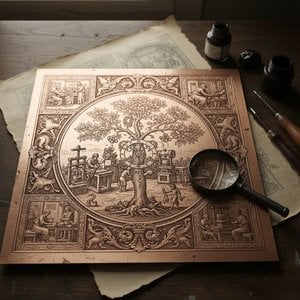
Explore the intricate world of etching and intaglio printmaking. Discover how masters use acid and metal to create profound textures and lines, from Romanticism to modern era, through an expert lens of art history and technical mastery.

 プレビュー
プレビュー
 シェアする
シェアする シェアする
シェアする
 詳細を見る
詳細を見る

 ダウンロード
 似ている作品
 X線調査
X線調査 スライドショー
 Stats
Stats
 詳細を見る
詳細を見る









 ガラスオプションは、110cm未満のサイズでのみご利用いただけます。


