作品詳細説明
A Visionary Landscape: Exploring Max Ernst’s “Flying Geese”
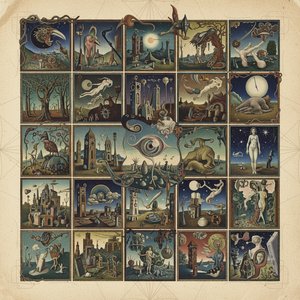
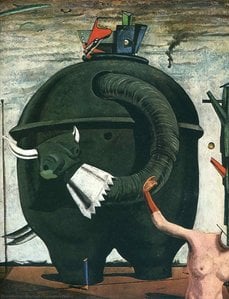
This captivating work by Max Ernst presents a compelling example of his foray into surrealist landscape painting. While titled "Flying Geese," the artwork transcends a literal depiction, offering instead an evocative and dreamlike vision that invites contemplation on themes of isolation, transformation, and the subconscious. The composition is dominated by warm hues – fiery oranges melding with muted greens and browns – creating a sense of both allure and unease.
Stylistic Influences & Surrealist Roots
Ernst was a pivotal figure in both Dadaism and Surrealism, movements that rejected rational thought in favor of the irrational, the dreamlike, and the subconscious. “Flying Geese” embodies these principles through its abstract forms and ambiguous subject matter. The painting leans heavily into Abstract Expressionism, prioritizing emotional impact over realistic representation. The fragmented composition, with scattered geometric shapes – rectangles and triangles – disrupts traditional perspective, contributing to a feeling of disorientation and the uncanny. It shares stylistic similarities with Ernst’s work *Day and Night*, showcasing his consistent exploration of symbolic landscapes.
Technique & Materiality
The artwork appears to be executed in oil paint, applied with an impasto technique – meaning the paint is laid on thickly, creating textural variation across the canvas. This tactile quality adds depth and physicality to the otherwise ethereal scene. The diffused lighting, lacking strong highlights or shadows, further flattens the image, enhancing its dreamlike quality. The bold, expressive lines contribute a dynamic energy, suggesting movement within the stillness of the landscape.
Decoding the Symbolism
While open to interpretation, several symbolic elements stand out. The central bird-like figure – though stylized and abstract – immediately draws the eye. Birds often represent freedom, transcendence, or messengers between worlds in art historical symbolism. Here, however, its ambiguous form and placement within a desolate landscape might suggest a sense of longing or even foreboding. The undulating white forms representing water could symbolize the fluidity of the subconscious or the passage of time. The geometric shapes scattered throughout may represent fractured realities or attempts to impose order on chaos.
Historical Context & Ernst’s Artistic Journey
Born in Germany in 1891, Max Ernst experienced firsthand the tumultuous events of the early 20th century, including both World Wars. This historical context profoundly influenced his art, leading him to explore themes of alienation, anxiety, and the fragility of existence. His artistic journey was marked by experimentation with various techniques, including frottage (rubbing textures onto paper) and collage, all aimed at unlocking the creative potential of the unconscious mind. Ernst’s work continues to be celebrated for its innovative spirit and psychological depth, as evidenced by his prominent place in collections like The Menil Collection in Houston.
Emotional Resonance & Interior Design Considerations
“Flying Geese” evokes a complex range of emotions – isolation, mystery, and perhaps a subtle sense of unease. Its warm color palette and abstract forms make it a striking focal point for any interior space. The painting’s surreal quality would complement modern or contemporary décor schemes, adding a touch of intellectual sophistication and artistic intrigue. It's a piece that invites viewers to lose themselves in its enigmatic world, sparking conversation and contemplation.