Oil On BoardWallArtSurrealist Style
 1937Modern
 24.0 x 33.0 cm
迅速な制作と多彩な仕上げオプションを備えた、ミュージアムクオリティのジークレーまたはキャンバスプリント。 ( 手描きの絵画を購入 デジタル画像販売へ切り替え)





























作品のオリジナル比率に合わせた、当店の規定サイズからお選びください。

特定のフレームやスペースに合わせて、ご自身でサイズを指定することも可能です。選択されたサイズが元の画像の比率と一致しない場合、作品をトリミングするか、鏡面反射または単色での塗りつぶしによって画像を拡張いたします。制作を開始する前に、ご確認用のデジタルモックアップをお送りいたします。
画面上のプレビューには、実際のトリミングや拡張は反映されませんのでご注意ください。最終的な構図を正確に確認できるのは、モックアップのみとなります。
カスタムサイズも承っておりますが、元の比率を維持するためには、あらかじめ用意されたリストからサイズを選択することをお勧めいたします。

Barbarians Marching to the West
複製画のサイズ
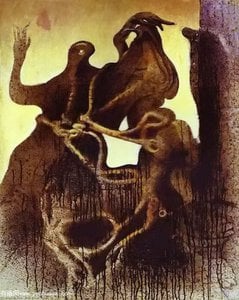
In the hauntingly beautiful landscape of 1937, Max Ernst birthed a visual fever dream titled “Barbarians Marching to the West.” This masterpiece serves as more than just a painting; it is a visceral distillation of the global anxieties that gripped the world on the precipice of World War II. As an exemplar of the Surrealist movement, the work transcends mere representation to explore the profound instability of the human condition. The viewer is immediately thrust into a desolate, otherworldly terrain where the boundaries between dream and reality dissolve, leaving behind a sense of cosmic dread and primal uncertainty.
The composition is anchored by two colossal, predatory birds that dominate the frame, locked in an unsettling dance of aggression and instinct. These avian titans act as metaphors for the escalating tensions of their era—forces of destruction that seem unstoppable and indifferent to the fate of man. Amidst this titanic struggle, a solitary human figure stands near the periphery, a silent witness to the unfolding catastrophe. This juxtaposition between the monumental, mythic creatures and the fragile, observing individual creates a profound emotional tension, inviting collectors and observers alike to contemplate our own vulnerability within the grand, often violent, cycles of history.
To behold this work is to witness Ernst’s revolutionary technical prowess. Eschewing the smooth, polished finishes of academic tradition, Ernst utilized grattage—a technique he pioneered to tap into the subconscious. By layering oil paint onto a cardboard substrate and then scraping or pressing textured objects like pumice stone against the surface, he achieved a geological complexity that feels alive. The resulting textures mimic the ruggedness of ancient earth and weathered bone, providing a tactile depth that makes the landscape feel as though it were unearthed rather than painted.
This deliberate use of texture serves a deeper conceptual purpose. For the discerning enthusiast, the uneven, scarred surface of the painting reflects the fractured psyche of an era defined by trauma. The technique allows light to catch on the ridges and valleys of the paint, creating a shifting visual experience that mirrors the unpredictable nature of dreams. It is this very marriage of physical grit and psychological depth that makes a high-quality reproduction of this piece such a compelling addition to any sophisticated interior, offering a conversation piece that rewards prolonged, intimate study.
For the art lover or interior designer, “Barbarians Marching to the West” offers an unparalleled opportunity to introduce a sense of intellectual depth and historical gravity into a space. The painting does not merely decorate a wall; it commands the atmosphere, injecting a layer of mystery and philosophical inquiry into its surroundings. Its palette of muted, earthy tones and its stark, surrealist imagery harmonize beautifully with modern minimalist or avant-garde decor, providing a focal point that is both intellectually stimulating and visually arresting.
Owning a reproduction of this Ernst masterpiece means preserving a fragment of the 20th century’s most radical artistic revolution. It is an invitation to inhabit the realm of the irrational, to find beauty in the grotesque, and to appreciate the enduring power of the human imagination to confront the darkest shadows of existence. Whether placed in a private gallery or a curated living space, this work remains a timeless testament to the enduring resonance of Surrealism.


1891 - 1976 , ドイツ

Elevate your digital artistry with our expert guide to mastering collage. Learn professional techniques for layering textures, blending imagery, and creating profound visual narratives through advanced digital composition and modern creative workflows.

Embark on a journey through the subconscious with our expert guide to Surrealism. Discover the profound symbolism of masters like Dalí and Ernst, exploring how dreamlike imagery reshaped art history and continues to inspire collectors and enthusiasts worldwide.


 プレビュー
プレビュー
 シェアする
シェアする シェアする
シェアする
 詳細を見る
詳細を見る ガイド
ガイド

 ダウンロード
 似ている作品
 X線調査
X線調査 スライドショー
 統計情報
統計情報 詳細を見る
詳細を見る









 ガラスオプションは、110cm未満のサイズでのみご利用いただけます。