
 Acrylic On CanvasWallArtRenaissance
 1523
1523 434.0 x 320.0 cm
 国立博物館群
迅速な制作と多彩な仕上げオプションを備えた、ミュージアムクオリティのジークレーまたはキャンバスプリント。 ( 手描きの絵画を購入 デジタル画像販売へ切り替え)





























作品のオリジナル比率に合わせた、当店の規定サイズからお選びください。

特定のフレームやスペースに合わせて、ご自身でサイズを指定することも可能です。選択されたサイズが元の画像の比率と一致しない場合、作品をトリミングするか、鏡面反射または単色での塗りつぶしによって画像を拡張いたします。制作を開始する前に、ご確認用のデジタルモックアップをお送りいたします。
画面上のプレビューには、実際のトリミングや拡張は反映されませんのでご注意ください。最終的な構図を正確に確認できるのは、モックアップのみとなります。
カスタムサイズも承っておりますが、元の比率を維持するためには、あらかじめ用意されたリストからサイズを選択することをお勧めいたします。

Man Looking Up
複製画のサイズ
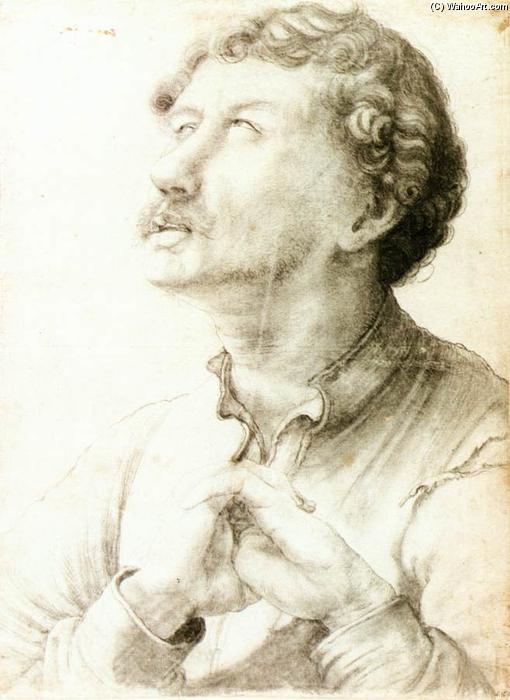
Matthias Grünewald’s “Man Looking Up,” completed in 1524, stands as a testament to the enduring power of observation and contemplation within the Northern Renaissance tradition. This remarkable pencil drawing captures a moment of profound introspection—a young man’s head and upper torso presented in a three-quarter view—executed with meticulous detail and imbued with an understated elegance that continues to resonate centuries later.
Historical Context & Artistic Influences
Painted during Grünewald's prolific period, “Man Looking Up” reflects the broader artistic landscape of its time. While Italy dominated the visual arts scene with burgeoning humanist ideals and stylistic innovations spearheaded by Leonardo da Vinci and Michelangelo, Grünewald remained firmly rooted in Germanic artistic sensibilities. He absorbed influences from artists like Albrecht Dürer and Martin Schongauer, whose mastery of realism and anatomical precision served as a guiding force for his own work. Importantly, Grünewald’s focus wasn't on philosophical discourse; rather, he channeled his talent into religious iconography—a tradition deeply ingrained in the cultural fabric of Central Europe.
Technique & Material Considerations
The artwork’s execution is entirely reliant on graphite pencil drawing. Grünewald skillfully employed varying pressures to achieve tonal gradations, creating a rich tapestry of light and shadow that breathes life into the figure. The dominant technique is hatching and cross-hatching—a painstaking process where intersecting lines build up texture and depth, particularly noticeable in the hair and drapery. These meticulous marks convey not only form but also an emotional resonance – conveying a sense of solemnity and quiet contemplation.
Composition & Visual Elements
The composition prioritizes verticality, emphasizing the man’s posture and hairstyle. The figure occupies most of the frame, creating a powerful visual impact. Careful attention to anatomical accuracy is evident in the rendering of facial features—the eyes gaze upwards with an expression of serene wonder. Shapes are predominantly organic, mirroring the contours of the face, hair, and clothing. Depth is achieved primarily through tonal variation and subtle linear recession – techniques borrowed from Renaissance masters.
Symbolism & Emotional Impact
"Man Looking Up" transcends mere portraiture; it embodies a deeper symbolic significance. The upward gaze represents aspiration—a yearning for something beyond the immediate earthly realm—and simultaneously conveys introspection, inviting viewers to contemplate their own inner thoughts and feelings. Grünewald’s masterful use of graphite captures not just likeness but also an emotional state – conveying dignity, serenity, and perhaps even a hint of spiritual reverence. It's a piece that speaks volumes without uttering a word, cementing its place as a cornerstone of Northern Renaissance art.

ドイツ・ヴュルツブルクにて1470年から1475年頃、マティス・ゴットハルト・ナイトハルトの名で生まれたマティアス・グリューネヴァルドは、ドイツ・ルネサンスにおける極めて重要な人物です。イタリア・ルネサンスの理想が浸透しつつあった時代にありながら、グリューネヴァルトの魂は中欧の後期中世的な芸術伝統に深く根ざしていました。彼の幼少期に関する詳細な記録は乏しいものの、地元の工房において画家としての研鑽を積んだことは間違いありません。
グリューネヴァルトの芸術的発展は、写実主義、感情の強烈さ、そして細部への緻密な観察眼という、当時の北欧ヨーロッパに主流であった伝統によって形作られました。アルブレヒト・デューラーやマルティン・ショングアウアーといった巨匠たちの影響もその作品には見て取れますが、彼は劇的な表現と鮮やかな色彩を特徴とする独自の道を切り拓きました。イタリアで隆盛を極めた人文主義のサークルに直接関わることはありませんでしたが、彼の芸術は主に宗教的な目的を果たし、当時の人々が抱いていた精神的な不安や祈りを映し出していたのです。
グリューネヴァルトの真骨頂は、その圧倒的な傑作群に集約されています。
彼の芸術様式を決定づけているのは、以下の要素です。
グリューネヴァルトの作品は、ルネサンス期におけるドイツの伝統的な中世芸術が持つ、不朽の力を証明するものとして存在しています。彼は後期ゴシック様式と、新たに台頭してきたルネサンスとの架け橋となり、同時代の人々の心に響く独自の視覚言語を創造しました。その影響は、宗教的な熱狂や感情の強烈さを追求し続けた後のドイツ人芸術家たちの中にも見出すことができます。1528年に没した後、数世紀にわたって人々の記憶から薄れかけた時期もありましたが、19世紀に再評価され、今日ではドイツ・ルネサンスを代表する最も重要な画家の一人として認められています。その芸術は、剥き出しの感情、技術的な輝き、そして深遠な精神的奥行きをもって、今なお観る者を魅了し続けています。
マティアス・グリューネヴァルトの生涯と作品について詳しくはこちら: WahooArt

1480 - 1528 , ドイツ

Explore the profound artistry of graphite drawing. Discover professional techniques for mastering depth, texture, and detail through a lens of art history, from classical sketches to modern masterpieces. Elevate your understanding of the pencil medium with our expert guide.

Discover the sophisticated mastery of graphite drawing. Explore expert techniques for achieving profound depth, intricate texture, and hyper-realistic detail through the alchemy of carbon, curated for the discerning art enthusiast and professional collector.

Elevate your artistic practice with this expert guide to mastering the line. Discover advanced techniques in graphite, charcoal, and contour drawing designed for art students seeking technical precision and expressive depth in their fine art studies.
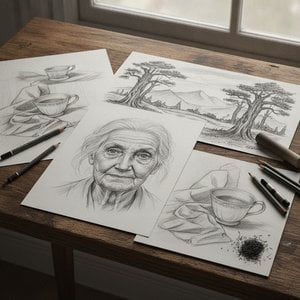
Explore the profound elegance of pencil and charcoal sketching. Discover how masters use line, shadow, and chiaroscuro to capture light and texture, bridging the gap between preparatory studies and timeless fine art masterpieces.

 プレビュー
プレビュー
 シェアする
シェアする シェアする
シェアする
 詳細を見る
詳細を見る

 ダウンロード
 似ている作品
 X線調査
X線調査 スライドショー
 統計情報
統計情報 詳細を見る
詳細を見る









 ガラスオプションは、110cm未満のサイズでのみご利用いただけます。


