
 PaintingRococo
 83.0 x 119.0 cm
 レギオン・オブ・オナー美術館
迅速な制作と多彩な仕上げオプションを備えた、ミュージアムクオリティのジークレーまたはキャンバスプリント。 ( 手描きの絵画を購入 デジタル画像販売へ切り替え)





























作品のオリジナル比率に合わせた、当店の規定サイズからお選びください。

特定のフレームやスペースに合わせて、ご自身でサイズを指定することも可能です。選択されたサイズが元の画像の比率と一致しない場合、作品をトリミングするか、鏡面反射または単色での塗りつぶしによって画像を拡張いたします。制作を開始する前に、ご確認用のデジタルモックアップをお送りいたします。
画面上のプレビューには、実際のトリミングや拡張は反映されませんのでご注意ください。最終的な構図を正確に確認できるのは、モックアップのみとなります。
カスタムサイズも承っておりますが、元の比率を維持するためには、あらかじめ用意されたリストからサイズを選択することをお勧めいたします。

Commode
複製画のサイズ
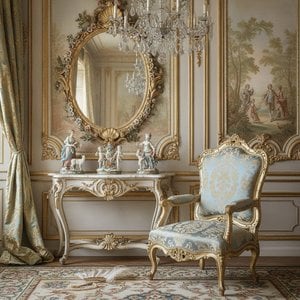
To gaze upon this painting of a commode is to step directly into the gilded salons of 18th-century European aristocracy. It is more than a mere depiction of furniture; it is a carefully orchestrated tableau vivant, an artifact celebrating the apex of decorative arts and material opulence. The subject itself—the commode—is elevated from a functional piece of furnishing to a veritable sculpture, adorned with painstaking detail that speaks volumes of its owner's refined taste and considerable means. Notice how the artist has treated this object; every curve, every inlaid panel, seems imbued with an almost architectural significance.
What immediately captivates the eye are the exquisite gold accents that catch the light across the surface. These highlights suggest techniques such as elaborate gilding or perhaps marquetry incorporating precious metals, hallmarks of the finest cabinetmaking traditions. The composition is balanced with an inherent grace; the central commode anchors the piece, while the two flanking vases introduce vertical rhythm and a touch of naturalistic beauty. Furthermore, the inclusion of small drawers, stacked neatly one below the other, adds a layer of mechanical intrigue—a suggestion of hidden compartments and ingenious craftsmanship that was so prized during this era.
The hand of Martin Carlin, whose spirit seems to inform this piece, guides us through an age obsessed with the perfect marriage of art and utility. Carlin himself was a master of porcelain and mechanical detail, a figure whose life bridged the gap between pure artistry and functional luxury. This painting channels that very ethos. It speaks to the period when furniture makers were not just carpenters, but miniature engineers and decorative poets. The overall impression is one of sophisticated restraint mixed with undeniable grandeur—a perfect reflection of Rococo elegance tempered by Enlightenment precision.
In art history, objects like this commode often symbolize status, domestic harmony, and the cultivated life. Owning such a piece was a public declaration of one's position within society. For the modern collector or designer considering a reproduction, the emotional impact lies in its ability to transform a space from merely decorated to truly curated. It whispers tales of candlelight, whispered conversations, and the quiet rituals of high society. To reproduce this work is not just to hang art; it is to invite an atmosphere of timeless, sophisticated romance into your own dwelling.

Born in Freiburg im Breisgau, Germany, around 1730, Martin Carlin’s life was a fascinating confluence of craftsmanship, luxury, and the burgeoning aesthetic sensibilities of 18th-century Europe. While his origins lie in the Black Forest region, it was Paris that would become his stage and where he ultimately cemented his reputation as one of the most innovative “ébénistes” – cabinetmakers – of his era. Carlin’s story is not simply one of a skilled artisan; it's a reflection of the opulent tastes of the French aristocracy and the intricate mechanisms that defined the era’s fascination with both beauty and ingenuity.
Carlin’s early career began as a day-worker for Jean-François Oeben, a renowned cabinetmaker whose workshop was a hotbed of experimentation and innovation. This apprenticeship proved invaluable, exposing him to the latest techniques in veneering, carving, and particularly, the integration of precious materials like Sèvres porcelain. His marriage to Oeben’s sister further solidified his connection to this influential circle. However, Carlin's ambition quickly outstripped mere assistance; he sought independence and a chance to establish his own distinct style. The contract details reveal that he was initially “still a day-worker,” highlighting the precariousness of early careers in such competitive fields.
Carlin’s breakthrough came through his association with the “marchands-merciers”— Parisian merchants who acted as intermediaries between artisans and wealthy clients. These dealers, including Simon-Philippe Poirier and Dominique Daguerre, were crucial to Carlin's success. They provided access to the Sèvres porcelain workshops, a vital component of his distinctive style. Without these connections, it would have been exceedingly difficult for Carlin to acquire the elaborate porcelain plaques that adorned his furniture – pieces that elevated his work beyond mere cabinetry and into the realm of true luxury. This relationship also exposed him to the tastes of Marie Antoinette and other members of the French elite, solidifying his position within the highest echelons of Parisian society.
Carlin’s genius lay not just in his technical skill but also in his ability to fuse realism with a touch of fantastical invention. His furniture was characterized by incredibly detailed carvings, often depicting scenes from mythology, history, or even everyday life – all rendered with meticulous precision. The integration of Sèvres porcelain, frequently featuring elaborate floral motifs and intricate landscapes, added another layer of visual richness. He wasn’t simply replicating existing designs; he was creating entirely new worlds within the confines of a table, writing desk, or commode. This blend of classical influences and imaginative embellishment reflected the transitional style between Rococo and Neoclassicism, capturing the spirit of an era embracing both grandeur and refinement.
Martin Carlin’s most celebrated works include the “Combined Work, Writing And Reading Table,” a stunning example of his technical mastery and artistic vision. His “Bonheur du jour” tables – literally translated as "Happiness of the Day" – are particularly noteworthy for their intricate mechanical features, including rotating elements and hidden compartments. These pieces demonstrate Carlin’s fascination with mechanics and his ability to seamlessly integrate them into decorative objects. Beyond these iconic examples, he produced a range of exquisite cabinets, chests, and jewelry boxes, each showcasing his exceptional skill and attention to detail. While relatively few of his original works survive today, they remain highly prized by collectors worldwide, serving as testaments to the artistry and innovation of this remarkable ébéniste. Carlin’s influence can be seen in subsequent generations of furniture makers, who continued to explore the possibilities of combining craftsmanship with decorative embellishment.
His work reflects a deep understanding of both artistic trends and mechanical principles, making him a truly unique figure in 18th-century European art history.

1730 - 1785 , Germany

Immerse yourself in the splendor of Rococo art. Discover the era of elegance through masterworks by Watteau and Fragonard. Explore themes of romance, aristocratic leisure, and gilded ornamentation in this definitive guide to 18th-century French opulence.
Discover the exquisite allure of Rococo art. Explore a curated guide to 18th-century French masterpieces, from Watteau to Fragonard, and learn how hand-painted oil reproductions can bring timeless elegance and luxury to your sophisticated interior design collection.

Embark on a visual journey through the world's most radiant masterpieces. Discover how gold leaf, impasto textures, and gilded tones define luxury in fine art, from Byzantine icons to modern abstracts. Explore the eternal allure of gold in curated, museum-quality art collections.

Explore the divine mastery of Byzantine gold leaf and gilding. Discover how ancient artisans used gold ground and mosaics to create celestial light, a timeless legacy of spiritual splendor and technical excellence in sacred art history.


 プレビュー
プレビュー
 シェアする
シェアする シェアする
シェアする
 詳細を見る
詳細を見る ガイド
ガイド

 ダウンロード
 似ている作品
 X線調査
X線調査 スライドショー
 統計情報
統計情報 詳細を見る
詳細を見る









 ガラスオプションは、110cm未満のサイズでのみご利用いただけます。


