

スピーディーな制作と多彩な仕上げオプションが魅力の、ミュージアムクオリティなジークレー・キャンバスプリント。 ( 手描きの複製画を注文する デジタル画像販売へ切り替え)
作品のオリジナル比率に合わせた、当店の規定サイズからお選びください。

特定のフレームやスペースに合わせて、ご自身でサイズを指定することも可能です。選択されたサイズが元の画像の比率と一致しない場合、作品をトリミングするか、鏡面反射または単色での塗りつぶしによって画像を拡張いたします。制作を開始する前に、ご確認用のデジタルモックアップをお送りいたします。
画面上のプレビューには、実際のトリミングや拡張は反映されませんのでご注意ください。最終的な構図を正確に確認できるのは、モックアップのみとなります。
カスタムサイズも承っておりますが、元の比率を維持するためには、あらかじめ用意されたリストからサイズを選択することをお勧めいたします。

Sentieri Do Do
複製画サイズ一覧
Born in the industrial heart of Turin, Italy, in 1938, Marco Gastini developed an artistic sensibility that was deeply rooted in the tactile reality of physical matter. His early years were defined by a formative apprenticeship within his father’s laboratory, a period that served as more than mere vocational training; it was a profound introduction to the transformative potential of raw materials. This foundational exposure instilled in him a lifelong reverence for the chemical and structural properties of his medium, allowing him to view the canvas not as a passive surface, but as a site of alchemical change. As he emerged into the Italian art scene, Gastini sought to break free from the prevailing artistic stagnation of his era, moving away from traditional representation toward a language of minimal gestures and analytical traces that resonated with the burgeoning minimalist movements of the time.
As his career progressed into the mid-1emb1970s, Gastini’s vision underwent a radical evolution, propelling him toward techniques that challenged the very definition of painting. He began to distance himself from conventional practices, famously embracing unconventional materials such as wood shavings, plaster, and burlap. For Gastini, these elements were never merely supports for pigment; they were active participants in a complex dialogue with the painted surface. By integrating these textures, he created a spatial interplay that expanded the conceptual realm of his work, inviting viewers to move beyond mere visual perception and into a deeper, more contemplative mental space. His art became an exploration of layers, where the physical weight of the material met the ethereal lightness of thought.
The brilliance of Gastini’s technique lies in his meticulous, almost scientific approach to the behavior of light and color. Influenced by the rigorous minimalism of Robert Ryman and the conceptual depth of Yves Klein, he dedicated himself to studying how pigments interact with textured surfaces under varying conditions. This dedication allowed him to orchestrate subtle shifts in form that could captivate the viewer’s gaze through the interplay of shadow and brilliance. In his most evocative works, such as Sentieri Do Do, one can witness this mastery firsthand:
Through this careful orchestration, Gastini achieved a rare feat in contemporary art: he imbued heavy, tactile materials with a sense of profound lightness and poetic grace. His work remains a testament to the idea that painting can transcend the two-dimensional plane, becoming a multidimensional experience that captures both the physical essence of the world and the intangible complexities of human emotion.

1938 - 2018 , Italy

抽象表現主義を定義する10の傑作。ポロック、ロスコら巨匠たちの情熱と色彩の世界へ。各作品に込められた物語と技法を紐解き、至高のアート体験を。WahooArt.comで、ミュージアムクオリティの複製画や洗練されたインテリアアイデアを発見してください。
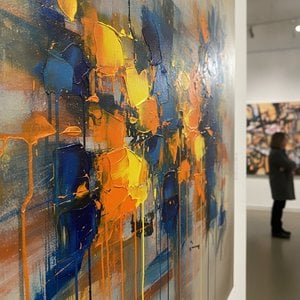
Master the high-impact world of contemporary abstraction. Discover how bold colors, textures, and modern movements like Abstract Expressionism can transform your space with premium, high-energy art curated for the design-conscious professional.

Journey through Wassily Kandinsky's 25 most iconic abstract paintings. Explore his revolutionary use of color, form & spiritual expressionism. Find museum-quality Kandinsky reproductions and elevate your home decor with WahooArt.com. Discover all masterpieces on WahooArt.com!

Explore the captivating world of tactile abstraction! Discover impasto techniques, influential artists like Richter & Hoyland, and expert insights for collecting textured art. Elevate your space with museum-quality pieces.

Explore the rich history of texture in art! Discover how artists from Van Gogh to contemporary masters use materiality & technique to create captivating tactile experiences. Deepen your art appreciation with WahooArt.

 設置イメージを確認
 送る
送る シェア
シェア
 詳細情報
詳細情報 ガイドを表示

 画像をダウンロード
 似ている作品
 X線調査
X線調査 スライドショー
 統計情報
統計情報


 続きを読む
続きを読む






































 ガラスオプションは、110cm未満のサイズでのみご利用いただけます。


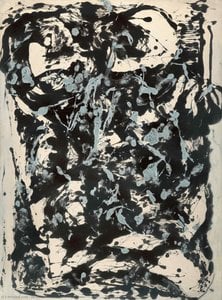


![Abstract Composition [triptych] — Vaclav Vytlacil, Abstract Expressionism](/media/artworks/images-thumb/08/3c/083c0675045645fd42d4e6c6d63f1ced.jpg)


