作品詳細説明
A Snapshot of Domestic Tranquility: Exploring Marc Chagall’s “The Overflowing Table”
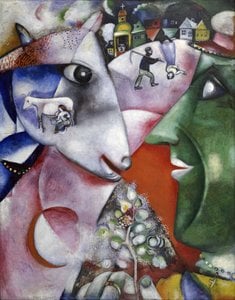
Marc Chagall's "The Overflowing Table," created in 1923, stands as a testament to the artist’s distinctive approach to Naïve Art—a style characterized by its childlike spontaneity and unwavering belief in visual storytelling. More than just a depiction of a dinner setting, this artwork delves into themes of memory, family life, and the enduring influence of folklore on artistic expression. The drawing itself is executed with meticulous detail, capturing a scene bathed in soft light that evokes a palpable sense of warmth and comfort.
Style and Technique: Embracing Surrealist Intuition
Chagall’s stylistic choices firmly situate “The Overflowing Table” within the burgeoning Surrealist movement. Departing from academic realism, he prioritized emotional resonance over precise representation. The artist employs bold color palettes—primarily yellows, blues, and reds—to convey mood and atmosphere rather than mirroring observable reality. Thick brushstrokes contribute to a textured surface that enhances the painting’s tactile quality, inviting viewers into Chagall's dreamlike vision. Notice how figures appear to float effortlessly above the table, defying gravity and blurring the boundaries between imagination and observation – a hallmark of Surrealist aesthetics.
Historical Context: Vitebsk’s Influence and Artistic Rebellion
The artwork’s genesis lies in Vitebsk, Belarus—a city deeply ingrained in Chagall's artistic consciousness. Vitebsk represented a crossroads of cultures, blending Russian Orthodox traditions with Jewish communal life, an environment that profoundly shaped Chagall’s worldview. Created during the turbulent years following World War I and amidst the rise of avant-garde movements, “The Overflowing Table” embodies Chagall’s rejection of conventional artistic conventions. It reflects a broader desire to express inner emotions and experiences in ways unbound by rational constraints—a core tenet of Surrealism's challenge to Western art traditions.
Symbolism: Cats, Tables, and the Language of Dreams
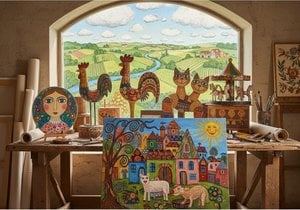
The inclusion of two cats within the composition is laden with symbolic significance. In Jewish folklore, cats are often associated with protection and fertility, representing blessings upon the household. The table itself serves as a central visual element, symbolizing nourishment, connection, and the rituals of daily life—a motif recurrent throughout Chagall’s oeuvre. Furthermore, the arrangement of dishes and utensils contributes to an overarching narrative of abundance and domestic harmony. Consider how the artist utilizes color and form to convey unspoken emotions – the vibrant hues mirroring the richness of memory and experience.
Emotional Impact: A Window into Chagall's Soul
Ultimately, “The Overflowing Table” succeeds in transporting viewers to a realm of imaginative beauty. Its serene atmosphere invites contemplation and evokes feelings of nostalgia for simpler times—a sentiment deeply rooted in Chagall’s personal recollections of Vitebsk and his formative years. The artwork’s enduring appeal lies not merely in its visual splendor but also in its ability to tap into universal themes of family, tradition, and the transformative power of dreams. It remains a poignant reminder that art can transcend mere representation, offering instead a glimpse into the artist's inner world and resonating with audiences across generations.



 プレビュー
プレビュー
 手描きの絵画を購入
 シェアする
シェアする シェアする
シェアする
 詳細を見る
詳細を見る

 ダウンロード
 似ている作品
 X線調査
X線調査 スライドショー


 詳細を見る
詳細を見る






































 ガラスオプションは、110cm未満のサイズでのみご利用いただけます。