作品詳細説明
A Portal into Chagall’s Dreamscape
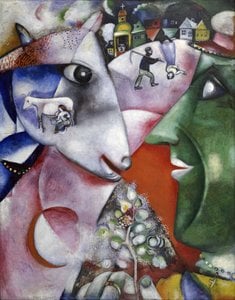
To gaze upon Marc Chagall’s The Blue Bird is to step through a threshold where the boundaries of reality and imagination dissolve into a singular, luminous experience. Created in 1968, this masterful lithograph serves as more than a mere print; it is an intimate window into the artist's soul, capturing the essence of his unique brand of Naive Art and Primitivism. The piece immediately envelops the viewer in a world of fantastical simplicity, where the weight of the modern world is replaced by the lightness of a dream. Through his signature use of vibrant hues and flattened forms, Chagulated invites us to abandon our logical perceptions and embrace a landscape shaped by memory, folklore, and spiritual longing.
A Tapestry of Symbolism and Spirit
At the heart of this composition lies a striking blue bird, a creature that soars above a pristine white egg, embodying the profound themes of freedom, aspiration, and hope. This central motif, deeply rooted in Jewish mysticism and the folk tales of Chagall’s youth, speaks to the eternal cycle of rebirth and renewal. Beneath this celestial flight, two figures with serene, green-tinted faces emerge, adorned with vibrant red berries that pulse with life against a more muted backdrop. These characters, rendered with a primitive charm, suggest a deep human connection to the natural world. The contrast between the intense, saturated blues and the soft, grayscale cityscape in the background creates a tension between the eternal spirit and the transient urban existence, making the artwork a poignant reflection on the human condition.
The Art of the Lithographic Line
Chagall’s technical prowess is exquisitely displayed through the medium of lithography, a process that allows for a rich interplay of texture and tone. The artist employs bold, expressive black outlines to delineate shapes, providing a graphic clarity that anchors the more abstract, swirling elements of the sky. This technique creates a sense of dynamic movement, as if the very air within the print is alive with motion. The lithographic stone allows for subtle hatching and cross-hatching, which lends a grainy, organic texture to the piece, contrasting beautifully with the smooth, intense pigments of the bird’s plumage. For the discerning collector or interior designer, this artwork offers a sophisticated balance of color and structure, making it a captivating centerpiece that brings both historical depth and a sense of whimsical tranquility to any curated space.



 プレビュー
プレビュー
 手描きの絵画を購入
 シェアする
シェアする シェアする
シェアする
 詳細を見る
詳細を見る

 ダウンロード
 似ている作品
 X線調査
X線調査 スライドショー


 詳細を見る
詳細を見る






































 ガラスオプションは、110cm未満のサイズでのみご利用いただけます。