The Poignant Echo of Isolation
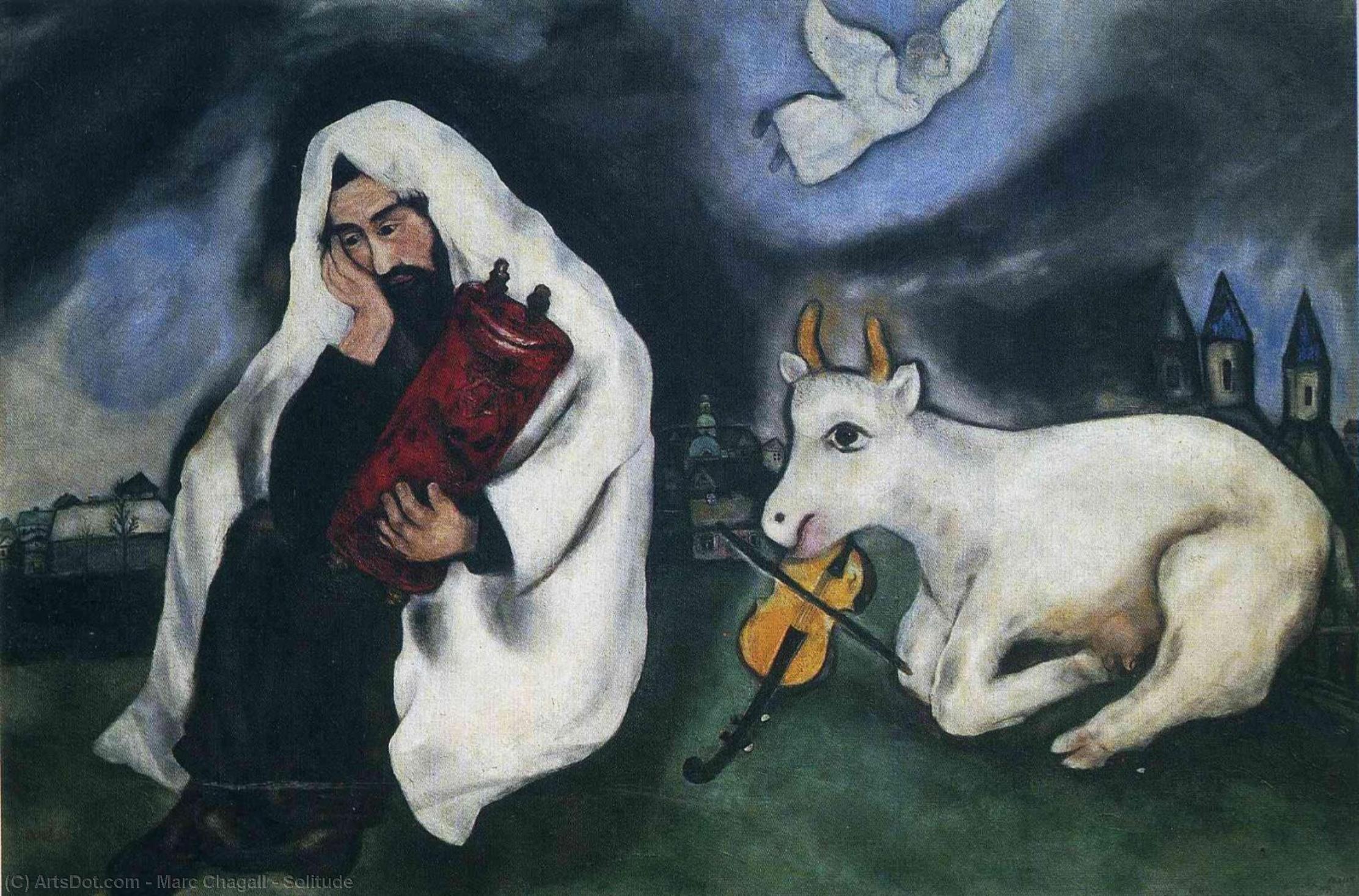
Marc Chagall’s “Solitude,” painted in 1933, isn't merely a depiction of a man seated on the ground; it’s a profound meditation on Jewish identity, cultural displacement, and the weight of history. Housed within the Tel-Aviv Museum of Art, this work transcends its physical dimensions to become a powerful symbol of resilience in the face of rising anti-Semitism across Europe. The painting immediately draws the eye with its muted palette – a deliberate departure from Chagall’s often vibrant Fauvist style – creating an atmosphere of contemplative stillness that mirrors the man's internal state. The composition is strikingly simple, yet deeply resonant: a solitary figure enveloped in a long robe or cloak, his head bowed in what appears to be profound introspection. This posture speaks volumes about the burden he carries, a weight amplified by the surrounding elements.
- The Central Figure: The man’s slumped form and downward gaze immediately evoke feelings of sadness and isolation. His attire – a traditional Jewish prayer shawl – subtly anchors him within his cultural heritage while simultaneously highlighting his separation from the world around him.
- The Goat: A calm, resting goat positioned before the figure is a particularly intriguing element. It’s not simply an animal; it represents a connection to the land and tradition, a grounding force amidst the man's internal turmoil. The juxtaposition of the human figure and the animal creates a visual dialogue about the relationship between humanity and nature, faith and instinct.
- The Violin: A violin resting nearby hints at a past filled with music and joy – a memory now overshadowed by present sorrow. It’s a poignant reminder of what has been lost, adding another layer to the painting's emotional complexity.
Symbolism Woven into the Canvas
“Solitude” is rich in symbolic detail, each element carefully chosen to convey a deeper meaning within the context of 1930s Europe. The Torah scroll, prominently displayed, represents Jewish law and tradition – a source of both strength and potential conflict during this turbulent period. God’s messenger, depicted subtly in the background, suggests divine guidance amidst uncertainty. The historical rabbi or elder figure embodies the continuity of Jewish faith and wisdom, offering a sense of stability against the encroaching darkness. The setting itself—a blurred landscape with buildings receding into the distance—represents a world increasingly distant from the man’s personal experience.
Notably, Chagall satirically uses animalistic cultural objects to highlight the absurdity of those who believed Jews could not produce remarkable art – a pointed commentary on prejudice and misunderstanding.
A Reflection of Troubled Times
Painted in 1933, “Solitude” is inextricably linked to the rising tide of anti-Semitism sweeping across Europe. The political climate was fraught with danger, as the Nazi party’s ideology gained traction, fueled by hatred and a desire for exclusion. Chagall, himself a Jewish artist living in a time of increasing persecution, channeled his anxieties and observations into this powerful work. His experiences witnessing discrimination firsthand – including the assault on a friend in Warsaw – undoubtedly informed the painting's somber tone. The backdrop of dark clouds suggests an impending storm, mirroring the turbulent times facing the Jewish community.
Legacy and Enduring Resonance
Despite facing criticism from conservative authorities who sought to control artistic expression, Chagall’s work continued to resonate with audiences. “Solitude” stands as a testament to the enduring spirit of Jewish culture—a poignant reminder of its resilience in the face of adversity. It's not simply a portrait of loneliness; it’s an exploration of identity, faith, and the human condition. Reproductions of this masterpiece offer a unique opportunity to engage with this emotionally charged artwork and contemplate its timeless themes. The painting invites viewers to consider their own experiences of isolation, reflection, and the importance of preserving cultural heritage in times of uncertainty.



 プレビュー
プレビュー
 プリントを購入
 シェアする
シェアする シェアする
シェアする
 詳細を見る
詳細を見る

 ダウンロード
 似ている作品
 X線調査
X線調査 スライドショー


 詳細を見る
詳細を見る






































 ガラスオプションは、110cm未満のサイズでのみご利用いただけます。