A Portrait of Intimacy: Unveiling “Sobakevitch”
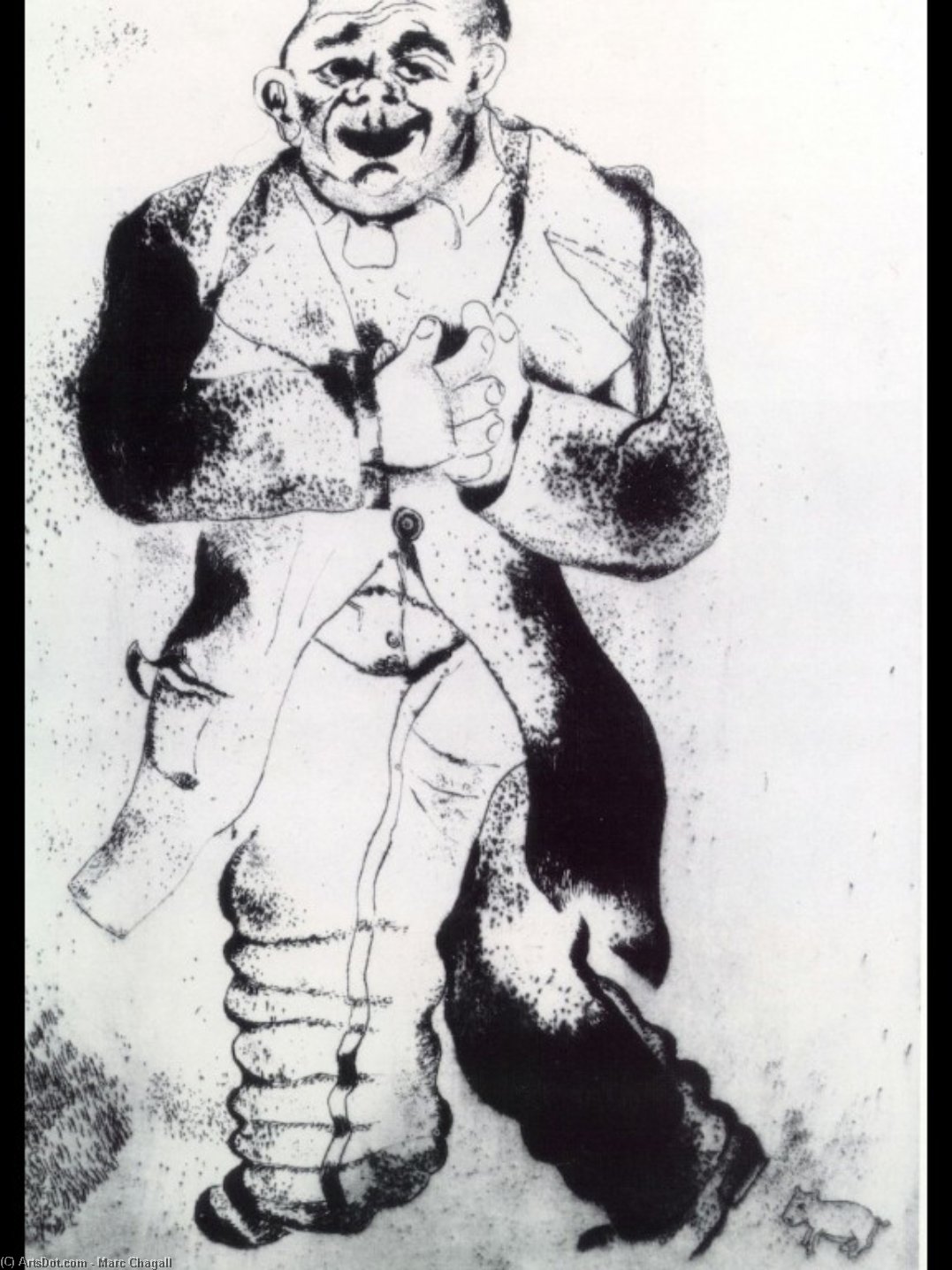
Marc Chagall’s “Sobakevitch,” created in 1923, isn't merely a depiction of two figures; it’s a portal into the artist’s deeply personal world—a realm where folklore intertwines with memory and reality blurs at the edges. This striking black-and-white etching, housed within WahooArt’s meticulously crafted hand-painted reproductions, immediately captivates with its naive style, reminiscent of early Primitivism. The composition, vertically oriented, draws the eye to the central figure, a man radiating an almost mischievous charm, positioned slightly off-center against a subtly suggested background. The deliberate simplification of forms—exaggerated proportions and bold outlines—is characteristic of Chagall’s approach, inviting us to look beyond literal representation and into the emotional core of the scene.
Decoding the Lines: Technique and Texture
Chagall's mastery lies in his skillful manipulation of line. The etching technique itself—drawing on a surface and then using acid to create recessed lines—generates a wonderfully tactile quality, a grainy texture that speaks to the immediacy of the process. The extensive use of hatching and cross-hatching isn’t simply about shading; it's a deliberate strategy for building volume and suggesting depth within a largely flattened space. Notice how these linear elements define the figures’ outlines with remarkable clarity, yet simultaneously create an atmosphere of quiet intimacy. The monochromatic palette—a study in shades of black and white—amplifies this effect, forcing us to focus on the nuances of line and form, creating a powerful visual contrast.
- Bold Outlines: Define the figures with striking clarity.
- Hatching & Cross-hatching: Build tonal variations and suggest texture.
- Monochromatic Palette: Enhances line work and creates a sense of intimacy.
Symbolism and Emotional Resonance: A Glimpse into Chagall’s World
“Sobakevitch” is more than just a portrait; it's a window into Chagall’s personal universe, deeply rooted in his Belarusian heritage. The subject, identified as Madame Sobakevitch, appears with an amused expression, suggesting a playful dynamic between the two figures. While specific symbolism remains elusive—Chagall often layered meaning within his work—the exaggerated features and posture hint at a lighthearted mood, echoing the whimsical nature of folklore and memory that frequently permeated his art. Considering Chagall’s upbringing in Vitebsk, a city brimming with cultural exchange between Russian Orthodox and Jewish communities, it's not surprising that elements of this rich tapestry find their way into this image. The work evokes a sense of nostalgia, perhaps for a simpler time or a cherished relationship—a feeling amplified by the dreamlike quality inherent in Chagall’s style.
Beyond the Image: Context and Legacy
Created in 1923, “Sobakevitch” reflects a pivotal moment in Chagall's career. Following his time in Vitebsk, he established himself as a leading figure in Paris’s avant-garde scene, embracing the influence of Cubism and Fauvism while retaining his distinctive voice. As evidenced by the supplementary research available on WikiArt, this piece exemplifies his signature naive style—a deliberate departure from academic realism that prioritized emotional expression and personal vision. WahooArt's hand-painted reproductions capture not only the visual details but also the spirit of this remarkable artwork, offering a tangible connection to Chagall’s extraordinary legacy. Consider commissioning a reproduction for your home – a beautiful addition that speaks volumes about your appreciation for art history and the enduring power of imagination.



 プレビュー
プレビュー
 プリントを購入
 シェアする
シェアする シェアする
シェアする
 詳細を見る
詳細を見る

 ダウンロード
 似ている作品
 X線調査
X線調査 スライドショー


 詳細を見る
詳細を見る






































 ガラスオプションは、110cm未満のサイズでのみご利用いただけます。