Acrylic On CanvasWallArtSurrealism
 1961Modern
 33.0 x 45.0 cm
このページに掲載されている作品は著作権法によって保護されており、当社の許可なく同一の複製物を制作または販売することは法律で禁じられています。この保護は、以下のような国際条約に基づき執行されます。 ベルヌ条約 および、以下の条項に定められたものを含む各国の法律により、 米国著作権法 第17編。
敬意を払った法的な代替手段として、私たちはオリジナルにインスピレーションを与えられた、カスタムの手描きアートワークを提供しています。私たちの熟練したプロのアーティストは、元の作品が持つスタイル、情緒、そして芸術的なエッセンスを注意深く研究し、独自の創作物でありながら、同じ感性を呼び起こすような、新しくユニークな作品を作り上げます。
この手法は、著作権で保護された作品の複製や複写を伴わないため、著作権法に完全に準拠しています。これは単なる模倣ではなく、創造的な再解釈です。元の作品からインスピレーションを受けつつも、それとは異なる、全く新しい絵画を生み出すものです。
当社のアーティストが、お客様のご希望のサイズと額縁に合わせて、キャンバスに手描きで制作する油彩画です。 ( プリント版に切り替え デジタル画像販売へ切り替え)





























作品のオリジナル比率に合わせた、当店の規定サイズからお選びください。

フレームや壁のスペースに合わせて、ご希望の幅と高さを入力してください。本作品は手描きのため、異なる比率のサイズをご希望の場合、絵画の周囲を少し広げて描くか、あるいは端を少しカットして調整することが可能です。お客様のご要望に合わせます。制作を開始する前に、仕上がりを確認するためのデジタルモックアップをお送りいたします。このページに表示されている画像は完成品の実物ではなく、あくまでモックアップによるイメージです。
Paradise (13)
複製画サイズ一覧
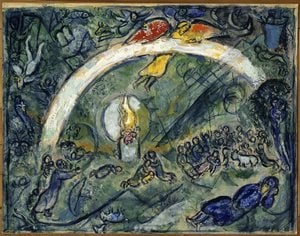
Marc Chagall's "Paradise (13)," painted in 1961, isn’t merely a depiction of an idyllic garden; it’s a vibrant, deeply personal tapestry woven from the threads of memory, faith, and the artist’s unique vision. This surrealistic masterpiece transcends simple representation, inviting us into a world where figures dance with animals, time seems to dissolve, and the familiar becomes imbued with profound symbolism. Born Moishe Shagal in Vitebsk, Belarus, Chagall carried within him the echoes of his Hasidic upbringing – a rich tradition of folklore, storytelling, and an unwavering belief in the power of dreams—and this is powerfully evident in every brushstroke.
The painting immediately captivates with its riotous color palette. Chagall eschews naturalistic hues, instead employing bold, luminous shades of blue, yellow, red, and green to create an atmosphere that’s both joyous and slightly unsettling. These aren't colors meant to simply describe; they are emotional conduits, conveying a sense of ecstatic wonder and spiritual yearning. The composition itself is deliberately dreamlike – figures float, animals mingle with humans, and the landscape bends according to Chagall’s imagination rather than strict perspective. This deliberate distortion reflects his intention: not to depict reality, but to capture the essence of a remembered paradise, filtered through the lens of memory and faith.
At the heart of “Paradise (13)” sits a woman seated in a chair, radiating an aura of serenity and maternal grace. This figure is often interpreted as representing Eve, though Chagall himself resisted definitive interpretations, preferring to let viewers find their own meaning within the work. Beside her stand two men, likely Adam and God, engaged in a gesture of blessing or perhaps even gentle rebuke. The presence of these figures anchors the painting within the biblical narrative of creation and expulsion from Eden, yet they are rendered with Chagall’s characteristic dreamlike quality – their forms elongated, their features softened, suggesting a realm beyond earthly constraints.
Scattered throughout the scene are a host of symbolic elements. A dog, often associated with loyalty and fidelity, sits close to the woman, while a horse—a symbol of strength and nobility—dominates the upper right corner. Birds flit across the canvas, representing freedom and spiritual aspiration. A prominent figure is a musician playing a violin, evoking themes of joy, celebration, and the divine presence in earthly life. Even seemingly simple objects – a table laden with fruit, a scattering of flowers – carry layers of meaning, hinting at abundance, fertility, and the promise of eternal life.
Painted in 1961, "Paradise (13)" represents a pivotal moment in Chagall's artistic journey. Following his emigration to France and the United States during World War II, he returned to a renewed sense of purpose and a deepening engagement with religious themes. This period saw him increasingly explore the rich tapestry of Jewish folklore and biblical narratives, often blending them with personal memories and emotional experiences. “Paradise (13)” is part of a larger series of works inspired by the Book of Genesis, reflecting his lifelong fascination with creation, redemption, and the human condition.
Interestingly, this painting shares thematic resonances with Chagall’s earlier work, particularly "Adam and Eve Expelled from Paradise" (1962). Both pieces depict a similar scene of expulsion, but “Paradise (13)” offers a more hopeful vision—a glimpse of an idealized Edenic realm where figures are bathed in light and surrounded by symbols of abundance. The Musée Marc Chagall in Nice houses a significant collection of his biblical works, providing invaluable context for understanding the evolution of his artistic vision.
WahooArt offers meticulously hand-painted reproductions of Marc Chagall’s "Paradise (13)" that capture the essence of this iconic artwork. Our skilled artisans replicate Chagall's vibrant colors, dreamlike composition, and evocative symbolism with exceptional detail and fidelity. Whether you choose a large-scale canvas for a statement wall or a smaller print to adorn your study, our reproductions provide an authentic and beautiful way to bring this masterpiece into your home or office. More than just a decorative piece, “Paradise (13)” is a portal to Chagall’s world—a world of faith, memory, and boundless imagination.
マルク・シャガール作「Paradise (13)」はWallArtに分類されます。このカテゴリーは、原画の作品形式を表しています。
マルク・シャガール作「Paradise (13)」は著作権により保護されていますです。著作権の保護期間は、1985年に亡くなった作家の没年から起算されます。
マルク・シャガール作「Paradise (13)」 の輝度は Gentle Luminance です。輝度とは、色がどれほど光を反射しているかを表す指標です。


1887 - 1985 , ベラルーシ

Embark on a journey through the subconscious with our expert guide to Surrealism. Discover the profound symbolism of masters like Dalí and Ernst, exploring how dreamlike imagery reshaped art history and continues to inspire collectors and enthusiasts worldwide.

 設置イメージを確認
 送る
送る シェア
シェア
 詳細情報
詳細情報 ガイドを表示

 画像をダウンロード
 似ている作品
 X線調査
X線調査 スライドショー
 統計情報
統計情報 続きを読む
続きを読む









 ガラスオプションは、110cm未満のサイズでのみご利用いただけます。