A Portal into the Subconscious: The Dreamscape of Marc Chagall
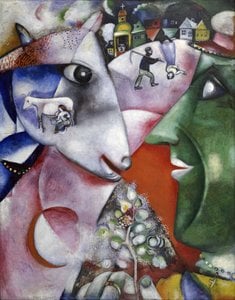
To encounter Marc Chagall’s 1963 masterpiece, "Inspiration," is to step through a threshold between the tangible world and the ethereal realm of memory. This painting does not merely present a scene; it invites the viewer into a landscape sculpted from dreams and illuminated by the incandescent glow of remembered joy. At its heart, the work depicts a serene tableau: a woman seated at a window, cradling a child in a moment of profound domestic tranquility. Through his signature use of elongated forms and stylized anatomy, Chagall transcends mere portraiture, transforming a quiet afternoon into a cosmic event. The composition is masterfully asymmetrical, guiding the eye upward toward the light of the window, emphasizing the spiritual connection between the mother, the child, and the infinite world beyond.
The atmosphere of the piece is further enriched by the presence of other figures—a man standing near the window, others engaged in quiet contemplation—creating a sense of communal peace. Scattered throughout this dreamlike setting are symbolic anchors that ground the surrealism in emotion. A prominent apple rests upon the windowsill, a recurring motif in Chagall’s vast oeuvre that serves as a poignant symbol of innocence, vitality, and the sweetness of life. Even the placement of a clock on the wall or a potted plant becomes part of a larger, rhythmic dance of existence, where time and nature coalesce within the artist's personal mythology.
Vitebsk Surrealism: A Symphony of Color and Technique
Technically, "Inspiration" is a triumph of Vitebsk Surrealism, a style born from the fervent artistic experimentation that followed the Second World War. Chagall eschews the rigid constraints of meticulous realism, opting instead for loose, expressive brushstrokes that capture the emotional essence of a moment rather than its literal form. His palette is nothing short of symphonic; deep, tranquil blues and verdant greens dominate the background to evoke a sense of boundless openness and calm, while sudden punctuations of fiery reds and radiant yellows inject warmth and an unmistakable energy into the composition.
The artist’s mastery lies in his ability to blend opaque and transparent pigments, creating a luminous depth that makes the canvas appear to glow from within. This technique produces an illusionistic effect, where the figures seem to float within a sea of light and color. For the collector or interior designer, this painting offers more than just visual beauty; it provides a focal point of profound emotional resonance. The way the light interacts with the layered colors makes "Inspiration" a dynamic piece that changes character depending on the lighting of a room, making it an exquisite addition to any curated space seeking to evoke warmth, nostalgia, and a sense of wonder.
The Legacy of a Poet of Color
Understanding "Inspiration" requires a glimpse into the soul of Marc Chagall himself. Born in the small Belarusian town of Liozna, Chagall’s identity was forged in the vibrant, multicultural tapestry of Vitebsk. His art remained forever rooted in the folklore of his Hasidic Jewish upbringing, weaving together the whimsical animals, flying figures, and nostalgic landscapes of his youth. This painting is a testament to that lifelong journey—a bridge between the historical reality of a tumultuous 20th century and the eternal, unchanging beauty of the human spirit.
For those seeking to adorn their homes with a piece of art history, this reproduction captures the very essence of Chagall’s genius. It is an invitation to pause, to breathe, and to reconnect with the "inspiration" that resides in our most cherished memories. Whether viewed as a study in color theory or a window into a surrealist dream, the work remains a timeless celebration of togetherness, love, and the enduring power of the imagination.



 プレビュー
プレビュー
 手描きの絵画を購入
 シェアする
シェアする シェアする
シェアする
 詳細を見る
詳細を見る

 ダウンロード
 似ている作品
 X線調査
X線調査 スライドショー


 詳細を見る
詳細を見る






































 ガラスオプションは、110cm未満のサイズでのみご利用いただけます。