作品詳細説明
A Vision of Biblical Narrative: Chagall’s ‘Bathsheba’ (1963)
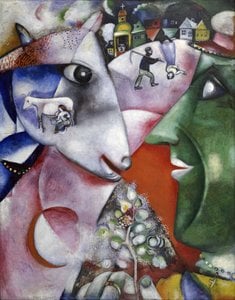
This captivating oil painting by Marc Chagall, created in 1963, offers a deeply personal and emotionally resonant interpretation of the biblical story of Bathsheba. Measuring 180 x 96 cm, the artwork is a prime example of Chagall’s mature style – a vibrant synthesis of Cubism, Symbolism, and his own unique artistic language rooted in Jewish folklore and memory.
Subject & Narrative
The painting depicts Bathsheba seated upon a horse, an angel hovering protectively above her, all set against the backdrop of a fragmented cityscape. This isn’t a literal illustration of David spying on Bathsheba as described in II Samuel; rather, it's a psychological exploration of the story’s themes – desire, power, vulnerability, and divine intervention. Chagall frequently revisited biblical narratives throughout his career, not to offer historical accuracy, but to imbue them with universal human emotions and spiritual significance. The horse itself can be interpreted as a symbol of both earthly passion and noble strength.
Style & Technique: Expressionist Dreamscapes
‘Bathsheba’ is firmly rooted in the Expressionist tradition, though uniquely filtered through Chagall's distinctive lens. Swirling lines, fragmented forms, and a flattened perspective create a dynamic and somewhat chaotic composition that prioritizes emotional impact over realistic representation. The technique is characterized by bold impasto – thick layers of paint applied with visible brushstrokes – lending the surface a rich texture and tactile quality. This energetic application of paint contributes to the painting’s dreamlike atmosphere, suggesting a scene unfolding within the realm of memory or imagination.
Color & Composition: A Symphony in Blues and Browns
The color palette is dominated by cool blues and purples, evoking a sense of melancholy and introspection. These cooler tones are punctuated by warmer browns and ochres used for the horse and figures, grounding the composition and drawing the viewer’s eye to the central subjects. The cityscape, rendered in abstracted forms, adds another layer of complexity, hinting at the societal context surrounding Bathsheba's story. The overall effect is one of ethereal beauty, tinged with a subtle undercurrent of unease.
Historical Context & Chagall’s Oeuvre
Born in Belarus and later naturalized as a French citizen, Marc Chagall (1887-1985) experienced a life shaped by cultural displacement and artistic innovation. His early exposure to the vibrant traditions of his Jewish community profoundly influenced his art, imbuing it with symbolism and a sense of spiritual longing. He explored various modernist movements – Cubism, Symbolism – but ultimately forged his own path, creating a style that is instantly recognizable for its poetic imagery and emotional depth. ‘Bathsheba’ belongs to a series of works where Chagall revisited biblical themes, alongside other paintings like “David and Bathsheba” (1956) and "From the terrace of his palace David sees bathing Bathsheba", demonstrating a lifelong fascination with these narratives.
Symbolism & Emotional Resonance
The angel in ‘Bathsheba’ is not merely a religious symbol; it represents protection, guidance, or perhaps even divine judgment. The juxtaposition of the earthly (the horse and cityscape) with the celestial (the angel) highlights the tension between human desire and spiritual consequence. The painting evokes a sense of vulnerability and longing, inviting viewers to contemplate the complexities of love, power, and faith. It’s a work that speaks not just to the story of Bathsheba, but to the universal human experience of navigating moral dilemmas and seeking meaning in a chaotic world.
For Collectors & Designers
‘Bathsheba’ is a powerful statement piece that would add depth and sophistication to any collection or interior space. Its rich colors, dynamic composition, and evocative symbolism make it a compelling focal point. A high-quality reproduction of this artwork will bring Chagall's unique vision and emotional intensity into your home, offering a constant source of inspiration and contemplation.



 プレビュー
プレビュー
 手描きの絵画を購入
 シェアする
シェアする シェアする
シェアする
 詳細を見る
詳細を見る

 ダウンロード
 似ている作品
 X線調査
X線調査 スライドショー


 詳細を見る
詳細を見る






































 ガラスオプションは、110cm未満のサイズでのみご利用いただけます。