
当社のアーティストが、お客様のご希望のサイズと額縁に合わせて、キャンバスに手描きで制作する油彩画です。 ( プリント版に切り替え デジタル画像販売へ切り替え)
作品のオリジナル比率に合わせた、当店の規定サイズからお選びください。

特定のフレームやスペースに合わせて、ご希望のサイズをご入力いただけます。選択されたサイズが元の画像の比率と異なる場合、アートワークをトリミングするか、手描きで要素を追加して絵画を拡張いたします。デジタルモックアップ を制作し、制作開始前にご確認(承認)をいただきます。
画面上のプレビューは、実際のトリミングや拡張を正確に反映しているものではありません。最終的な構図は、モックアップによってのみ正確にご確認いただけます。
カスタムサイズもご利用いただけますが、元の比率を維持するためには、あらかじめ用意されたリストからサイズを選択することをお勧めいたします。

Cooño
複製画のサイズ

Born in San Juan, Puerto Rico, in 1972, Luis Miguel Luciano’s artistic journey is inextricably linked to his heritage and a profound engagement with the complex relationship between Puerto Rico and the United States. His work isn't merely decorative; it’s a vibrant interrogation of identity, history, and cultural representation, often employing bold colors, unexpected juxtapositions, and a playful yet critical approach to familiar symbols.
Luciano’s early life in both Puerto Rico and New York City profoundly shaped his artistic vision. Growing up amidst the echoes of colonialism, the legacy of the Young Lords movement, and the burgeoning Latinx art scene instilled within him a desire to challenge dominant narratives and amplify marginalized voices. This dual-cultural experience fuels his work, creating a dynamic tension between the island’s rich traditions and the realities of contemporary life in America.
A central motif in Luciano's oeuvre is the plantain (plátano), a ubiquitous fruit deeply embedded within Puerto Rican culture. Initially appearing as a colonial symbol – representing labor, exploitation, and even racial categorization through the association of dark skin with the ‘stain’ left by its juice – Luciano reimagines this familiar image. His *Pure Plantainum* series, featuring plantains encased in platinum, transforms this historical marker into a glittering emblem of pride and resistance. The juxtaposition of the humble fruit with precious metal speaks volumes about the complexities of identity formation within a context of both cultural heritage and economic disparity.
Beyond the plantain, Luciano frequently incorporates other culturally significant symbols – from *piraguas* (shaved ice carts) to religious iconography – layering them with elements of popular culture, consumerism, and hip-hop aesthetics. This deliberate mixing creates a visual dialogue that invites viewers to question assumptions and consider multiple interpretations.
Luciano’s artistic practice is remarkably diverse, spanning painting, sculpture, photography, and public art installations. He doesn't adhere to a single medium; instead, he draws upon techniques and materials from various disciplines, often experimenting with unconventional approaches. His work frequently incorporates found objects, repurposed materials, and collaborative processes, reflecting his commitment to engaging with communities and challenging traditional notions of artistic authorship.
Notable examples include *Cooño*, a vintage advertising poster that playfully subverts colonial imagery through its bold depiction of a raccoon, and *Pimp My Piragua*, a vibrant public art intervention that transformed a shaved-ice cart into a dazzling spectacle. These projects demonstrate Luciano’s ability to use art as a tool for social commentary and community engagement.
Luciano's work has garnered significant critical acclaim and recognition, with pieces featured in prestigious collections including those of the Smithsonian American Art Museum, the Brooklyn Museum, and the Museo de Arte de Puerto Rico. His residency at The Metropolitan Museum of Art further cemented his position as a leading contemporary artist exploring themes of cultural identity and historical representation.
Through his innovative approach to symbolism, diverse media, and commitment to community engagement, Luis Miguel Luciano has established himself as a vital voice in the contemporary art world – one that continues to challenge viewers to reconsider their understanding of Puerto Rican culture, Latinx identity, and the complex dynamics between nations. His work serves as a potent reminder of the power of art to both reflect and transform our collective experience.

1972 - , Puerto Rico

Explore the vibrant evolution of Post-Impressionism. From Seurat's revolutionary Pointillism to the emotional depth of masters, discover how this movement redefined modern art history through color, structure, and unparalleled creative expression.

Explore the transformative era of Post-Impressionism. Discover how masters like Cézanne and Matisse revolutionized color and form, moving beyond Impressionism to shape modern art history through structural innovation and expressive emotion.

Master the nuances of Impressionism vs. Post-Impressionism with our expert guide. Explore the revolutionary shift from Monet’s fleeting light to Van Gogh’s emotional depth. Discover how these iconic movements continue to inspire fine art collectors and modern interiors today.
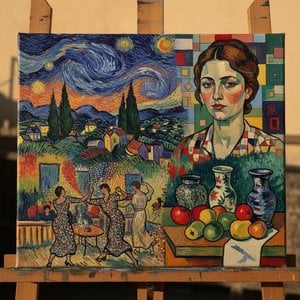
Unveil the profound revolution of Post-Impressionism. Explore how masters like Van Gogh and Cézanne utilized bold colors and emotional depth to transcend mere representation, laying the foundation for modern art. A sophisticated journey through history's most emotive brushstrokes.


 プレビュー
プレビュー
 シェアする
シェアする シェアする
シェアする
 詳細を見る
詳細を見る ガイド
ガイド

 ダウンロード
 似ている作品
 X線調査
X線調査 スライドショー
 統計情報
統計情報


 詳細を見る
詳細を見る






































 ガラスオプションは、110cm未満のサイズでのみご利用いただけます。


