
 Literati Style
 103.0 x 47.0 cm
当社のアーティストが、お客様のご希望のサイズと額縁に合わせて、キャンバスに手描きで制作する油彩画です。 ( プリント版に切り替え デジタル画像販売へ切り替え)
作品のオリジナル比率に合わせた、当店の規定サイズからお選びください。

特定のフレームやスペースに合わせて、ご希望のサイズをご入力いただけます。選択されたサイズが元の画像の比率と異なる場合、アートワークをトリミングするか、手描きで要素を追加して絵画を拡張いたします。デジタルモックアップ を制作し、制作開始前にご確認(承認)をいただきます。
画面上のプレビューは、実際のトリミングや拡張を正確に反映しているものではありません。最終的な構図は、モックアップによってのみ正確にご確認いただけます。
カスタムサイズもご利用いただけますが、元の比率を維持するためには、あらかじめ用意されたリストからサイズを選択することをお勧めいたします。

ISLAND BENEATH THE CLOUDS
複製画のサイズ

Born in Suzhou, Jiangsu province, during the twilight years of the Ming Dynasty (1496-1576), Lu Zhi emerged as a pivotal figure in Chinese landscape painting. More than simply an artist, he was a meticulous observer of nature, a skilled calligrapher, and a poet deeply attuned to the rhythms of the natural world. His work, characterized by its profound tranquility and subtle beauty, reflects a synthesis of traditional Ming aesthetics with his own unique sensibility – a style often referred to as ‘Shuqing’ (學清), meaning “learning from Zhengming.” Lu Zhi's legacy rests not just on the sheer number of paintings he produced, but on their ability to evoke a sense of profound peace and contemplation, solidifying his place among the most revered landscape masters of the era.
Lu’s artistic journey began under the tutelage of Wen Zhengming (1470-1535), a renowned calligrapher, painter, and scholar who served as a model for many aspiring artists. Wen's emphasis on meticulous brushwork, balanced composition, and the integration of poetry within paintings profoundly influenced Lu Zhi’s approach. However, unlike many of his contemporaries who merely imitated Wen’s style, Lu Zhi developed his own distinct voice, characterized by a softer, more ethereal quality. He was particularly drawn to depicting scenes of misty mountains, serene lakes, and delicate flora – subjects that resonated with his contemplative nature.
Lu's early life remains somewhat shrouded in mystery, though it’s known he spent considerable time studying under Ma Rong (1476-1538), a prominent scholar and poet. This exposure to literary traditions undoubtedly shaped his artistic vision, imbuing his landscapes with layers of symbolic meaning and poetic resonance. His sobriquet, ‘Bao Shanzi’ (寶山子), literally translates to “treasure mountain son,” reflecting his deep appreciation for the majesty and spiritual significance of mountainous regions – a recurring motif in his oeuvre.
Lu Zhi's paintings are distinguished by their masterful use of ink wash techniques, a hallmark of traditional Chinese landscape painting. He employed a delicate, almost translucent application of ink, creating subtle gradations of tone and texture that mimic the play of light and shadow in nature. His brushwork is remarkably fluid and expressive, conveying both the solidity of rock formations and the ephemeral quality of mist and clouds. Unlike some of his contemporaries who favored bold, assertive strokes, Lu Zhi’s approach was characterized by a quiet restraint – a deliberate avoidance of overt drama or exaggeration.
A key element of Lu Zhi's style is his masterful depiction of water. He skillfully rendered the shimmering surface of lakes and rivers, capturing their reflective qualities with remarkable precision. His use of ‘mo liu’ (墨漏), a technique involving allowing ink to bleed and spread naturally on the paper, created an atmospheric effect that enhanced the sense of depth and spaciousness in his compositions. This technique was particularly effective in conveying the misty atmosphere characteristic of many of his landscapes.
Furthermore, Lu Zhi's paintings often incorporate elements of bird-and-flower painting – a tradition closely associated with landscape art during the Ming Dynasty. He skillfully integrated these smaller motifs into his larger compositions, adding layers of visual interest and symbolic meaning. The inclusion of specific plants and birds was not merely decorative; it served as a means of conveying seasonal changes, philosophical concepts, and personal reflections.
Among Lu Zhi’s most celebrated works are “Day Lily and Garden Rock” (日荷圖), a serene depiction of a small garden featuring a delicate day lily flower and a weathered rock. This painting exemplifies his ability to capture the subtle beauty of everyday scenes, transforming them into objects of contemplation. “The Canying Hall” ( canyon hall) is another notable example, showcasing his skill in rendering mountainous landscapes with remarkable detail and atmospheric perspective.
Recurring themes in Lu Zhi’s work include the harmony between humanity and nature, the passage of time, and the pursuit of inner peace. His paintings often evoke a sense of solitude and introspection, inviting viewers to contemplate their own place within the vastness of the natural world. The frequent depiction of misty mountains – particularly those shrouded in clouds – symbolizes the mysteries of existence and the limitations of human understanding.
Lu Zhi’s influence on subsequent generations of Chinese landscape painters is undeniable. His emphasis on subtle brushwork, atmospheric perspective, and poetic integration within paintings set a new standard for artistic excellence. His work served as an inspiration for artists such as Shen Zhou (1425-1506) and Dong Yuan (1470-1523), who further developed the ‘Shuqing’ style.
Today, Lu Zhi's paintings are highly valued by collectors and art historians alike. His works are exhibited in major museums and galleries around the world, serving as a testament to his artistic genius and enduring legacy. Lu Zhi remains a symbol of Chinese landscape painting at its most serene and contemplative – a master who captured the essence of nature’s beauty with unparalleled grace and subtlety.

1940 - 1973
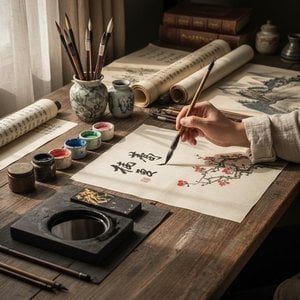
Embark on a sophisticated exploration of ink wash painting and Sumi-e. Uncover the profound historical lineages, Zen philosophies, and technical mastery behind this timeless medium in our authoritative guide for fine art enthusiasts.
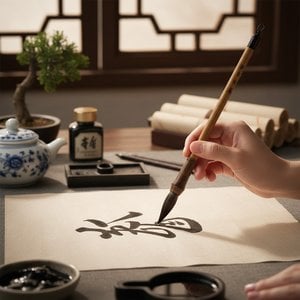
Embark on a profound journey through the soul of Chinese calligraphy. Explore the historical mastery of ink, brush, and script, from ancient Zhuanshu to elegant running script, and discover how this timeless art form reflects the enduring spirit of classical East Asian aesthetics.


 プレビュー
プレビュー
 シェアする
シェアする シェアする
シェアする
 詳細を見る
詳細を見る

 ダウンロード
 似ている作品
 X線調査
X線調査 スライドショー
 統計情報
統計情報 詳細を見る
詳細を見る






































 ガラスオプションは、110cm未満のサイズでのみご利用いただけます。


