
 Oil On PanelRenaissance Early
 1480
1480 88.0 x 71.0 cm
 ウフィツィ美術館
当社のアーティストが、お客様のご希望のサイズと額縁に合わせて、キャンバスに手描きで制作する油彩画です。 ( プリント版に切り替え デジタル画像販売へ切り替え)





























作品のオリジナル比率に合わせた、当店の規定サイズからお選びください。

特定のフレームやスペースに合わせて、ご希望のサイズをご入力いただけます。選択されたサイズが元の画像の比率と異なる場合、アートワークをトリミングするか、手描きで要素を追加して絵画を拡張いたします。デジタルモックアップ を制作し、制作開始前にご確認(承認)をいただきます。
画面上のプレビューは、実際のトリミングや拡張を正確に反映しているものではありません。最終的な構図は、モックアップによってのみ正確にご確認いただけます。
カスタムサイズもご利用いただけますが、元の比率を維持するためには、あらかじめ用意されたリストからサイズを選択することをお勧めいたします。

Annunciation
複製画のサイズ
Lorenzo di Credi’s “Annunciation,” painted around 1480, is more than just a depiction of a pivotal biblical moment; it's an exquisite distillation of Florentine Renaissance ideals – a harmonious blend of intellectual rigor and profound spiritual contemplation. This small panel, now housed in the Uffizi Gallery in Florence, offers a remarkably intimate glimpse into the world of early 15th-century religious art, revealing a painter deeply attuned to both the formal beauty of his craft and the evocative power of symbolism.
The scene unfolds within a meticulously rendered interior space, suggesting not a grand cathedral or opulent palace, but rather a modest dwelling – perhaps the Virgin Mary’s humble home in Nazareth. Credi masterfully employs linear perspective, drawing the viewer's eye towards the central figures and creating a sense of depth that belies the panel’s diminutive size. The architecture is subtly complex, incorporating elements reminiscent of Roman design while retaining a distinctly Italian sensibility. Note particularly the carefully constructed colonnade leading out from the room – an architectural device frequently used in Renaissance art to suggest an infinite space beyond the confines of the depicted scene, hinting at the boundless nature of God’s grace.
Credi's technique is characterized by a remarkable attention to detail and a masterful control of color. He employs a restrained palette – primarily cool blues, greens, and ochres – creating an atmosphere of tranquility and serenity. The fabrics are rendered with exquisite realism, showcasing the painter’s skill in capturing textures and folds. Observe how the delicate folds of Mary's robe contrast with the smoother surfaces of the wooden furniture, demonstrating Credi’s ability to create visual interest through subtle variations in texture.
The angel Gabriel, depicted as a youthful figure radiating an aura of divine authority, extends his hand towards Mary, presenting her with the news of her impending motherhood. The use of light is particularly effective here, illuminating Gabriel's face and highlighting the gesture of offering – a potent symbol of God’s grace and intervention in human affairs. The subtle gradations of color used to depict the angel’s garments further enhance his ethereal quality.
Beyond its formal beauty, “The Annunciation” is rich in symbolic meaning. The setting itself – a simple domestic space – underscores the idea that God's grace can be found in the most ordinary of circumstances. The presence of the wooden step beneath the scene, adorned with depictions of the Creation of Eve, Original Sin, and Expulsion from Paradise, serves as a visual reminder of humanity’s fallen state and the need for redemption. These lower panels act as a kind of prologue, framing the central event of the Annunciation and providing context for its significance.
The composition is carefully balanced, with Mary positioned centrally and Gabriel occupying a complementary space. The gesture of Mary's hand – raised in acceptance – conveys her humility and faith. The overall effect is one of profound reverence and spiritual contemplation, inviting the viewer to reflect on the miracle of the Incarnation and its implications for human existence.
Lorenzo di Credi’s “Annunciation” stands as a testament to the enduring power of Renaissance art to capture both the beauty of the material world and the depth of spiritual experience. His meticulous attention to detail, masterful use of color, and profound understanding of symbolism combine to create a work that is both visually stunning and emotionally resonant. It’s a painting that speaks not just to the eye but also to the heart, offering a timeless meditation on faith, grace, and the miracle of divine revelation.


1459 - 1537 , イタリア

Embark on a profound journey through art history with our exploration of the most iconic depictions of the Virgin Mary. Discover the divine grace, symbolism, and masterful techniques found in Renaissance masterpieces and sacred iconography.
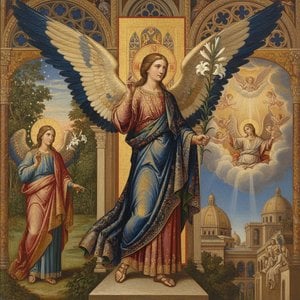
Explore the profound beauty of Angel Gabriel in art history. From Renaissance masterpieces to Baroque splendor, our expert guide delves into the sacred iconography and timeless techniques of these divine messengers for the discerning art enthusiast.

Explore the profound beauty of Marian iconography through an art historian's lens. Discover iconic masterpieces by Raphael and Renaissance masters, celebrating the divine grace and timeless elegance of the Virgin Mary in classical fine art.

Explore the profound power of religious symbolism in art history. From Renaissance masterpieces to sacred iconography, uncover the hidden meanings behind divine details in a deep dive into classical art excellence.


 プレビュー
プレビュー
 シェアする
シェアする シェアする
シェアする
 詳細を見る
詳細を見る

 ダウンロード
 似ている作品
 X線調査
X線調査 スライドショー
 統計情報
統計情報 詳細を見る
詳細を見る









 ガラスオプションは、110cm未満のサイズでのみご利用いただけます。


