

オンラインプレビューをはるかに凌ぐ、高解像度で鮮明なデジタル画像をご購入いただけます。
各ファイルは、社内の専門家が高度なツールと熟練した手作業によるレタッチを駆使し、細心の注意を払って仕上げています。すべての画像において、卓越した鮮明度、正確な色彩再現性、そして繊細なディテールをお約束いたします。
最終ファイルは、プロフェッショナルな編集・印刷環境ですぐにご利用いただけるよう最適化された状態で、72時間以内にメールにてお届けいたします。これは、一流のデザインスタジオ、出版社、ギャラリーから信頼されているものと同等の品質です。
個人での鑑賞、印刷、クリエイティブなプロジェクトにご利用いただける高解像度ファイルをダウンロードできます。 ( プリント版に切り替え 手描きの複製画を注文する)
WahooArt.com を選ぶことは、単に画像を手に入れることではありません。プロの手によって精密に仕上げられ、満足保証が付いた高品質なデジタルアートワークを受け取ることを意味します。ご注文いただいた際に自動的に付随する内容は、以下の通りです:

ご注文から72時間以内に、高解像度のデジタル画像ファイルをメールでお送りいたします。お手元に届き次第、すぐにご利用いただけます。

お客様の作品は、高度なAI技術と専門家による手作業を組み合わせてプロフェッショナルに最適化されており、細部のディテール、鮮明さ、そして正確な色再現性を最大限に引き出しています。

ファイルを誤って削除したり、紛失してしまったりしましたか?ご安心ください。いつでも無料で再送いたします。

関税や手数料、配送料を気にすることなく、お気に入りのアートワークをすぐにお楽しみいただけます。デジタルダウンロードは常に免税です。

プロ仕様のツールとカラーマネジメント技術を用いることで、デジタル画像が元の色を最大限に忠実に再現することを保証いたします。

ご購入いただいたデジタル画像にご満足いただけない場合は、100日以内であれば、理由を問わず修正または100%の返金対応をさせていただきます。

ご満足いただけない場合は、デジタルファイルを受け取ってから100日以内であれば、理由を問わず全額返金いたします。

3枚購入で10%OFF、5枚購入で15%OFF、10枚以上のご購入で20%OFF。クリエイティブなプロジェクトやギャラリー、エージェンシーに最適です。
Leonardo da Vinci's "Atlantic Codex (Codex Atlanticus), f. 858 recto," a deceptively simple black-and-white drawing, is far more than a mere study of a spiderweb. It’s a profound meditation on structure, proportion, and the intricate beauty found in nature – a cornerstone of Leonardo's relentless pursuit of understanding the universe through observation and meticulous detail. Created around 1506, during his Milanese period, this drawing exists as one fragment within the vast and extraordinary Codex Atlanticus, a collection of over 2,000 pages encompassing Leonardo’s diverse explorations across art, science, engineering, and anatomy.
The image itself is strikingly direct. A spiderweb dominates the composition, rendered with astonishing precision in charcoal or perhaps a similar medium. The lines are not merely outlines; they possess a subtle tonal variation, suggesting a layering of technique – an initial rapid sketch followed by careful refinement. Notice how Leonardo doesn’t attempt to depict the web as it appears to the naked eye. Instead, he dissects its geometry, revealing the underlying framework of intersecting strands and radiating patterns. The drawing captures not just the visual appearance but also the mathematical relationships that govern its construction – a testament to Leonardo's belief that all things could be understood through rational analysis.
This seemingly isolated study is deeply embedded within the context of Leonardo’s broader scientific investigations. During this period, there was a burgeoning interest in natural philosophy and the systematic observation of the world around us. Leonardo's meticulous drawings, like this spiderweb, were not simply artistic exercises; they served as tools for understanding and documenting the principles of nature. He frequently used such studies to explore concepts related to perspective, proportion, and the mechanics of movement – all crucial elements in his ambitious projects, including designs for flying machines and military weaponry.
The Codex Atlanticus itself is a remarkable artifact, representing the culmination of Leonardo’s lifelong intellectual journey. It reveals a mind constantly engaged in questioning, experimenting, and recording his observations. This particular page, f. 858 recto, offers a glimpse into his process – a demonstration of how he approached complex subjects with an almost obsessive attention to detail, breaking them down into their fundamental components for analysis.
The spiderweb, as a symbol, carries significant weight. It represents not only the intricate beauty of nature but also themes of entrapment, patience, and the delicate balance between order and chaos. Leonardo was fascinated by the concept of ‘divine proportion’ – the idea that mathematical ratios underpin all aspects of creation. The perfectly symmetrical structure of the spiderweb embodies this principle, suggesting a harmony and elegance derived from underlying mathematical relationships.
Furthermore, the monochrome palette—a deliberate choice—heightens the drawing's focus on form and structure. Without the distraction of color, the viewer is compelled to engage with the intricate details of the web’s geometry, appreciating its complexity and precision. It invites contemplation on the fundamental laws governing the natural world – a reflection of Leonardo’s own quest for universal understanding.
WahooArt offers meticulously hand-painted reproductions of this extraordinary drawing from the Codex Atlanticus, capturing its subtle tonal variations and intricate details with unparalleled accuracy. These reproductions are not merely copies; they are artistic interpretations that honor Leonardo’s original vision. Whether displayed in a study, gallery, or as part of an interior design scheme, a reproduction of “Atlantic Codex (Codex Atlanticus), f. 858 recto” brings the profound insights and aesthetic beauty of one of history's greatest minds into your space.

1452年、トスカーナ地方のヴィンチ村近くで生まれたレオナルド・ダ・ヴィンチは、ルネサンス期を象徴するまさに「万能の天才」でした。画家、彫刻家、建築家、科学者、技術者、解剖学者…彼の好奇心と探求心は、芸術、科学、工学の分野に革命をもたらし、後世に計り知れない影響を与えました。非嫡出子として生まれたという出自にも関わらず、彼は卓越した才能を発揮し、その名は今もなお、創造性と革新性の代名詞となっています。
幼少期を過ごしたヴィンチで自然と触れ合いながら育ったレオナルドは、14歳でフィレンツェの芸術家アンドレア・デル・ヴェロッキオの工房に入門します。そこで彼は、絵画や彫刻だけでなく、金属加工、木工、製図といった幅広い技術を習得し、その基礎を築きました。ヴェロッキオの工房での経験は、彼の多才な才能を開花させるための土台となり、後に彼自身が師を凌駕するほどの才能を持つことを予感させました。当時から、彼の並外れた才能は評判となり、ヴェロッキオ自身もレオナルドの才能に圧倒され、絵筆を置いたという逸話も残されています。
1482年、レオナルドはルドヴィーコ・スフォルツァ公の宮廷に仕官し、ミラノへと移ります。これは単なる芸術家としての任命ではなく、軍事技術者、建築家、彫刻家、そして舞台デザイナーとしても活躍する機会となりました。彼は革新的な防御施設の設計、豪華な舞台装置のデザイン、さらには空を飛ぶ機械の構想など、多岐にわたるプロジェクトに取り組みました。この時期に着手された「最後の晩餐」は、彼の代表作の一つであり、サンタ・マリア・デッレ・グラツィエ修道院の食堂壁画として完成しました。この作品は、単なる食事の場面を描写するだけでなく、人間の感情と心理的なドラマを深く掘り下げており、その革新的な構図と遠近法は、西洋美術に多大な影響を与えました。また、スフォルツァ公のために様々な彫刻プロジェクトに取り組む一方で、レオナルドの探求心は科学分野にも向かい、解剖学の研究を開始します。
1499年のフランス軍によるミラノ攻略後、レオナルドはフィレンツェに戻り、芸術の中心地で新たな活動を展開しました。この時期に制作された「モナ・リザ(ジョコンダ)」は、彼の最も有名な作品の一つであり、その謎めいた微笑みと魅惑的な眼差しは、何世代にもわたって人々を魅了し続けています。レオナルドが開発したスフマート技法—光と影の微妙なグラデーションによって輪郭をぼかし、幻想的な雰囲気を生み出す技術—は、この作品の神秘性をさらに高めています。また、彼は人間の形態を科学的に理解しようと試み、解剖学の研究を重ねました。遺体の解剖を通して得られた知識をもとに、筋肉、骨格、臓器などを詳細に記録した図面は、当時としては画期的なものでした。
その後のレオナルドは、フィレンツェ、ミラノ、ローマなど、イタリア各地を転々としながら活動を続けました。1516年には、フランス王フランシス1世の招聘を受け、アンボワーズ城近くのクロ・リュセ城に住み込み、晩年を過ごしました。1519年に亡くなったレオナルドは、芸術史における彼の遺産は計り知れません。彼は芸術家を単なる熟練した職人から、科学的探求に基づいた知的存在へと高めました。彼の作品は、写実性、心理的な深み、革新的な技法によって高く評価されています。レオナルド・ダ・ヴィンチは、人間の好奇心、創造性、そして知識の絶え間ない追求を象徴する存在であり、その影響力は今日まで色褪せることなく、私たちに畏敬の念と感動を与え続けています。
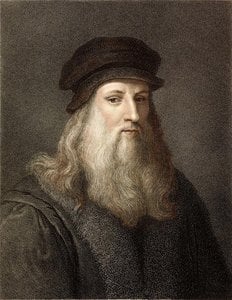
1452 - 1519 , イタリア

 設置イメージを確認
 送る
送る シェア
シェア
 詳細情報
詳細情報 ガイドを表示

 画像をダウンロード
 似ている作品
 X線調査
X線調査 スライドショー
 統計情報
統計情報
 続きを読む
続きを読む


