
 Oil On CanvasWallArtDutch Golden Age
 Early Modern
 84.0 x 70.0 cm
 エルミタージュ美術館
オンラインプレビューをはるかに凌ぐ、高解像度で鮮明なデジタル画像をご購入いただけます。
各ファイルは、社内の専門家が高度なツールと熟練した手作業によるレタッチを用いて、細心の注意を払って準備されています。すべての画像において、卓越した鮮明度、正確な色彩再現性、そして繊細なディテールを保証いたします。
最終ファイルは、プロフェッショナルな編集・印刷環境ですぐにご利用いただけるよう最適化された状態で、72時間以内にメールにてお届けいたします。これは、一流のデザインスタジオ、出版社、ギャラリーから信頼されているものと同等の品質です。
個人での鑑賞、印刷、クリエイティブなプロジェクト用に、高解像度ファイルをダウンロードできます。 ( プリント版に切り替え 手描きの絵画を購入)
WahooArt.com を選ぶことは、単に画像を手に入れることではありません。それは、プロの手によって精密に仕上げられ、満足保証が付いた高品質なデジタルアートワークを受け取ることを意味します。ご注文いただいた際に自動的に付随する内容は、以下の通りです:

ご注文から72時間以内に、高解像度のデジタル画像ファイルがメールでお手元に届きます。すぐにそのままご利用いただけます。

お客様の作品は、高度なAIツールと専門家による手作業の編集を組み合わせてプロフェッショナルに最適化されており、細部のディテール、鮮明さ、そして正確な色再現性を最大限に引き出しています。

ファイルを誤って削除したり、紛失してしまったりしましたか?ご安心ください。いつでも無料で再送いたします。

関税や手数料、配送料を気にすることなく、お気に入りのアートワークをすぐにお楽しみいただけます。デジタルダウンロードは常に免税です。

プロ仕様のツールとカラーマネジメント技術を用いることで、デジタル画像が元の色を最大限に忠実に再現することを保証いたします。

ご購入いただいたデジタル画像にご満足いただけない場合は、100日以内であれば、理由を問わず修正または100%の返金対応をさせていただきます。

ご満足いただけない場合は、デジタルファイルを受け取ってから100日以内であれば、理由を問わず全額返金いたします。

3枚購入で10%OFF - 5枚購入で15%OFF - 10枚以上購入で20%OFF。クリエイティブなプロジェクト、ギャラリー、エージェンシーに最適です。
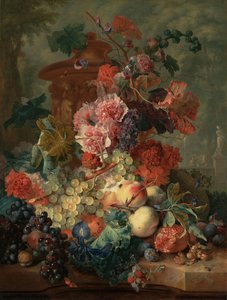
To gaze upon this magnificent depiction of flowers is to step directly into the luminous heart of the Dutch Golden Age. Justus van Huysum, the master whose brushstrokes seemed capable of capturing not just pigment on canvas, but the very ephemeral breath of life itself, presents us with a breathtaking still life. The arrangement is nothing short of opulent; a veritable cascade of blooms gathered in an elegant vase. From the softest blush of pastel petals to the deepest, most saturated hues of crimson and sapphire blue, every flower seems to possess its own unique narrative. It is a celebration of botanical abundance, rendered with a meticulousness that borders on the miraculous.
What elevates this piece beyond mere floral arrangement is the sheer technical virtuosity displayed by Van Huysum. His handling of oil paint allows for an astonishing play between light and shadow. Observe how the light seems to emanate from within the petals themselves, giving them a palpable texture—you can almost feel the velvety nap of a rose or the delicate curve of a lily's edge. The depth achieved in this composition is masterful; the flowers do not simply sit upon a surface but seem to emerge from it, creating an illusion of three-dimensional volume that speaks volumes about his skill as a painter.
Yet, the narrative thread woven through this floral tapestry extends beyond mere botany. Adding a layer of ethereal mystery is the presence of the cherubic figure in the background. This angelic element introduces themes of innocence and the divine connection to nature. The small bird held by this figure acts as a poignant symbol—a delicate emblem representing life's fragility, freedom, or perhaps the soul itself, all framed within the overwhelming beauty of the natural world. It invites the viewer into a contemplative space where art, mythology, and biology converge.
For the contemporary collector or designer, this artwork offers more than just decoration; it offers an atmosphere. The overall mood is one of serene contemplation—a quiet moment stolen from the bustle of modern life. Reproducing such a piece allows one to infuse a room with the historical gravitas and unparalleled beauty of Dutch mastery. It serves as a focal point that whispers tales of 17th-century refinement, making any space feel instantly richer, more cultured, and deeply connected to the enduring celebration of natural perfection.

In the golden light of the Dutch Golden Age, few artists captured the ephemeral splendor of nature with as much devotion and precision as Justus van Huysum. Born in Amsterdam in 1659, he emerged from a lineage of creative excellence, the son of Jan van Huysum I, a decorative painter who had brought his craft from the outskirts of Leeuwarden to the bustling artistic heart of the Netherlands. This familial foundation provided more than just a name; it offered a direct inheritance of technical skill and an intimate connection to the flourishing art market of Amsterdam. Growing up in an environment where visual creativity was a shared language, Justus was destined to refine the art of the still life into something profoundly transcendent.
The trajectory of his talent was shaped significantly by formal mentorship and early exposure to the masters of his era. In 1675, recognizing the exceptional aptitude of his son, Jan van Huysum I dispatched him to study under the renowned Nicolaes Berchem. This period of tutelage was transformative, instilling in Justus a rigorous discipline for detail and an eye for the subtle nuances of light and texture. While he possessed the versatility to explore landscapes, it was within the delicate realm of floral compositions that his true genius blossomed. He did not merely paint flowers; he sought to document their very essence, rendering petals, stems, and dew-kissed foliage with a realism so startling that it bridged the gap between fine art and botanical science.
Justus van Huysum’s work is characterized by an unparalleled ability to breathe life into the static medium of oil on canvas. His compositions often feel like captured moments of perfection, where every bloom is rendered with a meticulousness that borders on the miraculous. He possessed a rare gift for capturing the tactile qualities of his subjects—the velvety softness of a rose petal, the translucent fragility of a tulip, and the vibrant, pulsing energy of a garden in full summer glory. This technical mastery was not merely about imitation but about an emotional engagement with the natural world. His paintings served as a celebration of life's fleeting beauty, inviting viewers into a serene, idealized space where nature exists in eternal, unblemished perfection.
Beyond his individual skill, Justus played a vital role in establishing a stylistic standard that would influence generations of painters. His approach to the still life genre elevated it from mere decorative ornament to a subject worthy of deep scholarly and aesthetic contemplation. By meticulously researching botanical specimens, he ensured that his work possessed an anatomical accuracy that appealed to both the connoisseur and the scientist. This intersection of art and botany allowed his work to resonate within the intellectual circles of the 17th century, where the study of nature was deeply intertwined with the pursuit of knowledge.
The life of Justus van Huysum was also one of profound familial continuity. In 1683, his marriage to Maria Elisabeth van Voorbergen anchored a domestic life that would become a cornerstone of Dutch art history. The legacy of the Van Huysum name was carried forward by his children, most notably his son Jan van Huysum, who would go on to become one of the most celebrated flower painters in history. This lineage ensured that the techniques and the aesthetic values championed by Justus—precision, luminosity, and botanical reverence—would permeate the Dutch art scene well into the 18th century.
Though he passed away in 1716, the historical significance of Justus van Huysum remains undiminished. He stands as a pivotal figure who helped define the zenith of the Dutch floral still life. His ability to weave together technical brilliance with a profound respect for the natural world created a body of work that continues to enchant collectors and historians alike. Through his brush, the fleeting blossoms of the past are preserved forever, offering an enduring testament to the beauty of the earth and the limitless potential of the human hand.
1659 - 1716 , Netherlands


 プレビュー
プレビュー
 シェアする
シェアする シェアする
シェアする
 詳細を見る
詳細を見る

 ダウンロード
 似ている作品
 X線調査
X線調査 スライドショー
 統計情報
統計情報 詳細を見る
詳細を見る


