
x


作品のオリジナル比率に合わせた、当店の規定サイズからお選びください。

特定のフレームやスペースに合わせて、ご希望のサイズをご入力いただけます。選択されたサイズが元の画像の比率と異なる場合、アートワークをトリミングするか、手描きで要素を追加して絵画を拡張いたします。デジタルモックアップ を制作し、制作開始前にご確認(承認)をいただきます。
画面上のプレビューは、実際のトリミングや拡張を正確に反映しているものではありません。最終的な構図は、モックアップによってのみ正確にご確認いただけます。
カスタムサイズもご利用いただけますが、元の比率を維持するためには、あらかじめ用意されたリストからサイズを選択することをお勧めいたします。

Buckle [Center-right]\nCompact Cases [Upper]\nCompact Cases [Lower]\nCompact Cases [Center-left]
複製画のサイズ

In the shimmering, opulent landscape of the early twentieth century, few names evoke the sophisticated grandeur of the Art Deco era quite like Jean Dunand. A true Renaissance man of the decorative arts, Dunand possessed a rare ability to bridge the gap between ancient Eastern traditions and the burgeoning modernism of the West. Born Jules John Dunand in 1877 in Lancy, Switzerland, his journey was one of constant metamorphosis. The son of a goldsmith, he inherited an early intimacy with precious metals, a foundation that would later allow him to master the complex art of dinanderie—the exquisite process of hand-hammered metalwork. His move to Paris in 1909 was more than a mere change of scenery; it was a spiritual homecoming that saw him adopt his more famous French name and begin a lifelong dialogue with the most avant-garde movements of his time.
Dunand’s artistic evolution was deeply rooted in his rigorous training at the École des Arts Industriels de Genève, where he earned a diploma in sculpture. This sculptural sensibility remained the heartbeat of his work, even when he transitioned into more decorative mediums. His early years in Paris were marked by significant mentorships, most notably under the sculptor Jean Dampt, whose influence helped refine Dunand’s ability to manipulate form and texture. As he navigated the Parisian art scene, participating in prestigious exhibitions like the Salon of the National Society of Fine Arts, his work began to reflect a fascinating tension between the organic fluidity of Art Nouveau and the structured, geometric elegance that would define Art Deco.
While Dunand’s mastery of metal—working with copper, steel, silver, and pewter—was nothing short of virtuosic, it was his encounter with the ancient art of Japanese lacquer that would secure his immortality in art history. Around 1912, Dunand began a transformative collaboration with Seizo Sugawara, a Japanese master who had brought the secrets of lacquer painting to France. This encounter ignited a passion for a medium that required immense patience, precision, and a near-supernatural understanding of layering and drying. Through this study, Dunand became one of the very few Western artists capable of executing the traditional Japanese style, creating large-scale decorative panels that seemed to glow from within.
His technique was a breathtaking fusion of disparate worlds. In his metalwork, he utilized hammers and glides to create intricate patterns, often encrusting his pieces with mother-of-pearl or gilding them with gold to catch the light in ways that felt both ancient and modern. His lacquer panels, meanwhile, were masterpieces of depth and texture, often featuring:
The significance of Jean Dunand lies in his refusal to be confined by a single medium or style. He was an architect of atmosphere, designing entire interiors where his lacquered screens, metal vases, and sculptural objects worked in concert to create a cohesive sensory experience. His work stood alongside the giants of his era, such as Rodin and Renoir, yet he carved out a unique niche that celebrated the beauty of the functional object. By elevating decorative arts to the level of fine art, he helped define the luxury aesthetic of the 1920s and 30s.
Today, Dunand’s legacy is preserved in the world's most prestigious museums and private collections, serving as a testament to a period when craftsmanship and modern design reached a perfect, luminous equilibrium. His ability to breathe new life into forgotten techniques like lacquer and dinanderie ensures that his work remains not just a relic of the past, but a living inspiration for artists seeking to find the soul within the material.

1877 - 1942 , Switzerland
Discover the allure of Art Deco through a curated guide to its most iconic masterpieces. Explore the elegance of Erté and the innovation of Jean Dunand, perfect for collectors seeking timeless glamour and sophisticated design inspiration.

Discover the allure of Art Deco style with our expert guide to luxury interiors. Explore iconic influences from Erté to Jean Dunand and learn to curate a sophisticated space filled with timeless glamour and geometric elegance.

Discover the breathtaking allure of Art Deco. Explore the era's iconic geometry, legendary designers like Erté, and timeless glamour. Perfect for discerning collectors seeking to infuse their spaces with sophisticated modernist elegance and historical prestige.
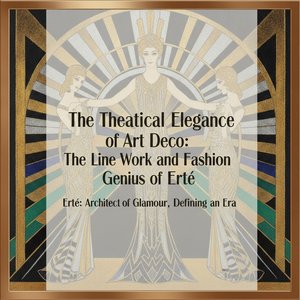
Discover the unparalleled elegance of Art Deco through the lens of Erté. Explore a masterclass in linear precision, theatrical costume design, and high-fashion illustration that continues to define modern luxury and sophisticated interior aesthetics.


最新の美術ニュース、限定オファー、そしてインテリアのアイデアをいち早くお届けします。
お客様のプロジェクトについてお聞かせください。当社の美術専門家が、お客様に合わせた3つのパーソナライズされた芸術提案をご提供いたします。
あなたにぴったりの3作品を無料で厳選いたします

![Buckle [center-right]\ncompact Cases [upper]\ncompact Cases [lower]\ncompact Cases [center-left] — Jules John Dunand](/media/artworks/images-full/72/9a/729a8901439122e1508a07ad203ece49.jpg)
 プレビュー
プレビュー
 プリントを購入
 シェアする
シェアする シェアする
シェアする
 詳細を見る
詳細を見る

 ダウンロード
 似ている作品
 X線調査
X線調査 スライドショー


 詳細を見る
詳細を見る






































 ガラスオプションは、110cm未満のサイズでのみご利用いただけます。


