

 Oil On CanvasWallArtCubism
 1915Modern
 92.0 x 73.0 cm
 クローラー・ミュラー美術館
スピーディーな制作と多彩な仕上げオプションが魅力の、ミュージアムクオリティなジークレー・キャンバスプリント。 ( 手描きの複製画を注文する デジタル画像販売へ切り替え)





























作品のオリジナル比率に合わせた、当店の規定サイズからお選びください。

額縁や壁のスペースに合わせて、ご希望の幅と高さを入力してください。プリントはカットすることは可能ですが、元の画像より大きくすることはできないため、異なる比率のサイズを選択された場合は、画像の一部が欠けることになります。印刷を開始する前に、内容を確認していただくためのデジタルモックアップをお送りいたします。このページに表示されている画像は、実際のカット後の状態を示すものではありません。実際の仕上がりはモックアップにてご確認ください。
Guitar on a table
複製画サイズ一覧
To stand before Juan Gris’s “Guitar on a Table” is to witness the precise moment where reality begins to dance with abstraction. Painted in 1915, this masterpiece serves as a profound testament to the era of Synthetic Cubism, a period when the art world was being radically redefined by the dismantling of traditional perspective. The painting presents a meticulously constructed still life, where a central guitar rests upon a table, surrounded by the quiet presence of stacked books and a subtle bowl. Yet, this is no mere imitation of life; it is a deliberate reconstruction of it. Gris, who brought the analytical rigor of his early engineering studies to the canvas, does not simply show us objects—he invites us to perceive the underlying architecture of existence through a rhythmic interplay of planes and shadows.
The composition functions like a visual musical score, where every line and edge contributes to a larger, harmonious movement. Unlike the more fragmented and analytical approach of his contemporaries, Gris utilized what he termed Deductive Painting. Rather than breaking an object down into pieces, he began with abstract geometric shapes—triangles, rectangles, and arcs—and gradually infused them with recognizable form. In this work, the guitar is not just an instrument; it is a focal point of structural elegance that anchors the surrounding elements. The way the books overlap and the table surfaces intersect creates a sense of depth that feels both intellectually complex and visually soothing, making it an ideal centerpiece for any sophisticated interior seeking a balance of modern edge and classical grace.
The technical brilliance of “Guitar on a Table” lies in its masterful use of color and light to define space without the need for traditional shading. Gris employs a palette that is both earthy and vibrant, using tonal shifts to suggest the weight of the books and the hollow resonance of the guitar's body. The artist’s ability to blend different textures—the smooth surface of the wood, the matte quality of paper, and the hard edges of geometric intersections—creates a tactile experience for the viewer. This technique allows the painting to transcend its two-dimensional plane, offering a sense of physical presence that is both captivating and intellectually stimulating.
For the discerning collector or interior designer, this piece offers more than just aesthetic beauty; it offers a conversation. The symbolism of the musical instrument—a recurring motif in Gris’s oeuvre—speaks to the harmony between the visual and the auditory, suggesting that art, like music, is a language of pure form and emotion. Bringing a high-quality reproduction of this work into a living space introduces an atmosphere of cultured contemplation. It provides a window into the early 20th-century avant-garde, lending a sense of historical depth and intellectual prestige to a room. Whether placed in a minimalist modern gallery or a richly textured traditional study, “Guitar on a Table” remains a timeless exploration of how we perceive the world around us.
「Guitar on a table」の色調は、Darkの輝度を示しています。
フアン・グリス作「Guitar on a table」は、サイズ92 x 73 cmのLandscape作品です。
フアン・グリス作「Guitar on a table」に描かれているテーマには、cubism, guitar, still life, geometric, abstraction, musical motif, juan grisなどがあります。これらが合わさることで、本作の主題を構成しています。

1887 - 1927 , スペイン

Unveil the radical revolution of Cubism. Explore how masters like Picasso and Braque redefined modern art through fragmented forms and geometric abstraction, offering profound insights for discerning collectors of fine art history and masterpieces.

Explore the profound evolution of Cubism through an expert analysis of Pablo Picasso's revolutionary works. From Analytical to Synthetic Cubism, discover the techniques that redefined modern art and learn how to curate these iconic masterpieces for your private collection.

Embark on a journey through the revolutionary world of Cubism. Discover how masters like Picasso redefined perspective through Analytical and Synthetic techniques in this expert-led guide for art enthusiasts and collectors.

Explore the profound evolution of Cubist still life, from Cézanne's structural foundations to the fragmented brilliance of Braque and Léger. Discover how geometric abstraction redefined reality through a sophisticated lens of form, color, and modern artistic mastery.
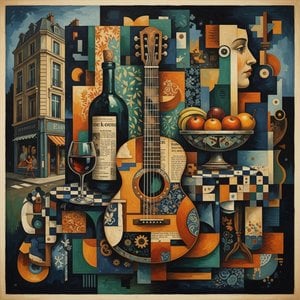
Master the vibrant world of Synthetic Cubism with our expert guide. Explore the revolutionary techniques of Picasso and Braque, from collage to color, and discover how this movement redefined modern art for collectors and connoisseurs alike.

 設置イメージを確認
 送る
送る シェア
シェア
 詳細情報
詳細情報 ガイドを表示

 画像をダウンロード
 似ている作品
 X線調査
X線調査 スライドショー
 統計情報
統計情報 続きを読む
続きを読む









 ガラスオプションは、110cm未満のサイズでのみご利用いただけます。


