
x


作品のオリジナル比率に合わせた、当店の規定サイズからお選びください。

特定のフレームやスペースに合わせて、ご希望のサイズをご入力いただけます。選択されたサイズが元の画像の比率と異なる場合、アートワークをトリミングするか、手描きで要素を追加して絵画を拡張いたします。デジタルモックアップ を制作し、制作開始前にご確認(承認)をいただきます。
画面上のプレビューは、実際のトリミングや拡張を正確に反映しているものではありません。最終的な構図は、モックアップによってのみ正確にご確認いただけます。
カスタムサイズもご利用いただけますが、元の比率を維持するためには、あらかじめ用意されたリストからサイズを選択することをお勧めいたします。

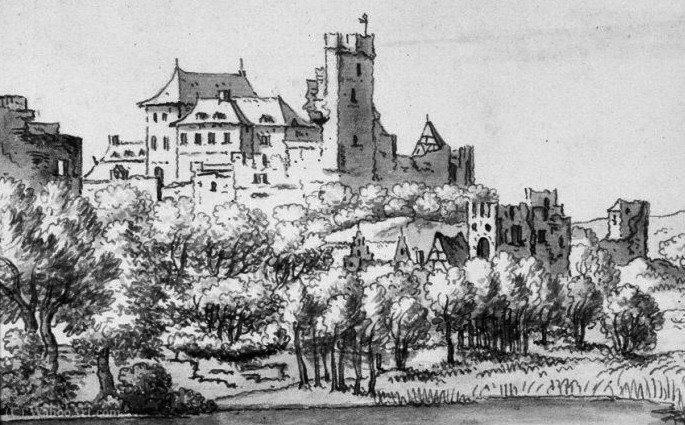
Valkenburg
複製画のサイズ

Josua de Grave, born in Amsterdam in 1643, emerged during the twilight years of the Dutch Golden Age—a period renowned for its artistic flourishing and burgeoning mercantile spirit. Though his origins lay within a family connected to commerce, young Josua found himself drawn towards the visual arts, a path that would lead him away from trade routes and into the delicate world of draughtsmanship. By 1648, the de Grave family had relocated to Haarlem, a city steeped in artistic tradition, where Josua’s formal training began. He entered the Guild of St Luke in 1659 at the remarkably young age of sixteen, signaling his commitment and early promise as an artist.
The influence of Haarlem's established masters—painters like Frans Hals and Adriaen Berckheyde—likely shaped de Grave’s initial artistic sensibilities. However, it was not within the bustling studios of portraiture or genre painting that his unique talent would fully blossom. Instead, he gravitated towards topographical drawing, a practice that demanded precision, observation, and an acute understanding of perspective.
De Grave’s early career was characterized by a restless spirit and a penchant for travel. He journeyed to Paris in the mid-1660s, returning via Maastricht where he began producing a series of meticulously detailed drawings documenting the landscapes and towns of the Southern Netherlands. These sketches, typically small in scale—around 95 x 150 mm—were often inscribed with dates and locations, providing invaluable insights into the daily life and conditions of the region during a period of political unrest. Between 1672 and 1676, de Grave entered the service of Stadtholder William III of Orange-Nassau, becoming an engineering officer within the Dutch States-General army. This appointment proved pivotal, affording him the opportunity to travel extensively throughout the Southern Netherlands during the campaigns against France.
His role wasn’t that of a war artist in the traditional sense; rather, he documented the logistical realities of military life—the construction of fortifications, the layout of encampments, and the subtle details of urban environments impacted by conflict. These drawings, executed with remarkable precision in pen and brown ink, often washed with grey tones, offer a unique perspective on 17th-century warfare, focusing not on heroic battles but on the practicalities of maintaining an army in the field.
During his travels, de Grave frequently collaborated with two other draughtsmen—Valentijn Klotz and his brother, Barnardus Klotz. The three artists shared a similar style and subject matter, leading to occasional confusion in attributing their works. Their drawings are characterized by a shared emphasis on topographical accuracy, delicate rendering of architectural details, and a subtle atmospheric quality achieved through the use of wash techniques. The close working relationship between de Grave and the Klotz brothers has prompted ongoing scholarly debate regarding the extent of their individual contributions.
Distinguishing their hands can be challenging, but careful examination reveals nuances in technique and subject preference. De Grave often focused on broader landscapes and city views, while the Klotz brothers tended towards more detailed architectural studies. Despite these subtle differences, the collaborative spirit between the three artists resulted in a body of work that provides a comprehensive visual record of the Southern Netherlands during a turbulent period.
After settling in The Hague around 1678, de Grave’s artistic focus began to shift. While he continued to produce topographical drawings, he increasingly turned his attention towards imaginary landscapes—fantastical scenes inspired by the Italian countryside. These later works reveal a growing interest in perspective and composition, drawing inspiration from earlier masters such as Jan Both, Nicolaes Berchem, and Jan Asselijn. His *Italianate landscape with rapids* (1697), for example, showcases his mastery of atmospheric effects and his ability to create convincing illusions of depth and space.
De Grave’s transition towards imaginary landscapes reflects a broader trend within Dutch art during the late 17th century—a growing fascination with idealized settings and classical motifs. Although he continued to receive commissions, including a brief return to military service in 1711, his later years were marked by a quieter artistic practice focused on exploring the possibilities of landscape painting.
Josua de Grave’s historical significance lies not in grand pronouncements or revolutionary stylistic innovations, but rather in his meticulous documentation of a specific time and place. His topographical drawings offer invaluable insights into the daily life, architecture, and military realities of the Southern Netherlands during the Dutch Golden Age. His work provides a unique counterpoint to more conventional depictions of warfare, focusing on the practicalities of maintaining an army and the subtle impact of conflict on urban environments.
While his collaborative relationship with the Klotz brothers has sometimes obscured his individual contributions, de Grave’s distinctive style—characterized by precision, delicate rendering, and a subtle atmospheric quality—remains readily identifiable. His later imaginary landscapes demonstrate his mastery of perspective and composition, solidifying his position as a skilled draughtsman and painter whose work continues to captivate and inform our understanding of 17th-century Dutch art.

1643 - 1712 , Netherlands


最新の美術ニュース、限定オファー、そしてインテリアのアイデアをいち早くお届けします。
お客様のプロジェクトについてお聞かせください。当社の美術専門家が、お客様に合わせた3つのパーソナライズされた芸術提案をご提供いたします。
あなたにぴったりの3作品を無料で厳選いたします

 プレビュー
プレビュー
 プリントを購入
 シェアする
シェアする シェアする
シェアする
 詳細を見る
詳細を見る

 ダウンロード
 似ている作品
 X線調査
X線調査 スライドショー
 詳細を見る
詳細を見る






































 ガラスオプションは、110cm未満のサイズでのみご利用いただけます。


