x


迅速な制作と多彩な仕上げオプションを備えた、ミュージアムクオリティのジークレーまたはキャンバスプリント。 ( 手描きの絵画を購入 画像を購入)
作品のオリジナル比率に合わせた、当店の規定サイズからお選びください。

特定のフレームやスペースに合わせて、ご自身でサイズを指定することも可能です。選択されたサイズが元の画像の比率と一致しない場合、作品をトリミングするか、鏡面反射または単色での塗りつぶしによって画像を拡張いたします。制作を開始する前に、ご確認用のデジタルモックアップをお送りいたします。
画面上のプレビューには、実際のトリミングや拡張は反映されませんのでご注意ください。最終的な構図を正確に確認できるのは、モックアップのみとなります。
カスタムサイズも承っておりますが、元の比率を維持するためには、あらかじめ用意されたリストからサイズを選択することをお勧めいたします。

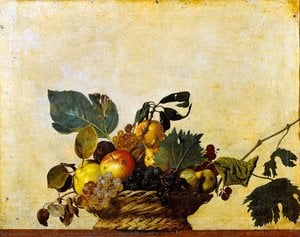
Fruit and a Herring on a Table
複製画のサイズ

Joris Hoefnagel, born in Antwerp around 1542 and tragically dying in Vienna in 1601, stands as a pivotal figure bridging the late Renaissance and the burgeoning Baroque periods. More than simply a painter or illustrator, he was a meticulous observer of nature, a skilled miniaturist, and a crucial contributor to the development of topographical drawing – a field that would profoundly influence generations of artists. His legacy lies not just in his individual works but also in the techniques and approaches he pioneered, shaping the visual language of his time.
Hoefnagel’s early life was steeped in mercantile activity. The son of Jacob Hoefnagel, a diamond dealer and tapestry merchant, he received an unusually comprehensive education, encompassing humanist studies alongside artistic training. While speculation persists regarding his apprenticeship under Hans Bol – a prominent Antwerp painter – the precise details remain elusive. Regardless, this formative period undoubtedly instilled within him a rigorous approach to observation and representation, qualities that would become hallmarks of his later work. His travels through France and Spain exposed him to diverse artistic influences, particularly in the realm of decorative arts and manuscript illumination, experiences which significantly broadened his creative horizons.
Hoefnagel’s most celebrated contributions reside within the intricate world of illuminated manuscripts. He served as a highly sought-after illuminator for wealthy patrons across Europe, producing breathtakingly detailed illustrations for religious texts and scholarly works. His style was characterized by an almost scientific precision – he meticulously documented flora, fauna, and architectural details with remarkable accuracy. This wasn’t merely decorative; it reflected a genuine fascination with the natural world, anticipating the rise of botanical illustration and proto-scientific inquiry.
His work for the *Speculum Humanae Salvationis*, an enormous theological manuscript commissioned by Emperor Charles V, is particularly noteworthy. Within its pages, Hoefnagel rendered hundreds of illustrations – from exotic animals and plants to intricate architectural designs and detailed depictions of courtly life. These images weren’t simply embellishments; they were integral components of the text, providing visual commentary and enriching the reader's understanding. He developed innovative techniques for rendering textures, light, and shadow, pushing the boundaries of manuscript illumination and establishing a new standard for detail and realism.
Beyond his work in illuminated manuscripts, Hoefnagel was a remarkably skilled draftsman. His drawings are characterized by an astonishing level of precision and observation – he captured the nuances of light, texture, and form with unparalleled accuracy. He moved beyond traditional portraiture, developing a unique approach to topographical drawing, meticulously documenting landscapes and architectural structures. This focus on detailed representation foreshadowed the rise of landscape painting as a distinct genre in the Netherlands.
His drawings of Antwerp, for example, are considered groundbreaking. They weren’t merely scenic views; they were carefully constructed representations that captured the city's layout, buildings, and atmosphere with remarkable detail. Hoefnagel’s meticulous approach to observation influenced a generation of artists, including his nephew, Jacob Hoefnagel, who continued to develop and refine these techniques.
Joris Hoefnagel's impact on the course of art history is profound. He bridged the gap between late Gothic artistic traditions and the emerging Renaissance style, incorporating Italian influences while retaining a distinctly Northern European sensibility. His meticulous attention to detail, his pioneering work in topographical drawing, and his contributions to manuscript illumination established new standards for realism, accuracy, and visual storytelling.
Furthermore, Hoefnagel’s detailed botanical illustrations played a crucial role in the development of natural history as a scientific discipline. His images served as models for later generations of artists and scientists, contributing to the burgeoning field of botany and influencing the way nature was depicted and understood. Though his life was tragically cut short, Joris Hoefnagel’s legacy endures as a testament to the power of observation, meticulous craftsmanship, and artistic innovation.

1542 - 1601 , Belgium


最新の美術ニュース、限定オファー、そしてインテリアのアイデアをいち早くお届けします。
お客様のプロジェクトについてお聞かせください。当社の美術専門家が、お客様に合わせた3つのパーソナライズされた芸術提案をご提供いたします。
あなたにぴったりの3作品を無料で厳選いたします


 プレビュー
プレビュー
 シェアする
シェアする シェアする
シェアする
 詳細を見る
詳細を見る

 ダウンロード
 似ている作品
 X線調査
X線調査 スライドショー
 詳細を見る
詳細を見る






































 ガラスオプションは、110cm未満のサイズでのみご利用いただけます。