アーティストの略歴
John Nost Sartorius: The Quintessential Sporting Artist
John Nost Sartorius (1759–1828) stands as a singular figure in British art history—a master of equine painting who captured the spirit of aristocratic leisure and sporting pursuits with unparalleled precision. Born into an artistic lineage, Sartorius’s legacy rests on his prolific output of canvases depicting horses, racing events, and hunting expeditions, cementing his place among the foremost animal painters of his era.
Early Life & Artistic Training
Information about Sartorius's formative years is scarce, but he emerged from obscurity as a descendant of artists who had established themselves in London’s art world. His father, also John Sartorius, was a respected portrait painter, and his grandfather, William Sartorius, possessed considerable artistic talent. This familial tradition instilled within him an appreciation for visual representation and undoubtedly influenced his own artistic inclinations. While biographical details remain elusive, Sartorius's dedication to honing his craft suggests a rigorous apprenticeship under established masters—a crucial step in developing the distinctive style that would define his oeuvre.
A Career Dedicated to Equestrian Art
Sartorius’s professional life commenced around 1781 when he debuted as an exhibitor at the Royal Academy, marking the beginning of a sustained artistic career spanning four decades. Walter Gilbey's seminal work, “Animal Painters of England from the Year 1650,” meticulously documented Sartorius’s contributions to the Academy’s exhibitions, highlighting his commitment to portraying animals with remarkable realism and sensitivity. Notably, he showcased seventy-four paintings—a testament to his prolific output and unwavering passion for equine subjects. Publications like "The Sporting Magazine" further disseminated Sartorius's artistic achievements through engraved plates featuring scenes from racing and hunting—collaborations with prominent engravers such as J. Walker and J. Webb ensuring that his images reached a wide audience.
Notable Paintings & Artistic Style
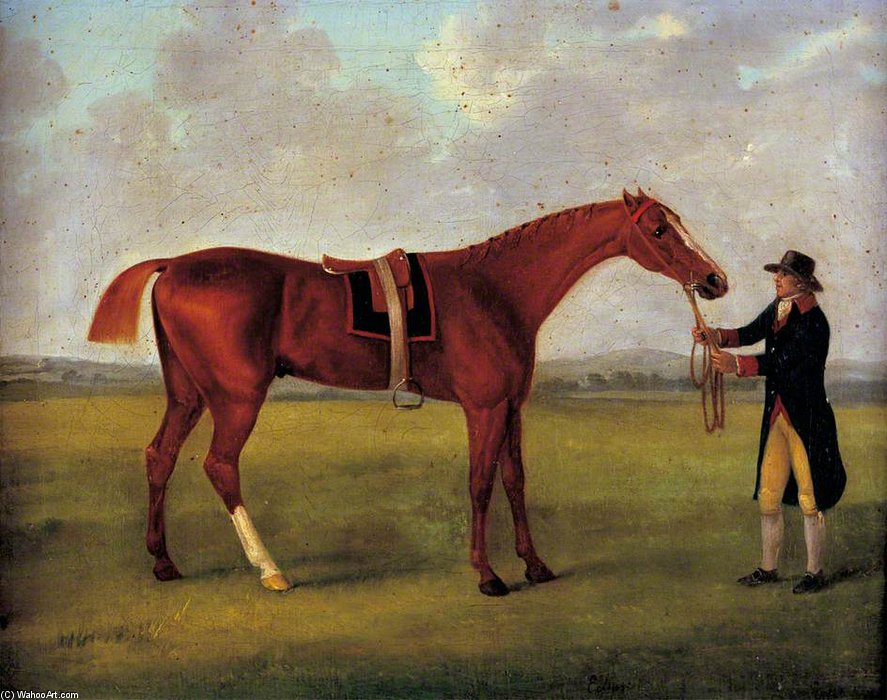
Sartorius’s fame solidified through depictions of iconic racehorses like “Escape,” belonging to the Prince of Wales, and “Grey Diomed,” owned by Sir Charles Bunbury—works imbued with meticulous detail and capturing the dynamism of equestrian sport. Perhaps his most celebrated achievement was the portrayal of “Eclipse,” a legendary thoroughbred whose likeness Sartorius painstakingly recreated from a drawing by his father. These paintings exemplify Sartorius’s artistic style: characterized by Neoclassical influences blended seamlessly with Romantic sensibilities. He skillfully employed chiaroscuro—the dramatic interplay of light and shadow—to sculpt form, conveying texture and movement with breathtaking accuracy. Furthermore, he demonstrated an exceptional understanding of color palettes, utilizing muted tones to evoke atmosphere and enhancing the emotional impact of his compositions.
Legacy & Influence
The publication of “A Set of Four Hunting Pieces” in 1790—featuring plates engraved by Peltro William Tomkins and James Neagle—served as another significant milestone in Sartorius’s artistic journey, establishing him as a respected artist within the broader artistic community. His sons, John Francis Sartorius and Francis Sartorius Jr., continued the family tradition of equine painting, demonstrating Sartorius's enduring influence on subsequent generations of artists. Today, John Nost Sartorius remains revered as one of Britain’s most accomplished animal painters—a figure whose canvases continue to captivate viewers with their timeless beauty and masterful execution. His work stands as a poignant reminder of an era defined by aristocratic pursuits and the profound appreciation for the natural world expressed through art.



 プレビュー
プレビュー
 手描きの絵画を購入
 シェアする
シェアする シェアする
シェアする
 詳細を見る
詳細を見る

 ダウンロード
 似ている作品
 X線調査
X線調査 スライドショー
 詳細を見る
詳細を見る






































 ガラスオプションは、110cm未満のサイズでのみご利用いただけます。





