52.0 x 31.0 cm
 Bank of England Museum
当社のアーティストが、お客様のご希望のサイズと額縁に合わせて、キャンバスに手描きで制作する油彩画です。 ( プリント版に切り替え デジタル画像販売へ切り替え)
作品のオリジナル比率に合わせた、当店の規定サイズからお選びください。

特定のフレームやスペースに合わせて、ご希望のサイズをご入力いただけます。選択されたサイズが元の画像の比率と異なる場合、アートワークをトリミングするか、手描きで要素を追加して絵画を拡張いたします。デジタルモックアップ を制作し、制作開始前にご確認(承認)をいただきます。
画面上のプレビューは、実際のトリミングや拡張を正確に反映しているものではありません。最終的な構図は、モックアップによってのみ正確にご確認いただけます。
カスタムサイズもご利用いただけますが、元の比率を維持するためには、あらかじめ用意されたリストからサイズを選択することをお勧めいたします。

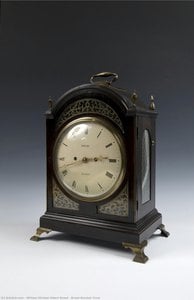
Moore & Sons Bracket Clock
複製画のサイズ

Born in the historic town of Woodbridge in 1821, John Moore of Ipswich emerged as a profound voice within the British maritime and landscape tradition. His life was deeply intertwined with the salt air and industrious spirit of the Suffolk coast, a setting that would later become the soul of his artistic output. Though he began his professional journey not in an atelier but as a painter and decorator, this practical foundation provided him with a unique, tactile understanding of color and surface. As a self-taught artist, Moore possessed a raw, unmediated connection to his subject matter, allowing him to translate the rhythmic pulse of the sea and the quiet dignity of the English countryside into works of enduring emotional resonance.
The trajectory of Moore’s career was marked by a transition from the utilitarian application of pigment to the sublime exploration of light and atmosphere. His early years in Ipswich, a bustling port city, placed him at the heart of a thriving seafaring culture. This environment served as his primary instructor, teaching him to observe the intricate interplay between the shifting tides and the heavy, moisture-laden skies of East Anglia. His mastery lay in capturing the dual nature of the coast: the dramatic, turbulent energy of waves crashing against rugged cliffs and the profound, meditative stillness of calm waters reflecting a twilight sky.
While his roots were firmly planted in the local soil of Suffolk, Moore’s artistic horizons expanded through significant intellectual and social connections. His studies in London brought him into contact with the influential George Frederic Watts, whose Symbolist leanings encouraged Moore to look beyond mere visual accuracy toward a deeper, more psychological exploration of his landscapes. This exposure infused his work with a sense of narrative depth, where a simple seascape could evoke feelings of solitude, resilience, or awe.
A pivotal moment in his professional development arrived in 1874, when he became a founding member of the Ipswich Fine Art Club. This institution was more than just a social circle; it was a crucible for creativity that fostered intellectual exchange among the region's most talented painters. Through this club, Moore helped establish a localized artistic movement that celebrated the specific beauty of the Suffolk landscape, ensuring that the maritime heritage of Ipswich was immortalized through fine art. His ability to find patrons among the wealthy inhabitants of the town further solidified his standing as a prominent figure in the regional art scene.
The oeuvre of John Moore is characterized by a remarkable versatility, ranging from sweeping maritime vistas to intimate rural scenes. His paintings often serve as windows into a vanished era of British life, capturing the essence of the following themes:
By the time of his passing in 1902, John Moore had left an indelible mark on the landscape of British art. He remains a celebrated figure not merely for his technical skill, but for his ability to capture the very breath of the Suffolk coast. His work continues to resonate with modern audiences, offering a nostalgic and deeply moving connection to the maritime traditions and the serene, rugged beauty of the English seaside.

1821 - 1902


 プレビュー
プレビュー
 シェアする
シェアする シェアする
シェアする
 詳細を見る
詳細を見る

 ダウンロード
 似ている作品
 X線調査
X線調査 スライドショー
 統計情報
統計情報 詳細を見る
詳細を見る






































 ガラスオプションは、110cm未満のサイズでのみご利用いただけます。