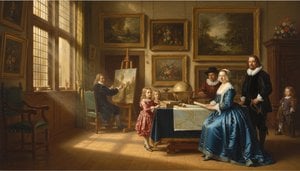
The Music Lesson: A Portrait of Domestic Harmony
John George Brown’s “The Music Lesson,” painted circa 1668 by Gerard Ter Borch the Younger, offers a glimpse into the idealized domestic life of the Dutch Golden Age. More than just a depiction of musicians playing instruments—a harp and virginal—the painting embodies themes of courtship, affection, and intellectual refinement, reflecting societal values during a period marked by burgeoning bourgeois culture. Its subtle nuances invite contemplation on the complexities of human relationships and the pursuit of beauty within the confines of home.
- Subject Matter: The scene portrays a young woman seated beside a man at a richly furnished couch, engaged in playing music. This was a common motif during this time period, symbolizing marital aspirations and demonstrating social status.
- Style: Ter Borch’s style is characterized by meticulous realism combined with atmospheric lighting—a hallmark of Baroque painting—creating a sense of depth and intimacy within the room. The artist skillfully captures the textures of fabrics and instruments, emphasizing detail and precision.
- Technique: Executed in oil on canvas, “The Music Lesson” utilizes chiaroscuro – dramatic contrasts between light and dark – to illuminate key figures and objects, drawing attention to their expressions and gestures. This technique enhances the emotional impact of the scene, conveying a feeling of serene contemplation.
Historical Context: The Pursuit of Virtue and Domestic Tranquility
The painting emerged during a time when Dutch society prioritized moral virtue and domestic tranquility—values championed by Calvinist Protestantism. Music was considered an appropriate pastime for couples preparing for marriage, symbolizing harmony and intellectual engagement. Furthermore, the inclusion of potted plants contributes to the overall ambiance, representing fertility and prosperity – symbols prevalent in aristocratic interiors. The painting’s setting reflects the aspirations of the upper classes who sought to cultivate refined tastes and create aesthetically pleasing homes.
Symbolism: Bridging Music and Romance
The harp and virginal serve as potent symbols within the artwork, representing feminine grace and musical artistry alongside male intellect and refinement. The woman’s attentive gaze towards her teacher underscores the importance of communication and mutual admiration in romantic relationships. The carefully arranged furniture—the couch draped with luxurious fabrics—further reinforces the notion of comfort and elegance – essential elements of aristocratic life during this era.
Emotional Impact: A Moment Frozen in Time
“The Music Lesson” transcends mere representation; it captures a fleeting moment of serene connection between two individuals. The artist’s masterful use of light and shadow evokes feelings of warmth, intimacy, and contemplation. It speaks to the universal desire for beauty, harmony, and meaningful relationships—themes that continue to resonate with viewers centuries later. Its enduring appeal lies in its ability to transport us back to a bygone era while simultaneously reminding us of timeless human emotions.