当社のアーティストが、お客様のご希望のサイズと額縁に合わせて、キャンバスに手描きで制作する油彩画です。 ( プリント版に切り替え デジタル画像販売へ切り替え)





























作品のオリジナル比率に合わせた、当店の規定サイズからお選びください。

特定のフレームやスペースに合わせて、ご希望のサイズをご入力いただけます。選択されたサイズが元の画像の比率と異なる場合、アートワークをトリミングするか、手描きで要素を追加して絵画を拡張いたします。デジタルモックアップ を制作し、制作開始前にご確認(承認)をいただきます。
画面上のプレビューは、実際のトリミングや拡張を正確に反映しているものではありません。最終的な構図は、モックアップによってのみ正確にご確認いただけます。
カスタムサイズもご利用いただけますが、元の比率を維持するためには、あらかじめ用意されたリストからサイズを選択することをお勧めいたします。
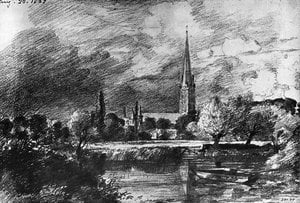
View on the Stour
複製画サイズ一覧
John Constable's “View on the Stour” is more than just a landscape; it’s an intimate portrait of a cherished place and a pivotal moment in the evolution of British painting. Executed around 1822, this work encapsulates the artist’s lifelong dedication to capturing the beauty and emotional resonance of the Suffolk countryside – specifically, the area surrounding his home known today as “Constable Country.” The scene unfolds with a gentle tranquility, inviting the viewer into a world where the river Stour meanders through lush meadows, framed by mature trees that stand as silent witnesses to the passage of time. It’s a composition built on observation and affection, a deliberate departure from the grand historical narratives favored by many of his contemporaries.
Constable emerged during a period of significant artistic transition, bridging the gap between the Neoclassical tradition and the burgeoning Romantic movement. While he received formal training at the Royal Academy, he found its emphasis on idealized forms and classical compositions restrictive. Instead, he sought inspiration in the works of 17th-century Dutch masters like Jacob van Ruisdael and Claude Lorrain, admiring their ability to convey atmosphere and light with remarkable sensitivity. However, Constable wasn’t simply imitating these artists; he was forging his own path, grounding his landscapes in direct observation and personal experience. “View on the Stour” exemplifies this approach – it's not a picturesque fantasy but a faithful rendering of a specific place, imbued with the artist’s deep emotional connection to the land. The subtle interplay of light and shadow across the water, the delicate rendering of foliage, and the inclusion of everyday figures engaged in simple activities all contribute to a sense of authenticity and immediacy.
Constable’s technique was revolutionary for its time. He rejected the highly finished, polished surfaces favored by many academic painters, opting instead for a more painterly approach characterized by loose brushwork and visible texture. In “View on the Stour,” this is evident in the way he renders the clouds – not as solid forms but as shifting masses of light and air. This technique wasn’t merely stylistic; it was integral to his goal of capturing the fleeting effects of weather and atmosphere. He often worked on paintings over extended periods, returning to them repeatedly to refine details and capture subtle changes in light. The result is a painting that feels alive, breathing with the same energy as the natural world it depicts. The composition itself is carefully balanced, drawing the eye through the scene along the winding river, while the strategically placed trees create depth and frame the view.
“View on the Stour” wasn’t an immediate success upon its exhibition at the Royal Academy in 1822. Critics were initially puzzled by Constable's focus on seemingly mundane subjects, accustomed as they were to more grandiose themes. However, his work gradually gained recognition, influencing a generation of artists both in England and abroad. The painting’s impact extended beyond the art world, contributing to a growing appreciation for the beauty of the English countryside and inspiring a sense of national identity. Today, “View on the Stour” is celebrated as a masterpiece of Romantic landscape painting, a testament to Constable's skill, vision, and unwavering commitment to capturing the essence of nature. A reproduction of this work brings not only a beautiful image into a space but also a piece of art history—a window into a world where tranquility reigns and the beauty of the natural world is celebrated with profound sincerity.
ジョン・コンスタブル作「View on the Stour」に似た作品は、作品の似ている作品ページにまとめられています。
「View on the Stour」の著作権の状態について — パブリックドメイン(著作権消滅) — は、作者の没年である1837に基づいています。
視覚的な明るさの観点から見ると、ジョン・コンスタブル作「View on the Stour」 は bright です。
ジョン・コンスタブル作「View on the Stour」 の色彩分析は、Bold なコントラストと Unified Palette な調和を記録しています。
対応するデバイスの拡張現実(AR)機能を使用し、作品のARプレビューページから、ご自身の壁にジョン・コンスタブル作「View on the Stour」をプレビュー表示することができます。
「View on the Stour」の主題はlandscape, river, nature, england, pastoral, trees, countryside, tranquilityです。
「View on the Stour」のスライドショーは、作品のスライドショーページでご覧いただけます。
「View on the Stour」の中で最も際立っている色はPhthalo Green (#222418)です。作品の主色(メインカラー)を知ることは、インテリアとのコーディネートを考える際に役立ちます。


1776 - 1837 , イギリス

Explore the profound beauty of American Romanticism. Discover how the Hudson River School captured the wild frontier through masterful landscapes, exploring the legacy of legends like Thomas Cole and Asher Durand in this deep dive into art history.

Explore the profound beauty of American art history. From the Hudson River School to iconic landscapes, discover a curated journey through the masterpieces that defined a nation's spirit and the enduring legacy of American Romanticism.

Explore the profound legacy of John Constable. Discover how his mastery of light, atmosphere, and the English landscape redefined Romanticism through timeless, museum-quality oil reproductions for discerning collectors.

 設置イメージを確認
 送る
送る シェア
シェア
 詳細情報
詳細情報 ガイドを表示

 画像をダウンロード
 似ている作品
 X線調査
X線調査 スライドショー
 統計情報
統計情報
 続きを読む
続きを読む









 ガラスオプションは、110cm未満のサイズでのみご利用いただけます。