
x


WahooArt.com を選ぶことは、単に画像を手に入れることではありません。それは、プロの手によって精密に仕上げられ、満足保証が付いた高品質なデジタルアートワークを受け取ることを意味します。ご注文いただいた際に自動的に付随する内容は、以下の通りです:

ご注文から72時間以内に、高解像度のデジタル画像ファイルがメールでお手元に届きます。すぐにそのままご利用いただけます。

お客様の作品は、高度なAIツールと専門家による手作業の編集を組み合わせてプロフェッショナルに最適化されており、細部のディテール、鮮明さ、そして正確な色再現性を最大限に引き出しています。

ファイルを誤って削除したり、紛失してしまったりしましたか?ご安心ください。いつでも無料で再送いたします。

関税や手数料、配送料を気にすることなく、お気に入りのアートワークをすぐにお楽しみいただけます。デジタルダウンロードは常に免税です。

プロ仕様のツールとカラーマネジメント技術を用いることで、デジタル画像が元の色を最大限に忠実に再現することを保証いたします。

ご購入いただいたデジタル画像にご満足いただけない場合は、60日以内であれば、修正または100%の返金(理由を問う必要はありません)をさせていただきます。

ご満足いただけない場合は、デジタルファイルを受け取ってから60日以内であれば、理由を問わず全額返金いたします。

3枚購入で10%OFF - 5枚購入で15%OFF - 10枚以上購入で20%OFF。クリエイティブなプロジェクト、ギャラリー、エージェンシーに最適です。

Born on April 16, 1940, in Highland Park, New Jersey, Joan Snyder’s artistic journey began not within the hallowed halls of formal training but amidst the quiet rhythms of rural life. Her childhood, steeped in a sense of place and deeply connected to her family's heritage – a blend of Russian and German Jewish roots – would profoundly shape her visual language. This early grounding, coupled with an intuitive understanding of materials and process, laid the foundation for a career that would challenge conventions of abstract painting and forge a distinctly personal and powerfully expressive style.
Snyder’s formal artistic education commenced in 1962 at Douglass College, where she earned her Bachelor of Arts degree in Sociology. However, it was her subsequent enrollment in the Master of Fine Arts program at Rutgers University in 1963 that truly ignited her creative fire. Influenced by the expressive currents of German Expressionism – particularly artists like Ernst Ludwig Kirchner and Emil Nolde – as well as the pioneering work of Wassily Kandinsky and Alexei Jawlensky, Snyder began to experiment with layering materials and embracing a raw, emotional approach to painting. This early exploration was not merely about replicating visual forms but about translating internal experiences onto canvas, a process she would continue to refine throughout her career.
The early 1970s marked a pivotal period in Snyder’s artistic development. Responding to the dominance of color field painting and seeking to re-establish painting as a dynamic, process-oriented medium, she began creating what would become known as her "stroke paintings." These works, characterized by their deliberate use of grids overlaid with gestural brushstrokes, represented a radical departure from traditional abstract forms. The grid, initially employed as a structural device, quickly evolved into a means of deconstructing and reassembling the history of painting itself – a direct challenge to the established canon.
Snyder’s process during this period was intensely physical and intuitive. She would meticulously apply layers of gesso, paint, gauze, thread, and even glitter to the canvas, building up complex textures and surfaces that seemed to pulse with energy. These materials weren't simply applied; they were integrated into a ritualistic act, reflecting her deep connection to tradition and her desire to imbue her work with symbolic meaning. The “stroke paintings” weren’t about creating representational images but about exploring the very essence of painting – its materiality, its process, and its capacity for emotional resonance.
As Snyder moved into the late 1970s, she began to move beyond the formal constraints of the grid, incorporating symbols, text, and a wider range of materials into her paintings. This shift reflected a deepening engagement with personal experience and a desire to articulate complex emotional landscapes. Her work became increasingly autobiographical, grappling with themes of identity, gender, sexuality, and the legacy of trauma – particularly the Holocaust through the lens of her maternal grandmother’s story.
Snyder's exploration of female subjectivity was central to this period. She sought to challenge conventional representations of women in art and to create paintings that spoke directly to the experiences of women—her own, as well as those of others. Her use of materials like thread and fabric, often imbued with personal significance, further underscored her commitment to exploring the complexities of female identity.
Joan Snyder’s artistic vision has been widely recognized throughout her career, earning her numerous prestigious awards and accolades. She is a recipient of the MacArthur Fellowship (2007), a Guggenheim Memorial Fellowship (1983), and a National Endowment for the Arts Fellowship (1974). Her work has been exhibited extensively in major museums and galleries around the world, including the Whitney Museum of American Art, the Guggenheim Museum, Tate Modern, and the Jewish Museum.
Snyder’s influence extends far beyond her own body of work. She is considered a key figure in the feminist art movement of the 1970s and has inspired generations of artists to explore new approaches to painting and to challenge traditional artistic conventions. Her willingness to embrace experimentation, to incorporate unconventional materials, and to confront difficult emotional subjects has cemented her place as one of the most important and enduring painters of her generation. Today, Joan Snyder continues to paint with a fierce independence and unwavering commitment to her unique vision, reminding us of the power of art to connect us to ourselves, to each other, and to the deepest currents of human experience.
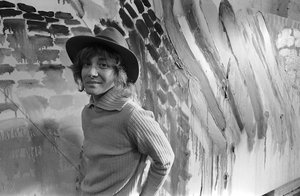
1940 - , United States of America


最新の美術ニュース、限定オファー、そしてインテリアのアイデアをいち早くお届けします。
お客様のプロジェクトについてお聞かせください。当社の美術専門家が、お客様に合わせた3つのパーソナライズされた芸術提案をご提供いたします。
あなたにぴったりの3作品を無料で厳選いたします


 プレビュー
プレビュー
 プリントを購入
 シェアする
シェアする シェアする
シェアする
 詳細を見る
詳細を見る

 ダウンロード
 似ている作品
 X線調査
X線調査 スライドショー

 詳細を見る
詳細を見る


