

迅速な制作と多彩な仕上げオプションを備えた、ミュージアムクオリティのジークレーまたはキャンバスプリント。 ( 手描きの絵画を購入 Switch to Digital Image)





























作品のオリジナル比率に合わせた、当店の規定サイズからお選びください。

特定のフレームやスペースに合わせて、ご自身でサイズを指定することも可能です。選択されたサイズが元の画像の比率と一致しない場合、作品をトリミングするか、鏡面反射または単色での塗りつぶしによって画像を拡張いたします。制作を開始する前に、ご確認用のデジタルモックアップをお送りいたします。
画面上のプレビューには、実際のトリミングや拡張は反映されませんのでご注意ください。最終的な構図を正確に確認できるのは、モックアップのみとなります。
カスタムサイズも承っておりますが、元の比率を維持するためには、あらかじめ用意されたリストからサイズを選択することをお勧めいたします。

Pasted Paper
複製画のサイズ
Joan Miró's *Papier collé* is not merely an artwork; it’s a portal into the artist’s deeply personal and playfully enigmatic world. Created during a pivotal period in his artistic evolution, this piece exemplifies Miró’s masterful ability to distill complex emotions and subconscious thoughts into deceptively simple forms. The composition—two circles dominating the canvas, one larger and bearing an intriguing aperture, the other suggesting a whimsical hat—immediately draws the viewer into a realm of abstract contemplation. It's a work that invites not analysis, but *feeling*, a direct connection to the artist’s inner landscape.
To understand *Papier collé* is to appreciate its place within Miró’s broader artistic journey. Born in Barcelona in 1893, Miró was initially influenced by the Post-Impressionists like Van Gogh and Cézanne, absorbing their expressive use of color and form. However, his move to Paris in the 1920s proved transformative. He became increasingly involved with the Surrealist movement, though he always maintained a unique artistic voice that resisted strict categorization. *Papier collé* emerges from this fertile ground—a period where Miró was actively exploring automatism and the power of the subconscious. The technique itself – “pasted paper” in French – reflects a deliberate rejection of traditional painting methods, embracing chance and spontaneity. It’s as if Miró is dismantling the conventions of representation to reveal something more primal and authentic.
The symbolism within *Papier collé* is deliberately ambiguous, allowing for multiple interpretations. The larger circle, punctured by a void, can be seen as representing wholeness disrupted, perhaps alluding to the fragility of existence or the inherent incompleteness of human understanding. The lines etched upon its surface—resembling equations or diagrams—hint at an underlying order attempting to make sense of chaos. Meanwhile, the smaller circle, playfully resembling a hat, introduces a touch of whimsy and personification. Is it a self-portrait in disguise? A symbol of identity? Miró rarely offered definitive explanations for his symbols, preferring instead to let them resonate with viewers on an individual level. This deliberate ambiguity is key to the work’s enduring power; it's not about *what* the shapes mean, but *how* they make you feel.
Miró’s influence on 20th-century art is undeniable. He paved the way for generations of artists to explore abstraction, symbolism, and the boundless possibilities of the imagination. *Papier collé*, though seemingly simple in its execution, embodies this spirit of playful innovation. It's a testament to Miró’s belief that art should be accessible, joyful, and deeply personal. Owning a reproduction of this work isn’t simply acquiring a beautiful object; it’s inviting a piece of Miró’s vibrant universe into your space—a constant reminder to embrace the unexpected, celebrate individuality, and find beauty in the abstract.

1893 - 1983 , スペイン

抽象表現主義を定義する10の傑作。ポロック、ロスコら巨匠たちの情熱と色彩の世界へ。各作品に込められた物語と技法を紐解き、至高のアート体験を。WahooArt.comで、ミュージアムクオリティの複製画や洗練されたインテリアアイデアを発見してください。

ダリ、マグリット…シュルレアリスムを代表する10選を紐解く。夢と無意識の世界へ誘う傑作の裏側を徹底解説。空間に彩りを添える、至高のアートプリントを見つけませんか?WahooArt.comでコレクションを探索しよう。

ジョアン・ミロの傑作25選🎨 シュルレアリスムを代表する巨匠、ミロの世界へ。色彩と象徴に満ちた絵画の物語を紐解き、インテリアアートのインスピレーションを得ましょう。WahooArtで高品質なアートプリントをお探しください✨
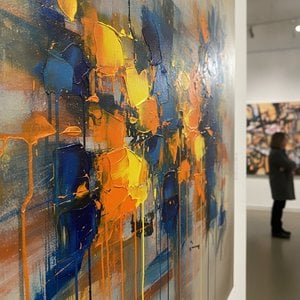
Master the high-impact world of contemporary abstraction. Discover how bold colors, textures, and modern movements like Abstract Expressionism can transform your space with premium, high-energy art curated for the design-conscious professional.

モンドリアン、マレーヴィチ…幾何学的抽象絵画を代表する傑作10選。各作品の背景や色彩構成、アーティストの情熱に迫ります。美術館品質の複製画はWahooArt.comで。オンラインでアートコレクションをご覧ください。

 プレビュー
プレビュー
 シェアする
シェアする シェアする
シェアする
 詳細を見る
詳細を見る

 ダウンロード
 似ている作品
 X線調査
X線調査 スライドショー
 Stats
Stats

 詳細を見る
詳細を見る









 ガラスオプションは、110cm未満のサイズでのみご利用いただけます。


