

このページに掲載されている作品は著作権法によって保護されており、当社の許可なく同一の複製物を制作または販売することは法律で禁じられています。この保護は、以下のような国際条約に基づき執行されます。 ベルヌ条約 および、以下の条項に定められたものを含む各国の法律により、 米国著作権法 第17編。
この手法は、著作権で保護された作品の複製や複写を伴わないため、著作権法に完全に準拠しています。これは単なる模倣ではなく、創造的な再解釈です。元の作品からインスピレーションを受けつつも、それとは異なる、全く新しい絵画を生み出すものです。
スピーディーな制作と多彩な仕上げオプションが魅力の、ミュージアムクオリティなジークレー・キャンバスプリント。 ( 手描きの複製画を注文する デジタル画像販売へ切り替え)
作品のオリジナル比率に合わせた、当店の規定サイズからお選びください。

額縁や壁のスペースに合わせて、ご希望の幅と高さを入力してください。プリントはカットすることは可能ですが、元の画像より大きくすることはできないため、異なる比率のサイズを選択された場合は、画像の一部が欠けることになります。印刷を開始する前に、内容を確認していただくためのデジタルモックアップをお送りいたします。このページに表示されている画像は、実際のカット後の状態を示すものではありません。実際の仕上がりはモックアップにてご確認ください。
Untitled
複製画サイズ一覧
Jiang Zhenghong作「Untitled」に似た作品は、作品の似ている作品ページにまとめられています。
「Untitled」は、作品のX線解析ページにて、層ごとに詳しく観察することができます。このビューアは修復家のライトベンチに着想を得ており、画像の11層にわたる光学的な読み取りを可能にしています。
著作権について、「Untitled」は著作権により保護されていますです。
Born in 1936 amidst the scenic landscapes of Zhoushan, Zhejiang Province, Jiang Zhenghong has emerged as a profound voice in the realm of contemporary Chinese painting and printmaking. His life’s work is not merely a collection of images but a continuous dialogue with the natural world, rooted deeply in the heritage of his homeland. The foundations of his mastery were laid at the prestigious Central Academy of Fine Arts, where he graduated in 1960. It was within these hallowed halls that Zhenghong underwent a rigorous intellectual and technical transformation, absorbing the wisdom of legendary masters such as Li Hua, Li Keran, Ye Shaoyu, Li Kuchan, Guyuan, Huang Yongyu, and Zhang Ding. These mentors provided him with more than just technique; they bequeathed to him a lineage of aesthetic philosophy that balances the meticulous observation of reality with the spiritual essence of the landscape.
The evolution of Zhenghong’s style is a testament to his ability to bridge the gap between ancient tradition and modern sensibility. His academic pursuits took him through the halls of the Central University for Nationalities, Tsinghua University, and the Academy of Fine Arts, allowing him to weave a complex tapestry of art history into his creative practice. This deep scholarly grounding enabled him to master the nuances of Guo hua (ink wash painting), where every brushstroke serves as a vessel for emotion. His work often captures the ethereal beauty of the Zhejiang landscape—towering, mist-shrouded peaks that seem to touch the heavens and tranquil, flowing rivers that mirror the shifting light of day. Through his eyes, the mountains and valleys are not just geological formations but living entities imbued with the symbolic resonance of Confucian philosophy and Daoist cosmology.
Beyond the delicate strokes of his landscape paintings, Jiang Zhenghong has made significant contributions to the art of printmaking, demonstrating a versatility that is rare among his contemporaries. His early brilliance was recognized on the global stage when his work New City earned the Golden Medal at the 7th World Youth Festival in Vienna in 1959. This early triumph signaled the arrival of an artist capable of communicating universal themes through a uniquely Chinese lens. Throughout his prolific career, which includes four decades of dedicated teaching at institutions like the Central Academy of Arts and Crafts, he has remained a steadfast guardian of artistic excellence, influencing generations of students with his commitment to both precision and poetic expression.
The technical brilliance of his oeuvre lies in the seamless integration of varied textures and tonal depths. In his landscapes, one can observe:
Jiang Zhenghong’s historical significance is cemented by his numerous accolades, including the prestigious Lu Xun Literature and Art Award from the Chinese Print Artists Association. His ability to maintain the sanctity of traditional Shanshui aesthetics while embracing the evolving landscape of modern art ensures that his legacy remains as enduring as the mountains he paints. To encounter a work by Zhenghong is to experience a moment of profound serenity, an invitation to step into a world where the boundaries between the observer and the natural universe dissolve into a single, breathtaking vista.

1936 - , China
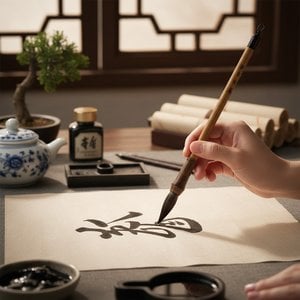
Embark on a profound journey through the soul of Chinese calligraphy. Explore the historical mastery of ink, brush, and script, from ancient Zhuanshu to elegant running script, and discover how this timeless art form reflects the enduring spirit of classical East Asian aesthetics.

Explore the profound elegance of ceramic art. From master glazes to sculptural forms, our expert guide offers discerning collectors deep insights into the mastery, texture, and timeless value of fine ceramics for sophisticated collections and luxury interiors.
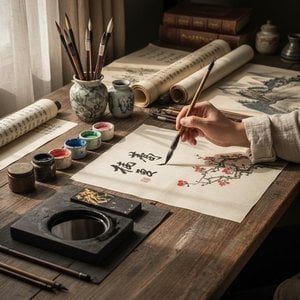
Embark on a sophisticated exploration of ink wash painting and Sumi-e. Uncover the profound historical lineages, Zen philosophies, and technical mastery behind this timeless medium in our authoritative guide for fine art enthusiasts.

Discover the profound serenity of timeless pastoral landscapes. From Impressionist masterpieces to bespoke oil commissions, explore how curated fine art brings the enduring beauty and tranquility of nature into your luxury home interior.

 設置イメージを確認
 送る
送る シェア
シェア
 詳細情報
詳細情報 ガイドを表示

 画像をダウンロード
 似ている作品
 X線調査
X線調査 スライドショー
 統計情報
統計情報

 続きを読む
続きを読む






































 ガラスオプションは、110cm未満のサイズでのみご利用いただけます。


