x


 Expressionism
 1959
1959 66.0 x 50.0 cm
迅速な制作と多彩な仕上げオプションを備えた、ミュージアムクオリティのジークレーまたはキャンバスプリント。 ( 手描きの絵画を購入 画像を購入)
作品のオリジナル比率に合わせた、当店の規定サイズからお選びください。

特定のフレームやスペースに合わせて、ご自身でサイズを指定することも可能です。選択されたサイズが元の画像の比率と一致しない場合、作品をトリミングするか、鏡面反射または単色での塗りつぶしによって画像を拡張いたします。制作を開始する前に、ご確認用のデジタルモックアップをお送りいたします。
画面上のプレビューには、実際のトリミングや拡張は反映されませんのでご注意ください。最終的な構図を正確に確認できるのは、モックアップのみとなります。
カスタムサイズも承っておりますが、元の比率を維持するためには、あらかじめ用意されたリストからサイズを選択することをお勧めいたします。

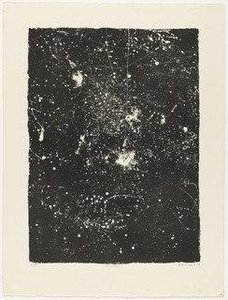
Waiting (Attente)
複製画のサイズ
Jean Philippe Arthur Dubuffet’s “Waiting (Attente),” created in 1959, is a striking monochrome print that invites contemplation and evokes a profound sense of unease. This work exemplifies Dubuffet’s pioneering role in the development of *Art Brut*, or "raw art," a movement he himself defined as art produced outside the established academic traditions.
This print, likely created using woodcut or linocut techniques, showcases a deliberate and textured aesthetic. The composition is dominated by a large central square filled with dense clusters of small white dots against a stark black background. This interplay of light and dark creates an immediate visual tension. The technique itself is integral to the artwork’s meaning. Dubuffet intentionally embraced the imperfections inherent in printmaking—the unevenness, the slight variations in ink density—to convey a sense of immediacy and authenticity. Notice how lines are implied through the varying density of these dots, suggesting darker regions with thicker concentrations. The overall effect is not one of precise representation but rather an exploration of texture and tonal relationships.
“Waiting (Attente)” transcends mere visual appeal; it delves into deeper psychological territory. The artwork’s symbolism remains open to interpretation, which is characteristic of Dubuffet's approach. The dense black area can be seen as representing the hidden depths of the human psyche—emotions suppressed or complexities unexplored. Conversely, the scattered white dots might symbolize fleeting moments of clarity, awareness, or even hope amidst a prevailing sense of darkness and uncertainty. The title itself, "Waiting," suggests a state of anticipation, perhaps for something unknown or inevitable. This ambiguity is key to the work’s enduring power.
Dubuffet created “Waiting (Attente)” during a period of significant artistic experimentation in post-war Europe. Rejecting traditional notions of beauty and skill, he sought inspiration from sources outside the art world—children’s drawings, folk art, and even graffiti. *Art Brut* aimed to capture an unfiltered expression of human experience, free from intellectual or academic constraints. Dubuffet's work challenged the established norms of the art world, paving the way for new forms of abstract expressionism and influencing subsequent generations of artists. His embrace of unconventional materials and techniques reflected a broader cultural shift towards authenticity and raw emotion.
“Waiting (Attente)” is not an artwork that offers easy answers or comforting resolutions. Instead, it evokes a feeling of unease, contemplation, and mystery. The stark contrast between light and dark, combined with the textured surface, creates a visually arresting experience that lingers in the mind. Despite its abstract nature, this print possesses remarkable decorative potential. Its monochrome palette lends itself to a variety of interior design schemes—from minimalist modern spaces to more eclectic environments seeking a touch of dramatic intensity. A reproduction of "Waiting (Attente)" can serve as a powerful focal point, sparking conversation and adding depth to any space.


1901 - 1985 , 日本国

抽象表現主義を定義する10の傑作。ポロック、ロスコら巨匠たちの情熱と色彩の世界へ。各作品に込められた物語と技法を紐解き、至高のアート体験を。WahooArt.comで、ミュージアムクオリティの複製画や洗練されたインテリアアイデアを発見してください。

Journey through Wassily Kandinsky's 25 most iconic abstract paintings. Explore his revolutionary use of color, form & spiritual expressionism. Find museum-quality Kandinsky reproductions and elevate your home decor with WahooArt.com. Discover all masterpieces on WahooArt.com!

Explore 10 iconic paintings dominated by black tones, from Rembrandt’s chiaroscuro to Goya's dark expressions. Discover the stories behind these masterpieces & find museum-quality art reproductions for your home at .

モンドリアン、マレーヴィチ…幾何学的抽象絵画を代表する傑作10選。各作品の背景や色彩構成、アーティストの情熱に迫ります。美術館品質の複製画はWahooArt.comで。オンラインでアートコレクションをご覧ください。

Explore the profound emotional depth of Lyrical Abstraction. Discover how masters like Raymond Parker used color and form to bridge Impressionism and Abstract Expressionism. Learn about this pivotal movement through our expert-led art history guide.


最新の美術ニュース、限定オファー、そしてインテリアのアイデアをいち早くお届けします。
お客様のプロジェクトについてお聞かせください。当社の美術専門家が、お客様に合わせた3つのパーソナライズされた芸術提案をご提供いたします。
あなたにぴったりの3作品を無料で厳選いたします


 プレビュー
プレビュー
 シェアする
シェアする シェアする
シェアする
 詳細を見る
詳細を見る

 ダウンロード
 似ている作品
 X線調査
X線調査 スライドショー
 詳細を見る
詳細を見る






































 ガラスオプションは、110cm未満のサイズでのみご利用いただけます。


![Abstract Composition [triptych] — Vaclav Vytlacil, Abstract Expressionism](/media/artworks/images-thumb/08/3c/083c0675045645fd42d4e6c6d63f1ced.jpg)