A Life Immersed in Roman Splendor
Jean Barbault, a name perhaps less resonant than those of his celebrated contemporaries, nevertheless occupies a fascinating niche within the artistic landscape of 18th-century Rome. Born around 1718 in the quiet French town of Viarmes, his journey led him to become a keen observer and documenter of Roman life, costume, and antiquity. While he may not have achieved widespread fame during his lifetime, Barbault’s meticulous work offers invaluable insights into an era captivated by classical revival and exoticism. His story is one of artistic ambition, self-driven exploration, and a dedication to capturing the ephemeral beauty of a city steeped in history. Initially trained under Jean Restout II in Paris, Barbault harbored aspirations for the prestigious Prix de Rome, but despite failing to secure it in 1745, his determination remained unshaken. In 1747, fueled by an unwavering artistic spirit, he embarked on a self-funded journey to Rome, supporting himself through engraving work while immersing himself in the city’s vibrant atmosphere.
The Allure of Rome and Piranesi's Influence
Rome proved to be Barbault’s true artistic home. Admitted to the French Academy in 1750, he flourished within its stimulating environment. The city itself became his muse, inspiring a body of work that reflects both its architectural grandeur and the lively character of its inhabitants. It is impossible to discuss Barbault without acknowledging the profound influence of Giovanni Battista Piranesi, the master Italian printmaker renowned for his dramatic and detailed etchings of Roman ruins. Like Piranesi, Barbault possessed an exceptional ability to capture the scale and atmosphere of ancient monuments, but he also brought a unique sensibility to his work—a fascination with the everyday lives of Romans and a penchant for depicting them in both traditional attire and elaborate, fantastical costumes. This interest in costume wasn’t merely decorative; it reflected the broader 18th-century preoccupation with cultural difference and the allure of the “Orient.” Barbault's artistic vision extended beyond mere replication; he sought to interpret and reimagine Roman life through his own distinctive lens.
Costume, Carnival, and Monumental Documentation
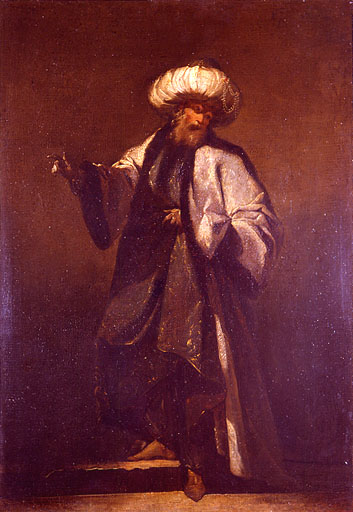
Barbault’s artistic output can be broadly categorized into several key areas, each revealing a different facet of his creative personality. He frequently portrayed local Roman women, often adorned in the vibrant dresses of Naples, alongside fellow artists who populated the city's bustling art scene. Perhaps most captivating is his *Turkish Masquerade Series* (1748), a collection of sketches and paintings documenting the elaborate carnival festivities held at the French Academy in Rome. Barbault himself actively participated in these events, even dressing as an officer of the Sultan’s guard—an experience that directly inspired works like “The Greek Sultana” and "Sultane grecque". These pieces are remarkable for their depiction of imaginative “Oriental” costumes, which were highly fashionable during the mid-18th century. However, Barbault's most significant contribution lies in his two published folios: *Les Plus Beaux Monuments de Rome Ancienne* (1761) and *Les Plus Beaux Edifices de Rome Moderne* (1763). These meticulously detailed etchings served as invaluable visual records of both ancient Roman ruins and contemporary buildings, offering a comprehensive survey of the city’s architectural heritage. He also undertook larger-scale paintings, such as “The Four Corners of the World” (1751), a nearly four-meter wide panorama depicting artists engaged in a lively carnival procession.
A Lasting Legacy: Documenting an Era
While some contemporaries may have dismissed Barbault as a "minor talent" in terms of painting, his etchings are widely regarded for their precision and artistry. He played a crucial role in popularizing the representation of traditional costumes in art, anticipating trends that would gain momentum in later decades. More importantly, his published folios remain invaluable historical documents, providing a detailed visual record of 18th-century Rome and its architectural treasures. Barbault’s work offers not only aesthetic pleasure but also a window into the cultural values and artistic practices of his time. Though he passed away in Rome in 1762 at the relatively young age of 43, leaving behind a widow and three children, his legacy has endured. Renewed interest in his oeuvre, evidenced by exhibitions held in France since the 1970s—including a significant showing at the Musée des Beaux-Arts in Strasbourg in 2010—has solidified his place as an important figure in the documentation of Roman life and artistic trends of the 18th century. His paintings and etchings continue to captivate viewers with their blend of historical accuracy, artistic skill, and a palpable sense of wonder at the enduring beauty of Rome.
Key Works
- The Greek Sultana: A vibrant depiction from the Turkish Masquerade Series, showcasing elaborate costumes.
- Sultane grecque: Another captivating piece from the same series, highlighting the fashionable "Oriental" aesthetic.
- Les Plus Beaux Monuments de Rome Ancienne: A comprehensive folio of etchings documenting ancient Roman ruins.
- Les Plus Beaux Edifices de Rome Moderne: A detailed record of contemporary buildings in 18th-century Rome.
- The Four Corners of the World: A large-scale painting capturing a lively carnival procession.
- Le Cocher du Pape: An evocative scene depicting a Roman coachman.






 プレビュー
プレビュー
 プリントを購入
 シェアする
シェアする シェアする
シェアする
 詳細を見る
詳細を見る

 ダウンロード
 似ている作品
 X線調査
X線調査 スライドショー
 詳細を見る
詳細を見る


