Oil On CanvasWallArtNeoclassicism
 177119th Century
 109.0 x 87.0 cm
 ルーブル美術館
迅速な制作と多彩な仕上げオプションを備えた、ミュージアムクオリティのジークレーまたはキャンバスプリント。 ( 手描きの絵画を購入 デジタル画像販売へ切り替え)





























作品のオリジナル比率に合わせた、当店の規定サイズからお選びください。

特定のフレームやスペースに合わせて、ご自身でサイズを指定することも可能です。選択されたサイズが元の画像の比率と一致しない場合、作品をトリミングするか、鏡面反射または単色での塗りつぶしによって画像を拡張いたします。制作を開始する前に、ご確認用のデジタルモックアップをお送りいたします。
画面上のプレビューには、実際のトリミングや拡張は反映されませんのでご注意ください。最終的な構図を正確に確認できるのは、モックアップのみとなります。
カスタムサイズも承っておりますが、元の比率を維持するためには、あらかじめ用意されたリストからサイズを選択することをお勧めいたします。

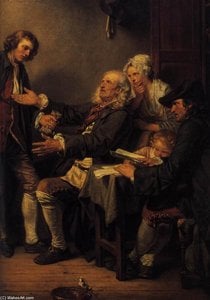
The Broken Pitcher
複製画のサイズ
To stand before Jean-Baptiste Greuze's The Broken Pitcher is to step directly into the heart of eighteenth-century sentimentality. This painting, executed in 1771, is far more than a mere portrait; it is a carefully composed tableau vivant of human vulnerability. The subject—a woman enveloped in a simple white dress—commands immediate attention, her posture speaking volumes without uttering a single word. Her hands, clasped together near her chest, suggest a profound internal dialogue, perhaps one tinged with loss or deep contemplation. Greuze masterfully captures that fleeting moment when emotion crests just before it breaks.
Greuze himself was a pivotal figure whose career blossomed during the rise of genre painting, an art form deeply attuned to the everyday dramas and emotional nuances of bourgeois life. While academic tastes often favored grand historical epics or mythological grandeur, Greuze found his voice in the intimate sphere. The Broken Pitcher exemplifies this shift toward sentimentality. The inclusion of secondary elements—the watchful dog and the sturdy chair—are not mere props; they are silent witnesses to the woman's emotional state. They ground the ethereal quality of her sorrow in a tangible, domestic reality, making her heartbreak feel immediate and deeply relatable to the viewer.
The technical brilliance at play here lies in Greuze’s ability to render texture and gesture with exquisite care. Observe the soft fall of the white drapery against the darker tones of the background; this contrast serves to isolate and illuminate the figure's emotional core. The brushwork, while skilled enough for a high-quality reproduction, retains the characteristic warmth of an artist deeply invested in narrative feeling. It is through these subtle gradations of light and shadow that Greuze guides our eye directly to the poignant expression on her face, inviting us into the quiet drama unfolding within the frame.
The title itself, The Broken Pitcher, hints at a narrative tragedy or a broken promise—a potent symbol of shattered domestic peace or emotional wholeness. The pitcher, though unseen in its broken state, acts as an emotional proxy for the woman's own fractured spirit. The dog, often symbolizing unwavering loyalty, adds a layer of poignant companionship to her solitude. For the modern collector or decorator, this piece offers more than just aesthetic beauty; it offers a contemplation point—a beautiful meditation on resilience found within moments of perceived breakage.
Reproducing such an emotionally charged work allows one to infuse a space with history and deep feeling. Whether displayed in a formal drawing-room or a more intimate study, The Broken Pitcher acts as a soulful anchor. It speaks to the enduring human capacity for profound feeling—joy, sorrow, longing—and reminds us that the most powerful art often resides not in what is grandly depicted, but in what is quietly felt.


1725 - 1805

Discover the profound allure of oil on canvas. Explore the mastery of impasto textures, the science of pigment longevity, and expert guides to selecting museum-quality reproductions that elevate your collection with timeless elegance and tactile depth.

Discover the enduring allure of hand-painted oil reproductions. WahooArt offers museum-quality, archival masterpieces designed for discerning collectors seeking timeless beauty and a lasting legacy. Invest in fine art that transcends generations with our expert craftsmanship.


 プレビュー
プレビュー
 シェアする
シェアする シェアする
シェアする
 詳細を見る
詳細を見る

 ダウンロード
 似ている作品
 X線調査
X線調査 スライドショー
 統計情報
統計情報 詳細を見る
詳細を見る









 ガラスオプションは、110cm未満のサイズでのみご利用いただけます。