スピーディーな制作と多彩な仕上げオプションが魅力の、ミュージアムクオリティなジークレー・キャンバスプリント。 ( 手描きの複製画を注文する デジタル画像販売へ切り替え)





























作品のオリジナル比率に合わせた、当店の規定サイズからお選びください。

特定のフレームやスペースに合わせて、ご自身でサイズを指定することも可能です。選択されたサイズが元の画像の比率と一致しない場合、作品をトリミングするか、鏡面反射または単色での塗りつぶしによって画像を拡張いたします。制作を開始する前に、ご確認用のデジタルモックアップをお送りいたします。
画面上のプレビューには、実際のトリミングや拡張は反映されませんのでご注意ください。最終的な構図を正確に確認できるのは、モックアップのみとなります。
カスタムサイズも承っておりますが、元の比率を維持するためには、あらかじめ用意されたリストからサイズを選択することをお勧めいたします。

The Champs-Elysées
複製画サイズ一覧
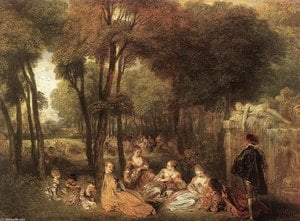
Jean Antoine Watteau's "The Champs-Elysées," painted in 1719, is a quintessential example of the *fête galante* genre and a captivating glimpse into the aristocratic leisure culture of early 18th-century France. Measuring 33 x 43 cm, this oil on canvas masterpiece resides within the esteemed Wallace Collection in London, offering viewers a window into Watteau's masterful ability to blend landscape and figure painting with an unparalleled sense of elegance and charm.
The painting depicts a group of approximately twelve individuals gathered in what appears to be a park setting, likely the gardens on the Champs-Elysées in Paris. The figures are dressed in fashionable attire of the period, showcasing a variety of colors and styles that reflect the social status and individual tastes of the time. They engage in relaxed conversation and leisurely activities, creating an atmosphere of refined sociability. Watteau's composition skillfully utilizes depth; trees and foliage recede into the background, enhancing the sense of space and tranquility. The diffused lighting contributes to a soft, dreamlike quality that is characteristic of Rococo art.
Watteau's contribution to art history lies significantly in his development of the *fête galante*. This genre, meaning "elegant festival," specifically portrays scenes of aristocratic gatherings in idyllic outdoor settings. Unlike traditional historical or mythological paintings, *fêtes galantes* focused on depicting contemporary leisure activities and social interactions within a picturesque landscape. “The Champs-Elysées” perfectly embodies this style, showcasing Watteau’s skill in capturing the relaxed atmosphere and subtle nuances of his subjects' relationships. The painting isn't merely a depiction of a scene; it is an exploration of beauty, grace, and the pursuit of pleasure – central tenets of Rococo aesthetics.
Watteau’s technique in "The Champs-Elysées" is characterized by loose brushwork and a slightly hazy effect. He employed glazing techniques to build up layers of color, creating depth and luminosity. The composition relies on flowing lines and organic shapes – trees, figures, water features – which blend together harmoniously. Symbolism within the painting is subtle but present. The carefully chosen attire of the figures suggests their social standing and individual personalities. The overall setting, a meticulously rendered garden, represents an idealized vision of nature—a space for contemplation, conversation, and refined enjoyment. While not overtly symbolic, the scene evokes feelings of serenity, elegance, and the fleeting beauty of life.
"The Champs-Elysées" stands as a testament to Watteau’s artistic genius and his pivotal role in transitioning from Baroque to Rococo art. Beyond this iconic work, Watteau left behind a rich body of paintings including "Halt During the Hunt," "Les Charmes de la Vie (The Music Party)," "Harlequin and Columbine," and “The Pleasures of Life,” all housed within the Wallace Collection. For those interested in exploring more of Watteau's works or other artists, WahooArt offers a wide range of handmade oil painting reproductions. Additionally, for further information on the Wallace Collection, visit their official website at https://www.wallacecollection.org/.

1684 - 1721 , フランス

Discover the breathtaking elegance of Rococo portraiture. Explore an expert guide to 18th-century mastery, from pastel palettes to aristocratic grandeur, and learn how to bring this era of opulence into your home through museum-quality oil reproductions.

Immerse yourself in the splendor of Rococo art. Discover the era of elegance through masterworks by Watteau and Fragonard. Explore themes of romance, aristocratic leisure, and gilded ornamentation in this definitive guide to 18th-century French opulence.

Discover the exquisite allure of Rococo art. Explore a curated guide to 18th-century French masterpieces, from Watteau to Fragonard, and learn how hand-painted oil reproductions can bring timeless elegance and luxury to your sophisticated interior design collection.

 設置イメージを確認
 送る
送る シェア
シェア
 詳細情報
詳細情報 ガイドを表示

 画像をダウンロード
 似ている作品
 X線調査
X線調査 スライドショー
 統計情報
統計情報


 続きを読む
続きを読む









 ガラスオプションは、110cm未満のサイズでのみご利用いただけます。