
 2019Contemporary
 59.0 x 64.0 cm
 シドニー・ビエンナーレ
当社のアーティストが、お客様のご希望のサイズと額縁に合わせて、キャンバスに手描きで制作する油彩画です。 ( プリント版に切り替え デジタル画像販売へ切り替え)





























作品のオリジナル比率に合わせた、当店の規定サイズからお選びください。

特定のフレームやスペースに合わせて、ご希望のサイズをご入力いただけます。選択されたサイズが元の画像の比率と異なる場合、アートワークをトリミングするか、手描きで要素を追加して絵画を拡張いたします。デジタルモックアップ を制作し、制作開始前にご確認(承認)をいただきます。
画面上のプレビューは、実際のトリミングや拡張を正確に反映しているものではありません。最終的な構図は、モックアップによってのみ正確にご確認いただけます。
カスタムサイズもご利用いただけますが、元の比率を維持するためには、あらかじめ用意されたリストからサイズを選択することをお勧めいたします。

I Haven
複製画のサイズ

Born in the heart of Alice Springs, Australia, Janie Nungala (also known as Janie Karpa) carries within her the profound echoes of the Hermannsburg School. Her artistry is not merely a collection of landscapes but a vibrant testament to Aboriginal resilience and an enduring connection to Country. Growing up amidst the arid, breathtaking expanses of Central Australia, Nungala’s creative identity was nurtured by the very soil she depicts. Her journey is deeply intertwined with the legacy of Albert Namatjira, the legendary figure who revolutionized Australian art by bringing the ethereal beauty of the desert vistas to the global stage. Through her work, Nungala continues this lineage, translating the ancient stories of her ancestors into a contemporary visual language that resonates with both local and international audiences.
The foundations of Nungala’s technique were laid organically within the Hermannsburg Lutheran Mission. Rather than seeking formal academic training in distant urban centers, her education was an immersion in the ancestral lands and the wisdom of her elders. This method of learning—rooted in storytelling and a deep observation of the natural world—imbued her work with an authenticity that distinguishes it from more detached explorations of landscape. She absorbed the aesthetic sensibilities championed by Namatjira, specifically the mastery of delicate watercolor washes used to capture the shifting light and atmospheric depth of the Outback. By adopting the use of simplified forms and bold, evocative color palettes, she honors a tradition that rejects European oil painting conventions in favor of a medium that breathes with the fluidity of the Australian landscape.
Nungala’s work serves as a bridge between the physical beauty of the Northern Territory and the urgent socio-political realities facing Aboriginal communities. Her participation in significant cultural exhibitions, such as the 22nd Biennale of Sydney, highlights her role as an artist who uses the landscape to raise awareness about contemporary struggles. Through her art, she explores themes of:
In her contributions to collective projects, such as those with the Iltja Ntjarra Many Hands Art Centre, Nungala’s work becomes part of a larger narrative of survival and strength. Her paintings do more than capture scenery; they act as witnesses to the cycles of dispossession and the powerful assertion of identity. By painting the landscapes of the Northern Territory for those in urban environments, she invites the viewer into a world where the beauty of the earth is inseparable from the struggles and triumphs of its traditional custodians. Through her brush, the desert is not just a place of sand and stone, but a living, breathing entity of immense historical and spiritual significance.

Australia

現代美術複製における依頼主の創造性を探求。アウラ、共同創造、クライアント・ミューズ論を専門家が解説。WahooArt.comでオーダーメイドアートの新たな価値を発見。

Explore the fascinating world of Art Brut – from Dubuffet's origins to its lasting impact on contemporary art. Discover key artists, characteristics & how to collect this powerful form of self-taught expression.
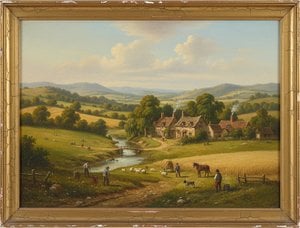
Explore the rich history of rural life in painting! Discover Impressionist masterpieces, Italian Macchiaioli scenes & the enduring appeal of pastoral landscapes. Find your perfect artwork at WahooArt.

Explore the captivating world of 19th-century landscape painting! Discover renowned artists like Friedrich & Monet, key movements, and find the perfect artwork to bring nature's serenity into your home. Expert insights at WahooArt.

Explore the captivating landscapes of George Elbert Burr, a pioneer of American Tonalism. Discover his masterful etchings, drypoints & watercolors – and learn about collecting this influential artist's work.


 プレビュー
プレビュー
 シェアする
シェアする シェアする
シェアする
 詳細を見る
詳細を見る

 ダウンロード
 似ている作品
 X線調査
X線調査 スライドショー
 統計情報
統計情報 詳細を見る
詳細を見る









 ガラスオプションは、110cm未満のサイズでのみご利用いただけます。


