

スピーディーな制作と多彩な仕上げオプションが魅力の、ミュージアムクオリティなジークレー・キャンバスプリント。 ( 手描き複製画を注文する デジタル画像販売へ切り替え)





























作品のオリジナル比率に合わせた、当店の規定サイズからお選びください。

額縁や壁のスペースに合わせて、ご希望の幅と高さを入力してください。プリントはカットすることは可能ですが、元の画像より大きくすることはできないため、異なる比率のサイズを選択された場合は、画像の一部が欠けることになります。印刷を開始する前に、内容を確認していただくためのデジタルモックアップをお送りいたします。このページに表示されている画像は、実際のカット後の状態を示すものではありません。実際の仕上がりはモックアップにてご確認ください。
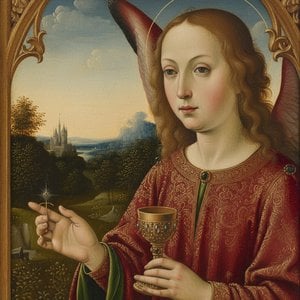
untitled (5187)
複製画サイズ一覧
In the quiet corners of fifteenth-century Flanders, a revolution was unfolding, not through the clash of swords, but through the delicate application of oil on panel. Jan van Eyck, a master whose name remains synonymous with the dawn of the Northern Renaissance, captured this transformative era in his untitled masterpiece (5187). This painting is far more than a mere depiction of a religious scene; it is an invitation to step through a portal into a world where the divine and the earthly are inextricably linked. As one gazes upon the composition, there is an immediate sense of profound stillness, a meditative atmosphere that draws the viewer into a sacred dialogue between the figures and the light that bathes them.
The scene unfolds before a doorway, a threshold that serves as a powerful metaphor for spiritual transition. A woman, draped in a vibrant, commanding red—a hue traditionally evocative of both royal dignity and divine grace—stands as the focal point of this devotion. She holds aloft a book, perhaps a sacred scripture, her posture suggesting a moment of deep contemplation or the sharing of holy wisdom. Beside her, a figure in somber black provides a grounding contrast, creating a visual balance that mirrors the duality of human existence: the earthly struggle and the spiritual aspiration. The presence of birds, perched subtly within the frame, adds a layer of naturalistic grace, reminding us that even the smallest creatures are part of this divine tapestry.
What truly elevates this work to the status of a cornerstone of Early Netherlandish art is Van Eyck’s pioneering mastery of the oil medium. Before his innovations, artists primarily relied on tempera, which often resulted in flat, opaque surfaces. Van Eyck, however, utilized glazing techniques—the meticulous layering of thin, translucent washes of pigment over thicker undercoats. This process allowed light to penetrate the paint layers and reflect back from within, creating an unprecedented luminosity and a sense of "inner glow" that seems to emanate from the woman’s very skin and the heavy textures of the books.
This technical brilliance allows for an astonishing level of detail that captivates the eye and rewards prolonged study. One can almost feel the weight of the leather bindings on the shelves, the crispness of the paper, and the soft way light dances across the surfaces. For the collector or interior designer, this level of detail offers a profound depth; a high-quality reproduction of such a piece does not merely decorate a wall—it provides a focal point of intellectual and sensory richness, bringing a sense of historical weight and quiet sophistication to any curated space.
Beyond the technical marvels lies a rich, coded language of symbolism that was central to the fifteenth-century mind. Every element in "Untitled (51 187)" is a deliberate choice intended to provoke thought. The books scattered throughout the scene, some resting on shelves and others held in trembling hands, serve as symbols of knowledge, piety, and the pursuit of divine truth through study. The interplay between the red and black garments further reinforces themes of passion and mourning, or life and death, creating a narrative tension that keeps the viewer emotionally engaged.
To possess or display a work inspired by Van Eyck is to embrace a legacy of meticulous observation and spiritual depth. This painting serves as a testament to a time when art was a bridge between the seen and the unseen. Whether viewed as an academic triumph of the Northern Renaissance or as a breathtaking piece of decorative fine art, the work continues to inspire awe, offering a timeless sanctuary of peace and beauty for the modern home.
全体として、「untitled (5187)」の明るさはbalancedと記録されています。知覚的な明るさとは、作品がどの程度明るく、あるいは暗く感じられるかを表すものです。
ヤン・ファン・エイク作「untitled (5187)」は、作品のスライドショーページにてスライドショーとしてご覧いただけます。
ヤン・ファン・エイク作「untitled (5187)」 の記録された数値は、明度 balanced、輝度 Soft Shadow です。


1390 - 1441 , オランダ
Embark on a journey through the luminous world of Early Netherlandish art. Discover the revolutionary oil techniques, microscopic realism, and sacred symbolism used by masters like Jan van Eyck to redefine Western art history in this expert-led guide.

Delve into the luminous revolution of Early Netherlandish painting. Unveil how Jan van Eyck and Flemish masters pioneered oil techniques to achieve unparalleled depth, sacred symbolism, and breathtaking realism, forever shaping the legacy of Western art history.
 設置イメージを表示
 シェアする
シェアする シェアする
シェアする
 詳細を見る
詳細を見る ガイドを表示

 ダウンロード
 似ている作品
 X線調査
X線調査 スライドショーを表示
 Q&A
Q&A
 統計情報
統計情報

 詳細を表示
詳細を表示









 ガラスオプションは、110cm未満のサイズでのみご利用いただけます。


