James Ensor’s *Lust*: A Descent into Grotesque Carnival
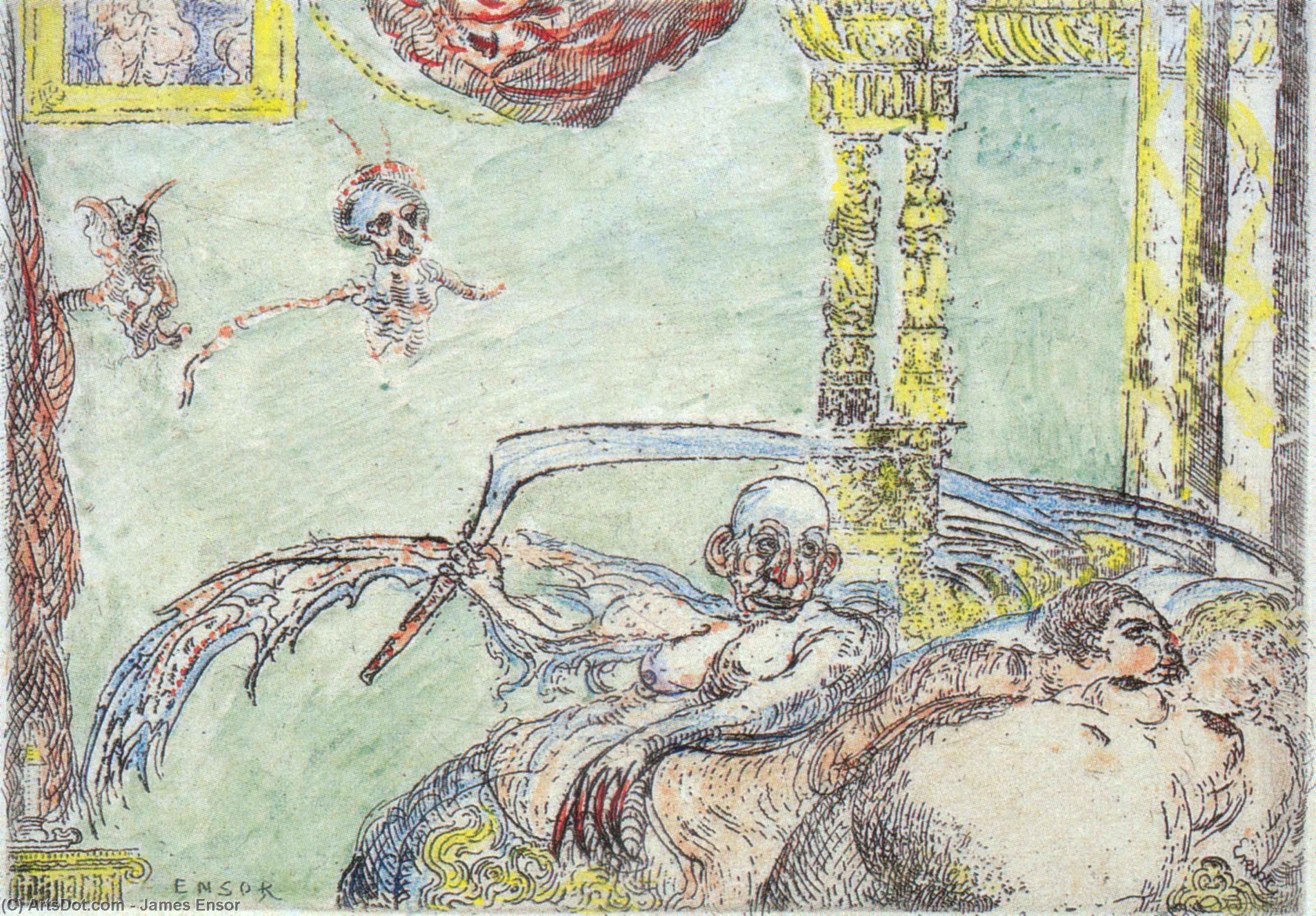
James Ensor's 1888 painting, *Lust*, is not merely a depiction of a clandestine encounter; it’s a meticulously constructed descent into the unsettling heart of human desire and societal anxieties. Born in Ostend, Belgium, during a period of rapid social change and burgeoning artistic experimentation, Ensor was deeply influenced by his upbringing amidst the vibrant chaos of seaside carnivals – an experience that profoundly shaped his visual language and thematic obsessions. This painting, part of his “Seven Deadly Sins” series, embodies his signature style: a jarring blend of realism and surrealism, populated with grotesque figures, symbolic imagery, and a palpable sense of unease. The work immediately confronts the viewer with a scene both intimate and profoundly disturbing – a young man, partially obscured and skeletal in appearance, seemingly crawling towards a woman whose face is averted, her body swollen and exposed.
Ensor’s technique is masterful in its deliberate ambiguity. He employs a predominantly black-and-white palette, intensifying the drama and stripping away any potential for romanticization. The figures are rendered with sharp, angular lines, contributing to their unsettling quality. Notice the meticulous detail applied to the woman's form – a stark contrast to the almost skeletal depiction of the man, suggesting perhaps an imbalance of power or a critique of societal expectations surrounding female sexuality. The use of heightened white pigment creates a ghostly luminescence, further amplifying the painting’s dreamlike and slightly nightmarish atmosphere. The background is deliberately blurred, drawing attention to the central figures and creating a sense of claustrophobia.
The Carnival of Masks and Mortality
*Lust* is inextricably linked to Ensor's fascination with masks – objects he’d encountered frequently in his childhood spent amidst Ostend’s bustling carnival scene. These masks, representing hidden identities and concealed emotions, became a recurring motif throughout his oeuvre. In this painting, they are not simply decorative elements but rather symbolic representations of the deceptive nature of desire. The man's obscured features, combined with the woman’s averted gaze, suggest a deliberate concealment, a performance of sorts – a carefully constructed facade masking deeper anxieties and vulnerabilities. The presence of a skeletal figure lurking in the background reinforces the theme of mortality, reminding us that even within the fleeting pleasures of lust, death and decay are ever-present.
Furthermore, *Lust* can be interpreted as a commentary on Victorian societal constraints surrounding sexuality. The scene unfolds in secrecy, hinting at repressed desires and the hypocrisy prevalent in bourgeois society. The inclusion of a time skeleton – a recurring figure in Ensor’s work – serves as a visual reminder of the relentless passage of time and the inevitable consequences of indulging in such forbidden impulses. It's a potent symbol of judgment and the awareness that our actions have repercussions.
Symbolism and Emotional Resonance
Beyond its immediate depiction, *Lust* is rich with symbolic meaning. The umbrella, positioned centrally within the composition, could represent protection or concealment – perhaps shielding the illicit encounter from observation. The bird perched above, a common motif in Ensor’s work, often symbolizes both freedom and danger, adding another layer of complexity to the scene. The overall effect is profoundly unsettling, evoking feelings of anxiety, vulnerability, and moral ambiguity. It's not a painting that offers easy answers or comforting resolutions; instead, it compels us to confront uncomfortable truths about human nature.
James Ensor’s *Lust* remains a powerfully evocative work, demonstrating his mastery of unsettling imagery and symbolic representation. It is a testament to the artist's ability to capture the darker aspects of the human experience – desire, guilt, and mortality – within a meticulously crafted and deeply resonant composition. WahooArt offers exceptional hand-painted reproductions that faithfully capture the nuances of this extraordinary painting, allowing you to bring its haunting beauty into your home or office.



 プレビュー
プレビュー
 手描きの絵画を購入
 シェアする
シェアする シェアする
シェアする
 詳細を見る
詳細を見る

 ダウンロード
 似ている作品
 X線調査
X線調査 スライドショー

 詳細を見る
詳細を見る






































 ガラスオプションは、110cm未満のサイズでのみご利用いただけます。